
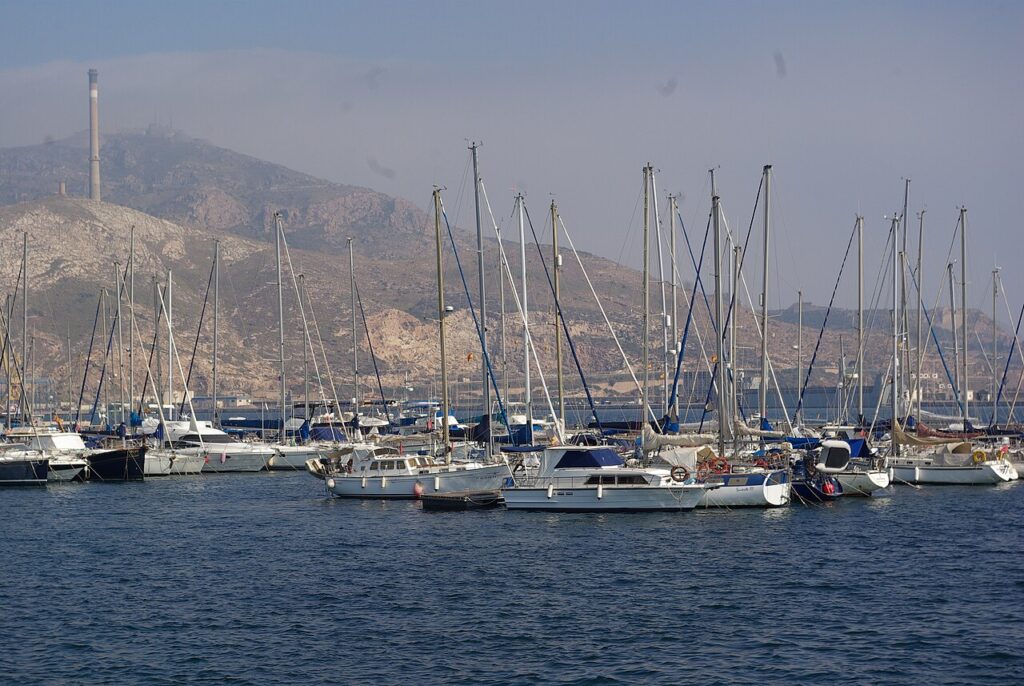
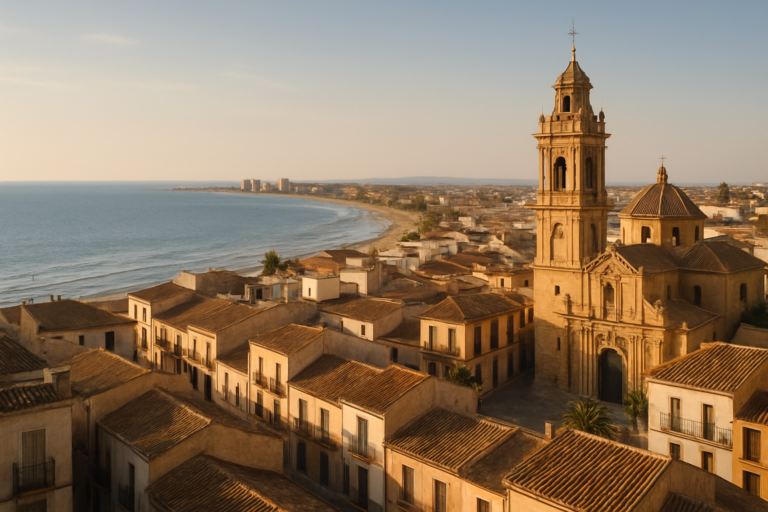
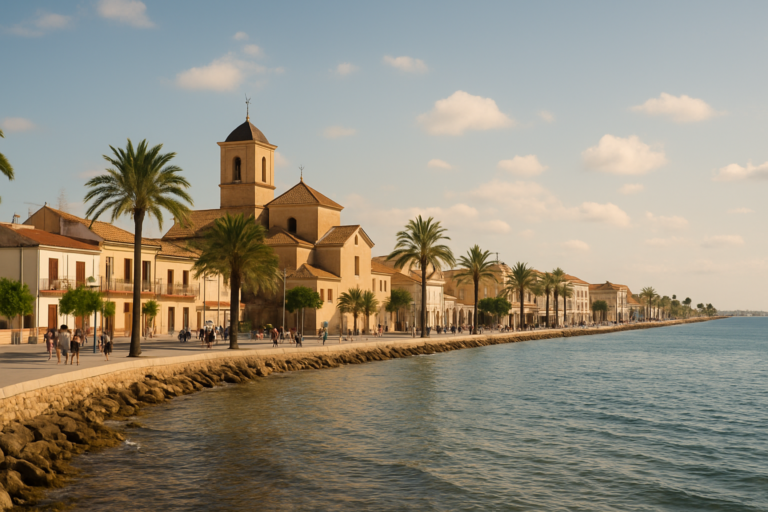
Cartagena is a working port city of more than 200,000 people on the Costa Cálida, about 24 km in a straight line from Región de Murcia airport, and it suits travellers who want Roman ruins, naval history and day trips to wild beaches more than a seaside resort. Stay in or near the old town if you like walking to museums and eating late; stay on the Mar Menor or at Cabo de Palos if sand is the point of the trip. It is part of our Costa Cálida guide.
Quick facts
- Where: Cartagena, Region of Murcia, on a natural harbour on the Mediterranean coast.
- Residents: more than 200,000 in the municipality, which also includes villages and Mar Menor shore settlements.
- Nearest airport: Región de Murcia international airport at Corvera, about 24 km in a straight line; Alicante–Elche is about 83 km in a straight line.
- Murcia city: about 44 km in a straight line.
- Beach: yes, but not in the centre. Cala Cortina is the city beach, reached through a tunnel; the large beaches of Calblanque and the Mar Menor shore lie outside town.
- Language: Spanish. Murcia has no second official language.
- Age of the city: founded by the Carthaginian Asdrubal in 227 BC, according to the regional tourism board.
- Market day: we could not confirm a weekly market from official sources; the Sunday market the regional tourism board mentions is in Cabo de Palos.
Where to base yourself
Cartagena is a city, and where you sleep decides what kind of trip you have. The choice is between the old town and port, and the coast outside.
Old town and port
The historic centre sits between the harbour and five hills, and the Roman Theatre, the Concepción castle hill, the port museums and the pedestrian streets are all within walking distance of each other. It suits couples, history lovers and anyone travelling without a car, since the station and bus station are in town. It does not suit you if you want to walk to a beach before breakfast.
Mar Menor shore (Los Urrutias, Los Nietos)
Part of the Mar Menor shoreline belongs to Cartagena municipality. Los Urrutias has an urban beach of 750 m, and Los Nietos has El Arenal, about 2,700 m long, according to the regional tourism board. These places suit families who want calm shallow water and are happy to drive or take a bus into the city for sightseeing.
Cabo de Palos and La Manga (southern end)
The regional tourism board puts Cabo de Palos less than 30 minutes from Cartagena by car. The southern part of La Manga also lies in Cartagena municipality. This is the better base for beach days and diving, and a car makes city trips easy. Our Los Alcázares guide and San Pedro del Pinatar guide cover the northern lagoon towns.
Things to do
Cartagena packs a lot into a small centre, and most of it is about the ancient and naval past. A day and a half covers the main sights comfortably.
The Roman Theatre Museum
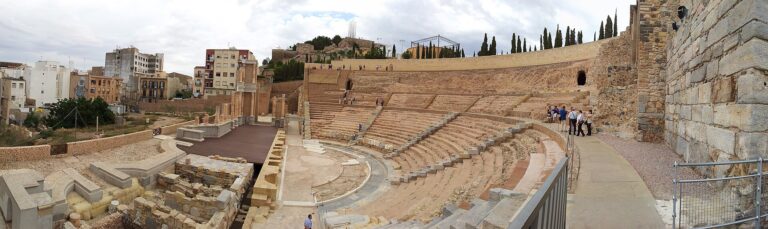
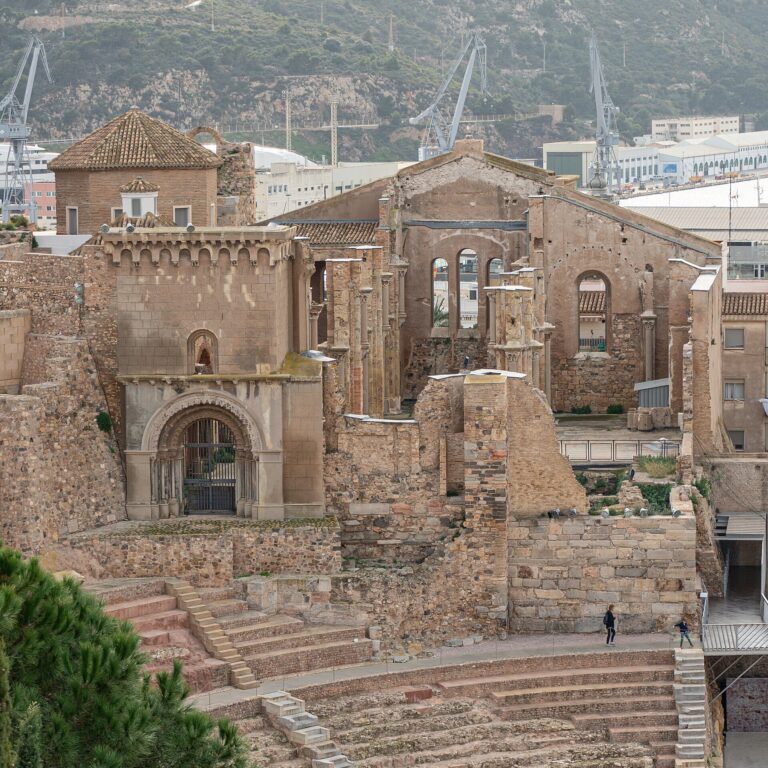
The Roman theatre of Carthago Nova was built in the Augustan era and counted among the most important buildings of the Roman city. The ruins lay under the old town until they were identified as the theatre in 1990. The seating held about 7,000 spectators. The museum and the way the ruins are woven into the streets were designed by the architect Rafael Moneo. An underground corridor links the museum to the theatre beneath the church of Santa María la Vieja, and along it you can see the church foundations, dating from the 13th to the 19th century. Check current hours and ticket prices on the theatre museum site before you go, as we do not quote them.
Castle hill and the panoramic lift
A panoramic lift climbs 45 m from Gisbert street to the top of the hill with Concepción Castle, and has been open to the public since 2004, according to the city’s Puerto de Culturas page. The castle holds an interpretation centre on the history of Cartagena, which the regional tourism board says takes about an hour. It is a good first stop to see the harbour and the other hills before you walk down.
Museums at the port
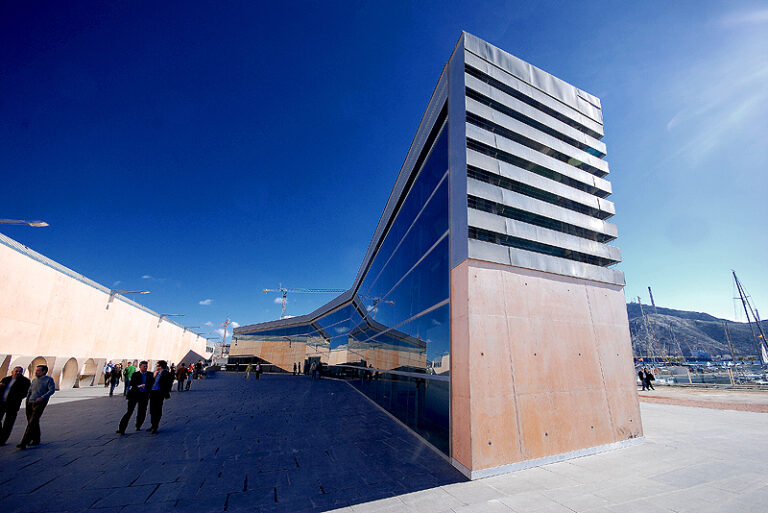
ARQUA, the National Museum of Underwater Archaeology, stands on the port. The building was designed by Guillermo Vázquez Consuegra, built from 2002 to 2007, and the museum opened in 2008. Highlights include the Phoenician wrecks Mazarrón I and II and elephant tusks from the Bajo de la Campana wreck. According to the regional tourism board it also shows coins from the frigate Nuestra Señora de las Mercedes. Details and current admission are on the ARQUA site. The Naval Museum, with the Isaac Peral submarine, is nearby.
Other Roman and defensive sites
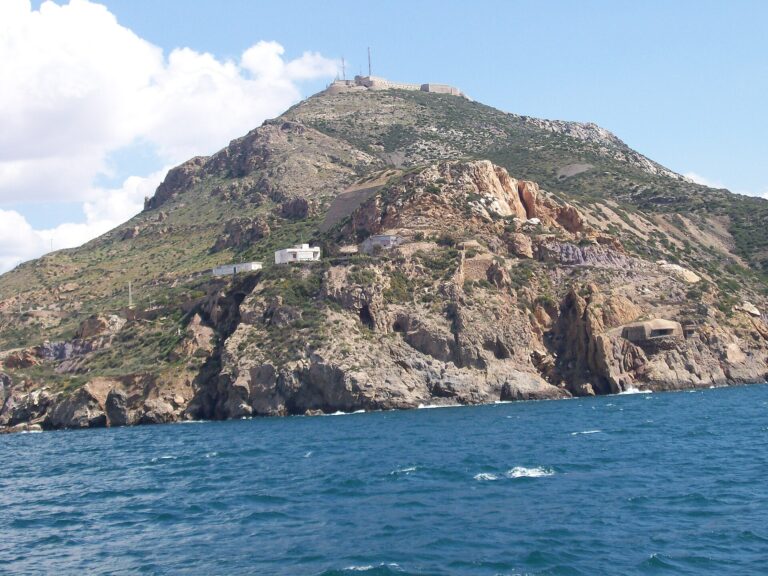
The Roman Forum district lay hidden underground for more than 20 centuries, the regional tourism board says. Castillo de San Julián stands on Monte San Julián at 293 m above sea level and was built between 1861 and 1888. It is not open to visitors, so enjoy it as a landmark rather than a stop. The Holy Week processions are declared of International Tourist Interest; the Carthaginians and Romans festival is also a big local event, and the programme changes each year, so check the city’s tourism site for the current dates.
Skip Cartagena if you only have a single beach day: the city is the reason to come, and the best sand is a drive away.
Beaches and places nearby
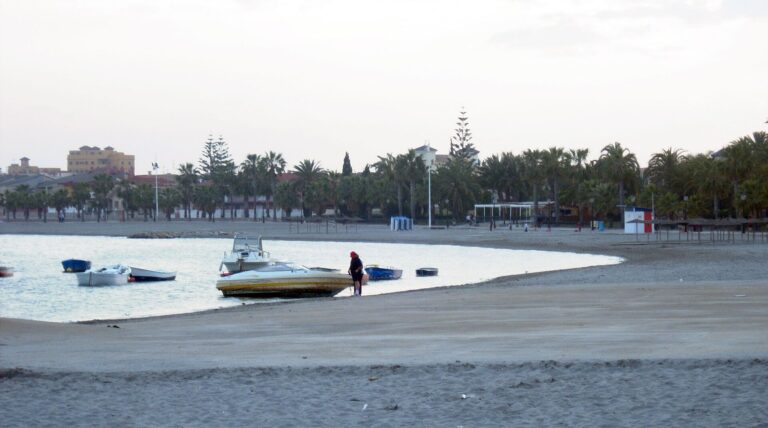
Cala Cortina is the city beach, reached through a tunnel. The better-known coast is outside town.
Calblanque
Calblanque, Monte de las Cenizas y Peña del Águila Regional Park covers 2,822 ha between Cabo de Palos and Portmán. Its beaches include Parreño, Negrete, Larga and Las Cañas in the west, and Calblanque, Cala Arturo, Cala Magre and Cala Déntoles in the east. Playa Larga is about 600 m long. The park site says there is no mobile coverage on the beaches, no water or food is sold inside the park and there are no bins, so bring supplies and take your rubbish back out. Camping is not allowed, and pets are not allowed in the beach zone from 1 March to 30 September. In summer, motor vehicle access is restricted by day and visitors use a paid shuttle bus; check the schedule on the Calblanque site before you drive. The park also warns of currents, insects and jellyfish.
Other coast
The regional tourism board names Playa del Portús and Cabo Tiñoso as essential stops, with Cabo Tiñoso a favourite with divers, and describes the PR-1 route from Cala Reona to Calblanque. Mazarrón and its coves lie to the west: see our Mazarrón guide.
Murcia, the regional capital, is covered in our Murcia guide.
Other town guides nearby: Fuente Álamo de Murcia (about 21 km in a straight line), Pilar de la Horadada (about 34 km in a straight line).
On CostaMap near Cartagena: Cartagena Cathedral (0.1 km) · Roman Theatre of Cartagena (0.1 km) · National Museum of Subaquatic Archaeology (0.4 km) · Castillo de San Julián (2.6 km).
Food and drink
The city’s own tourism site lists caldero as the main fish dish of Cartagena and its countryside: rice cooked with Mediterranean and Mar Menor fish, usually served as two dishes, the rice and the fish. Michirones, a dish of dried broad beans, and salted fish (salazones) also appear on the list. The signature drink is the asiático: coffee with condensed milk, brandy, cinnamon, Licor 43 and lemon peel, served in its own glass. Another local snack is the marinera, Russian salad on a crisp ring of bread, topped with an anchovy. Try the asiático after a meal rather than instead of one, since it is strong and sweet.
We do not name restaurants we could not verify. Look in the old town and around the port, and ask for the daily rice dish.
Where to stay
Hotels and apartments cluster around the old town and the port, with more resort-style lodging on the Mar Menor shore and at La Manga. Prices change with the season and with cruise-ship days, and we do not quote them. For a short city break, book near the Roman Theatre so you can walk everywhere. For a beach week, choose Cabo de Palos or the Mar Menor and visit Cartagena as a day trip. Book ahead for Holy Week and for summer weekends.
Getting there and around
By air, Región de Murcia international airport at Corvera is the closest, about 24 km in a straight line; Interbus runs a bus from the airport to Cartagena bus station, according to Aena. Alicante–Elche is about 83 km in a straight line, and the road distance is longer.
Cartagena railway station is on Plaza de Méjico and has long-distance and medium-distance trains, and Renfe runs a Murcia–Cartagena service; check times on Renfe. In the old town you walk, and the panoramic lift saves the climb to the castle. For Calblanque, Cabo de Palos and the Mar Menor beaches a car is easiest; read the access rules above before you drive into the park.
Best time to visit
Climate figures for a point near Cartagena, from NASA POWER (monthly averages for 2001 to 2020, modelled data): January averages 13.3 °C, August 25.8 °C, and the year 18.8 °C. July is the driest month at about 0.1 mm of rain per day. For sightseeing, spring and autumn are comfortable: you can walk the old town and climb the castle hill without midday heat. Summer is the season for Calblanque and the Mar Menor, with the access limits described above. Holy Week is crowded, so book early. Check the forecast on AEMET.
FAQ
Is Cartagena worth visiting?
Yes, if you like Roman remains, naval history and a real port city. It is less suited to a pure beach holiday.
Does Cartagena have a beach?
Yes. Cala Cortina is the city beach, reached through a tunnel. Calblanque and the Mar Menor beaches are bigger and need a car or bus.
How far is Cartagena from the airport?
Región de Murcia international airport is about 24 km away in a straight line, and Interbus runs a bus from the airport to Cartagena bus station.
How long do you need in Cartagena?
A day and a half covers the Roman Theatre, the castle hill and the port museums at a relaxed pace; add a day for Calblanque.
Can you visit Castillo de San Julián?
No. According to the city’s tourism site, it is not open to visitors.
Sources and freshness
Last checked: October 2026. Sources: Región de Murcia tourism, Cartagena (history, sights, beaches, festivals); Cartagena Puerto de Culturas, Roman Theatre; Puerto de Culturas, Panoramic Lift; Roman Theatre Museum, corridor; Cartagena tourism, food; Calblanque park site; ARQUA; Aena; NASA POWER; AEMET.
Main photo: Concepcion AMAT ORTA…, CC BY 3.0, via Wikimedia Commons.
Nearby on the Costa Cálida
Cartagena on the map
Places worth knowing near Cartagena
This place is part of our Costa Cálida — the honest guide to Spain's warm coast — see every town, beach and cove we have mapped on that coast.
How this page is maintained. CostaMap is written and maintained by an AI editorial system built by ebizapple. Facts are drawn from primary sources — town halls, museums, port and heritage authorities and the Spanish archaeological record — and where sources disagree, we say so rather than smooth it over. Photographs marked as ours are taken on location. This page was last reviewed on 28 October 2026. Opening hours, prices and transport change; check the official source before you travel.