
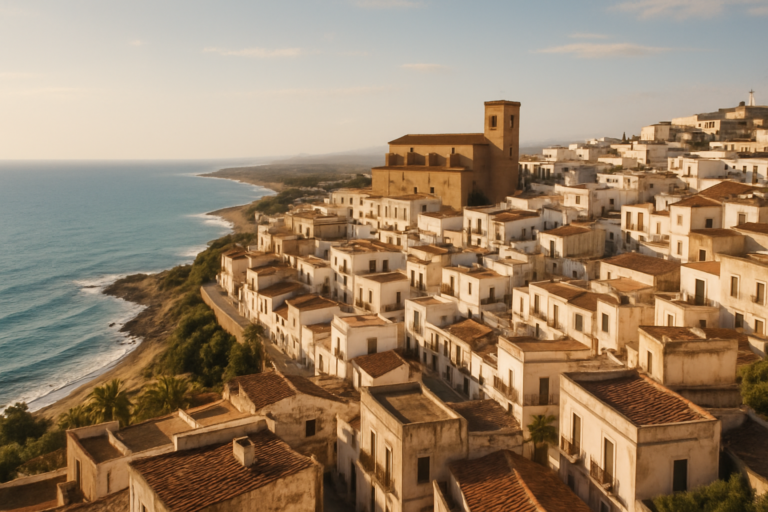
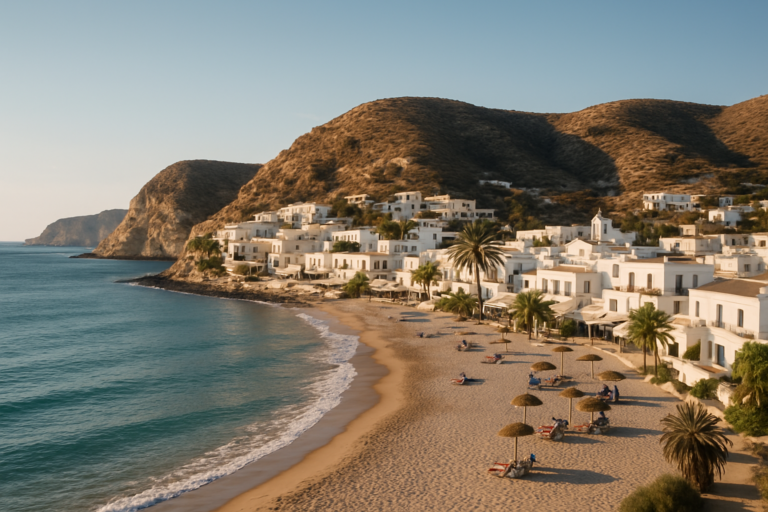
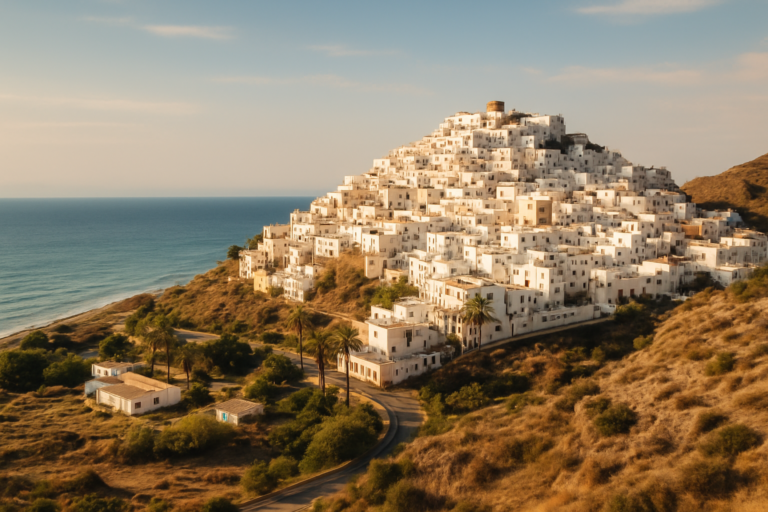
Expect a rugged, sunbaked stretch of coast more valued for dramatic geology and authentic working-port life than for polished tourist infrastructure. The town sits inside the Cabo de Gata‑Níjar Natural Park — Spain’s largest coastal protected area — a volcanic desert of cliffs, coves and unusually clear water. If you want glossy promenades and resort trimmings, this isn’t that place; if you want silence, wild beaches and a port that still fishes, read on.
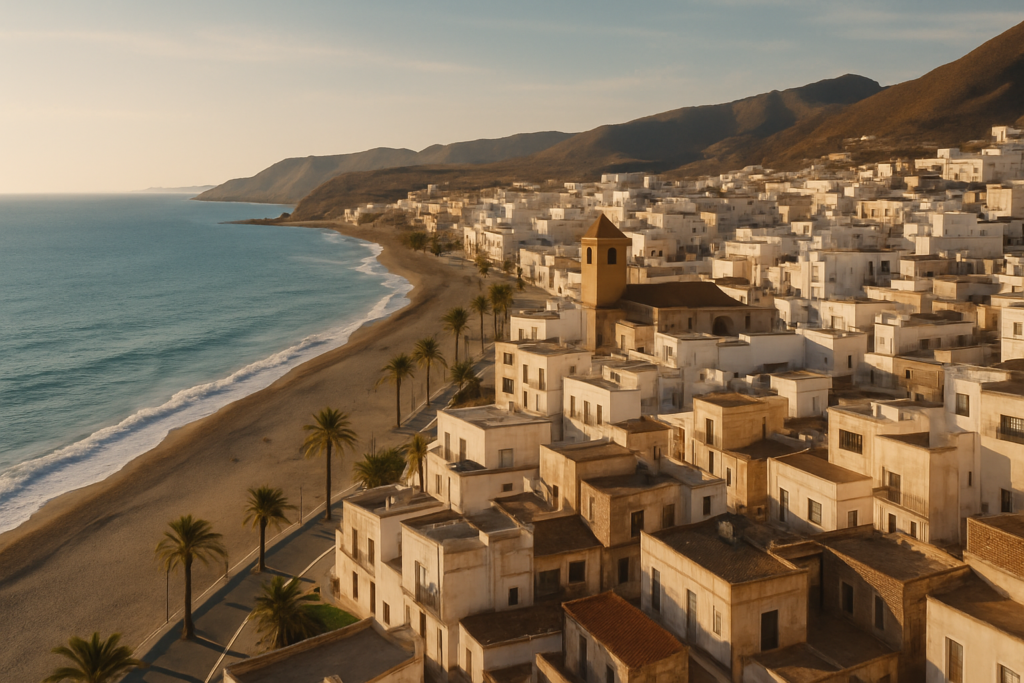
Carboneras at a glance
- Located in Andalusia; a municipality of Almería province.
- Inside the Cabo de Gata‑Níjar Natural Park — protected volcanic desert coastline.
- Working fishing port that remains an active commercial harbour (not just a marina).
- Maps and satellite/aerial imagery are readily available for route and beach planning.
- Mentioned in regional government information sources (Diputación Provincial de Almería and the Sistema de Información Multiterritorial de Andalucía).
- Practical base for boat-based activities and land excursions into the natural park.
Things to do in Carboneras
The draw here is landscape and outdoor activity: ruinous towers, low-key cultural stops and a clutch of standout coves and beaches. Several small historic monuments are clustered around the town, and the harbour is the launch point for water- and land-based excursions into the surrounding protected park.
| Attraction | What it is | Price/entry | Best for |
|---|---|---|---|
| Castillo de San Andrés | 16th‑century coastal fortress that hosts local exhibitions | Free entry | History and short walks |
| Molino de Viento | Historic windmill housing a small museum of local culture | — | Local culture and light indoor respite |
| Torre del Rayo | Restored Moorish‑era watchtower with panoramic views | — | Views and photography |
| Mesa Roldán | Headland with lighthouse and a 19th‑century tower (filming location) | — | Coastal scenery and film‑location interest |
| Playa del Algarrobico | Long beach used as a filming location (Lawrence of Arabia) with an infamous disputed hotel above it | — | Beach walks and film history |
Castillo de San Andrés and the compact historic centre
The coastal fortress sits close to the seafront and is open to visitors without an entry fee; it also stages rotating local exhibitions. It’s a quick, roofed way to learn something of the area’s defensive past without a long hike.
Molino de Viento — local culture in a small museum
A restored windmill now houses displays about traditional life and the town’s maritime and agricultural heritage. It’s a short stop that works well on a hot afternoon when you want indoor shade and a local perspective.
Watchtowers and coastal film trivia
Walk or drive to the headlands to find Torre del Rayo and the Mesa Roldán tower. The watchtower gives 360‑degree panorama of the shoreline, and the Mesa Roldán tower (with its lighthouse nearby) is notable for having been used as a filming location on international productions.
Best beaches in Carboneras
The shoreline alternates between sweepingly open, sandy bays and smaller, dramatic coves tucked into volcanic cliffs. Some beaches are easy to reach from town; others require a short walk down paths or cliff trails.
| Beach | Character | Facilities / Notes |
|---|---|---|
| Cocones y Barquicos | 600 m beach lined with traditional wooden fishing boats; working‑port atmosphere | Simple, traditional; reflects local fishing activity |
| Playa El Ancón | 1.5 km of fine golden sand with good snorkelling; one of the town’s most accessible main beaches | Accessible from town; suited to swimming and snorkelling |
| Cala la Galera | Undeveloped 800 m cove prized for clear water and snorkelling | No built‑up services — bring supplies |
| Playa de los Muertos | 1.2 km pebble beach reached by a steep cliff path; widely regarded as the most dramatic beach in the Cabo de Gata area | Steep access; dramatic scenery |
Carboneras with kids
This is a place for outdoor kids who don’t need playground gloss. Beaches with easy access and gentle sand are best for families; rocky or pebble coves with steep descents are better left for older children. A short museum visit or a calm walk along the seafront can break up sun and sea time.
How to get to Carboneras and get around
There are no grounded public‑transport timetables or fixed routes in our source set to list here; the sensible approach is to use a car as your primary means of getting around the coast and into the natural park. The town’s working port means there are locally organised boat excursions and small watercraft departures for coastal trips, but specific operators and schedules should be checked locally on arrival.
Best time to visit Carboneras
Sources do not include detailed climate tables or festival dates for the town. In practical terms, the protected coastal landscapes are most pleasant outside extreme heat; water activities rely on calm seas. Check local weather and park guidance before planning activities.
History of Carboneras
The town’s coastal position is reflected in several historic defensive structures: a 16th‑century fortress in the centre demonstrates the area’s maritime strategic importance, and a locally restored Moorish‑era watchtower marks earlier coastal surveillance systems. Later structures on headlands include 19th‑century towers that have since entered cultural memory as film locations.
Practical info
- Port and tours: The fishing harbour remains an active commercial port and is also the launch point for organised coastal excursions and small‑boat departures; ask locally for current operators and bookings.
- Maps and planning: Satellite relief maps and aerial photography are available for route finding and identifying beaches and access paths.
- Water infrastructure: Carboneras appears in regional water/desalination reporting — a reminder that infrastructure in this coastal zone is influenced by arid conditions.
- Official listings: The town is referenced in provincial and regional information systems, useful if you need administrative or planning resources.
Worth it for: travellers who prioritise wild, volcanic coastal scenery, secluded coves and a genuine working harbour. Less so if: you want highly developed resort amenities, polished promenades or nightlife-focused holidays.
How we assess this guide
This guide compiles verified regional and local claims from government and cartographic sources and cross-checked references. We flag film locations and protected‑area status, and we do not speculate beyond the sourced facts. We do not conduct first‑hand reporting for this piece — check local operators and official park resources for the latest access and activity updates.
Frequently asked questions
How do I get from the nearest airport to the town?
Our verified sources don’t provide specific airport transfer routes or schedules. Use regional transport links or hire a car; local maps and provincial information sources can help plan the connection.
Is it expensive to visit?
There are no concrete price listings in the source set. Expect a mix: simple local beaches and outdoor sights are low‑cost, while organised boat trips or specialist guided tours will add expense.
Which beach is the most famous here?
Playa de los Muertos is widely regarded as the most famous and dramatic beach in the broader Cabo de Gata area.
How many days do I need to visit?
With beaches, a small museum and a few coastal monuments, a long weekend will cover the main highlights; add more time if you want to hike remote coves, take boat trips or explore the wider natural park.
Is the area good for families with children?
Yes for families who prefer outdoors over theme parks: the town offers accessible sandy beaches and short cultural stops. Some coves have steep access or pebbles and suit older children better.
Can I get around without a car?
Sources do not include public‑transport timetables. Many visitors rely on cars for flexible access to beaches and headlands; local boat excursions operate from the harbour for coastal access where available.
Are there parking facilities near beaches?
Specifics on parking provision are not detailed in the sourced material. For popular or remote beaches, plan for limited facilities and consider arriving early.
What are good rainy‑day options?
Indoor options in the immediate area are modest: the windmill museum offers a small, cultural stop, and the Castillo de San Andrés hosts exhibitions under cover.
When is the best time of year to visit?
There are no detailed seasonal climate or festival entries in our sources. Generally, coastal outdoor activities are best outside periods of extreme heat; check weather and park guidance for exact timing.
Is there any notable film history here?
Yes. Playa del Algarrobico was used as a filming location for Lawrence of Arabia (1962), and the Mesa Roldán headland tower has been used as a filming location in contemporary television productions.
Are there guided tours available from the harbour?
The working fishing port is the base for sailing tours, boat excursions, guided kayaking and organised 4×4 tours into the natural park; verify schedules and operators locally when you arrive.
Are beaches well serviced with facilities?
Facilities vary. Some coves like Cala la Galera are undeveloped with no built‑up services; other main beaches closer to town are more accessible. Bring supplies for remote spots.
Is the Castillo de San Andrés worth a visit?
Yes; it’s a 16th‑century fortress with free entry that also hosts local exhibitions, providing historical context without a large time or cost commitment.
Are there opportunities for snorkelling?
Yes. Several beaches and coves are noted for clear water and good snorkelling conditions, including a main beach known for accessible snorkelling and an undeveloped cove prized for clear water.
How remote are the coastal paths and coves?
Some beaches require steep or cliff paths to access (for example, a well‑known pebble beach reached by a steep descent), while others are accessible from the town seafront.
Plan the wider trip
- Costa de Almería travel guide
- Níjar and Cabo de Gata
- Mojácar up the coast
- Garrucha and its port
- Berja: Alpujarra market town in inland Almería
- Adra: Fishing Town on Almería's Western Coast
Nearby on the Costa de Almería
Carboneras on the map
Places worth knowing near Carboneras
How this page is maintained. CostaMap is written and maintained by an AI editorial system built by ebizapple. Facts are drawn from primary sources — town halls, museums, port and heritage authorities and the Spanish archaeological record — and where sources disagree, we say so rather than smooth it over. Photographs marked as ours are taken on location. This page was last reviewed on 15 August 2026. Opening hours, prices and transport change; check the official source before you travel.