
Expect a municipality whose strengths are rural Mallorca and long natural beaches rather than a compact resort centre. The area blends agricultural plains and salt marshes with two small coastal towns that exist because of tourism; if you come looking for untouched countryside, white-sand swimming and a slice of Mallorcan market life, this is a reliable choice. If you expect an entertainment-packed resort with nightlife and big-hotel promenades, you’ll likely be disappointed.
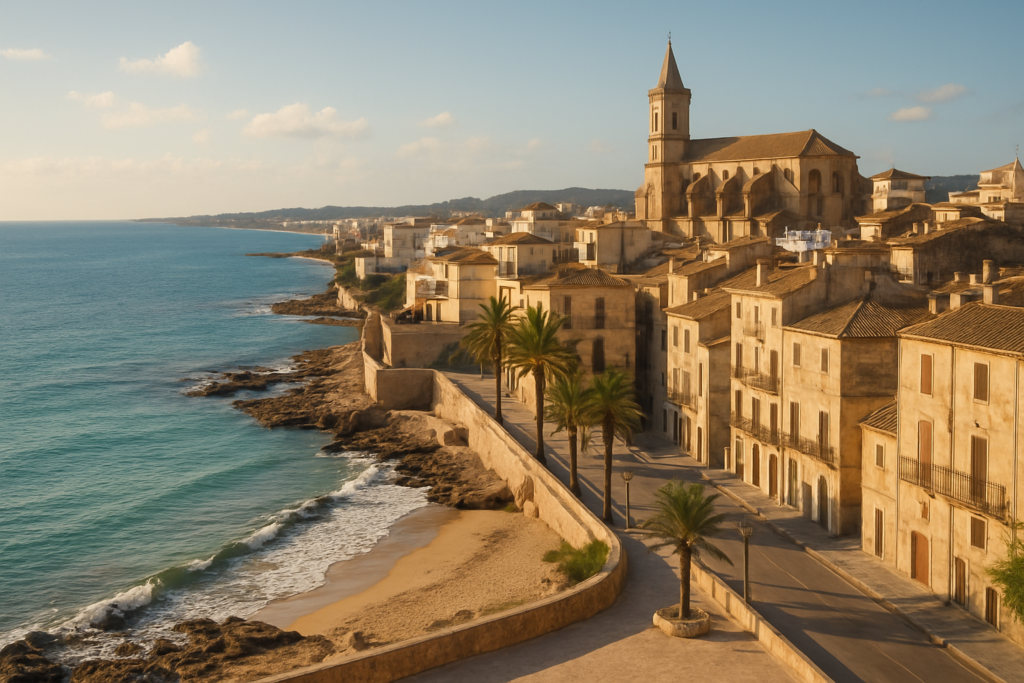
Campos at a glance
- Location: on Mallorca’s south side in the comarca of Migjorn.
- Landscape: fertile agricultural plains that rely on irrigation cultivation.
- Natural highlights: a long unspoilt white-sand beach with nearby protected salt marshes.
- Coastal access: the seaside is reached via two resort villages, ses Covetes and sa Ràpita.
- Local life: a weekly market selling local produce including a traditional cheese and fresh vegetables.
- Historic curiosity: a 17th-century rainwater storage well in the village built 1671–1673.
- Wellness note: the only natural thermal spring on Mallorca is close to town and has a spa history.
Things to do in the area
The main reasons to visit are outdoors: beach time, birdwatching and sampling local produce. Activities are low-key — walking, swimming, market browsing and short heritage stops are the core itinerary. Use the coastal villages as bases for beach access rather than expecting a single compact town centre with tourist infrastructure.
| Attraction | What it is | Price/entry | Best for |
|---|---|---|---|
| Es Trenc | A long natural beach of fine white sand and turquoise water | — | Beachgoers seeking unspoilt sand and clear sea |
| Salobrar de Campos | Protected salt marsh and wetland behind the beach, habitat for flamingos and migratory birds | — | Birdwatchers and nature-walks |
| Banys de la Font Santa | The island’s only natural thermal spring, with a history as a spa | — | Visitors interested in historic spa sites and local traditions |
| Weekly market | A local market selling produce including a traditional cheese and fresh vegetables | — | Food lovers and shoppers after local goods |
| Aljub de la Font Santa | 17th-century rainwater storage well (built 1671–1673) | — | People interested in historic rural architecture |
Es Trenc and the coastline
Es Trenc is the headline draw: a long, largely natural stretch of white sand with turquoise water on the south coast. Access to the shore is typically via the two nearby coastal settlements rather than a single promenade, so expect a largely sunlight-and-sand experience rather than resort-style facilities. The beach sits adjacent to protected salt marshes, which help preserve the landscape and wildlife values of the shore.
Salt marshes and birdwatching
Behind the beach lies a protected wetland system where flamingos and other migratory birds can be seen. This is an important natural area rather than a manicured park: bring binoculars and plan for quiet observation rather than interpretive centres or heavy visitor infrastructure.
Markets, local produce and rural life
The municipality still has strong agricultural roots. A weekly market is the practical way to experience local produce: look out for the region’s traditional cheese and fresh vegetables. Fields here are intensively irrigated, which is the reason for the area’s consistent vegetable production.
Best beaches in the area
Beach options are simple: long open sand and natural coastline rather than sheltered coves with facilities. Choose your stretch according to how isolated you want to be.
| Beach | Character | Facilities/Blue Flag |
|---|---|---|
| Es Trenc | Long, unspoilt natural beach with fine white sand and turquoise water | — |
| Shorelines near ses Covetes and sa Ràpita | Coastal access points serving the nearby resort villages | — |
The town with kids
Families who enjoy beaches and gentle nature outings will find the area suitable. The wide sands at Es Trenc are forgiving for children, and the salt marshes are a calm setting for supervised wildlife watching. There are no claims about commercial children’s attractions, so plan on outdoor play, swimming and market visits rather than theme-park days.
How to get to the area and get around
The municipality sits on Mallorca’s south side and includes a village and two tourist towns by the coast. The coastal settlements act as the usual access points for beach visits; visitors typically transfer from larger nearby transport hubs into these local centres. Once based in the district, expect to move between the village, the coastal towns and natural sites by road.
Where to stay in the municipality
- The village centre — suits travellers who want a quieter, more local base with access to the weekly market and historic features.
- sa Ràpita — a coastal tourist town that provides a practical gateway to the beach areas.
- ses Covetes — the other seaside settlement serving the shoreline; useful if you prioritise proximity to sand over village amenities.
Best time to visit
There are no specific festival or climate claims in the source set to pin exact months. The area’s attractions — beach and nature — mean timing should follow when you prefer sea swimming and quiet coastal walking. If you want the widest choice of outdoor activities, choose times when the sea and weather are favourable for swimming and birdwatching.
History of the area
Rural agriculture has shaped the municipality’s development and economy over time; irrigation cultivation remains a defining feature of the landscape. The built heritage includes a 17th-century rainwater storage construction built between 1671 and 1673, and the nearby natural thermal spring has long been used as a spa, marking the area as both an agricultural and a wellness place in the past.
Practical info
- Landscape and agriculture: the area’s fertile lands depend on irrigation, which explains the productive vegetable cultivation you’ll see in fields and at market.
- Coastal development: the two coastal towns have developed because of tourism and act as practical access points to the shore.
- Population centres: the municipality comprises seven population centres in total; plan logistics around moving between small villages and coastal settlements rather than within a single central town.
- Borders: the municipality shares boundaries with Llucmajor, Porreres, Felanitx, Santanyí and ses Salines — useful to know if you’re combining visits to neighbouring areas.
Worth it for: long natural beaches, birdwatching in protected salt marshes, farmers’ markets and a quiet rural-Mallorca experience. Less so if: you want resort nightlife, compact urban attractions or large-scale visitor infrastructure.
How we assess this guide
This guide compiles verifiable facts from regional sources and conservation records. We cross-checked natural-site descriptions, historic building dates and economic background; closures and major changes are flagged when confirmed. This is not first-hand field reporting — treat practical details like access and opening hours as subject to local variation and check local providers before you travel.
Frequently asked questions
How do I get from Palma to the area?
The municipality lies on the south side of the island; travel from Palma typically involves a road transfer to the south coast, where the village and the two coastal towns provide access points to local attractions.
Is it expensive to visit?
There are no specific price claims in the sources. The area’s attractions are largely natural and public (beaches, wetlands, markets), so many core activities are low-cost; accommodation and services in the coastal towns reflect tourist development but specifics vary by season and provider.
Which beach is the best here?
Es Trenc is the standout: a long unspoilt natural beach with fine white sand and clear turquoise water. It is the primary reason most visitors head to this stretch of coast.
How many days should I plan?
Allow at least a full day for the beach and the salt marshes and another half-day for market browsing and a short heritage visit if you want a relaxed pace. The area is suited to slow itineraries rather than tight city-hopping schedules.
Is the area good for families?
Yes for families who like outdoor time: beaches are wide and the wetlands offer quiet wildlife-watching. There are no grounded claims about family entertainment venues, so plan on nature and market activities rather than amusement-centre options.
Can I get around without a car?
The sources emphasise several small population centres and two coastal towns that provide access to the shore. While local movement is possible between these settlements, expect that many visitors find a car the most flexible option for reaching beaches and dispersed natural sites.
Is parking available near the beach?
There are no explicit parking claims in the provided material. Because the coastline is accessed via nearby coastal towns, parking logistics depend on the specific access point you use — plan ahead and check local guidance for the exact beach entry you choose.
What can I do on a rainy day?
The source set does not list indoor attractions beyond historic features and the market. On wet days, focus on indoor market stalls, small heritage sites in the village or transfers to neighbouring municipalities with more urban offerings.
When is the best time for birdwatching?
Salt marshes behind the beach are noted for flamingos and migratory birds. For migration-related sightings, plan around migration periods typical for the western Mediterranean; check local birding resources for precise timing before you travel.
Can I see flamingos here?
Yes — the protected salt marsh and wetland area behind the beach is a habitat where flamingos and other migratory birds can be seen.
Are there spa facilities nearby?
A natural thermal spring exists near the village and has historically been used as a spa. For current visitor facilities and treatments, confirm with local providers.
What local products are typical?
The municipality is known for local produce sold at its weekly market, including a traditional cheese and fresh vegetables produced from the area’s irrigated fields.
Are ses Covetes and sa Ràpita the same place?
They are separate coastal resort villages within the municipality; both provide different access points to the beach area rather than being a single settlement.
How many centres are there in the municipality?
The municipality comprises seven population centres in total, including the village and the two coastal tourist towns that serve the coastline.
Plan the wider trip
Campos on the map
How this page is maintained. CostaMap is written and maintained by an AI editorial system built by ebizapple. Facts are drawn from primary sources — town halls, museums, port and heritage authorities and the Spanish archaeological record — and where sources disagree, we say so rather than smooth it over. Photographs marked as ours are taken on location. This page was last reviewed on 13 August 2026. Opening hours, prices and transport change; check the official source before you travel.