
Expect a town that feels local rather than polished for tourists: a working Mallorcan centre with a medieval core, a 20th‑century shoemaking identity and several coastal settlements that together make the municipality useful as a base for south Mallorca. If you come wanting sun-and-sand postcards only, pick a beach resort instead. If you appreciate small‑town history, honest shops and easy access to Palma and sandy coves, this will deliver.
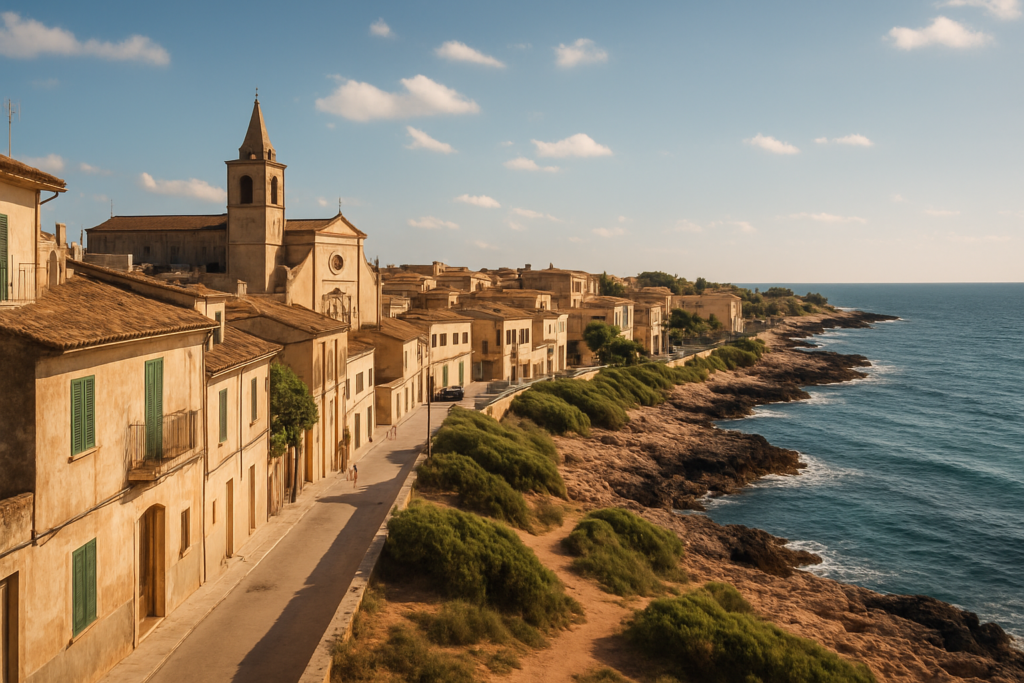
Llucmajor at a glance
- Location: about 15 km southeast of Palma Airport — short transfer options into Palma’s south coastline.
- Character: a town with a medieval core, later industrial growth around shoemaking and modern commercial activity.
- Population: the town itself counts 9,312 inhabitants; the municipality contains multiple urban settlements and extensive rural area.
- Economy: specialises mainly in shoes and also relies on tourism.
- Key sights: Church of Sant Miquel and a memorial for James III; layers of history from the 13th century onward.
- Territory: the largest municipality by surface area on Mallorca, which includes coastal hamlets such as s’Arenal, Cala Blava and Cala Pi.
- Business presence: the Centro Empresarial Globalia in the municipality houses the Air Europa headquarters.
Things to do in the town
The town core rewards slow wandering: a church with deep roots, civic monuments and local ateliers tied to the shoemaking tradition. Nearby coves and resort suburbs give you choices: beaches for a day, markets for shopping and Palma within easy reach for museums and nightlife.
| Attraction | What it is | Price/entry | Best for |
|---|---|---|---|
| Church of Sant Miquel | Parish church with medieval origins | – | History and architecture |
| Memorial for James III | Commemorative site linked to the town’s medieval past | – | History buffs |
| Town centre streets and shoemaking workshops | Local commerce and industrial heritage | – | Shopping, craft‑industry interest |
| Coastal settlements (Cala Pi, Cala Blava, s’Arenal) | Coves and beaches attached to the municipality | – | Beach days and family outings |
Church of Sant Miquel
The parish church is one of the clear historical anchors. The first church in the settlement dates back to 1259, and that long religious presence is reflected in the fabric and position of the current church. It’s a good stop to understand the town’s medieval origins and to see a civic building that has been central to local life for centuries.
The memorial for James III and medieval memory
A visible link to bigger historical events survives in the memorial dedicated to James III. The area’s medieval story is not abstract here: the 1349 Battle of Llucmajor marked the end of the independent Kingdom of Majorca, and the town was earlier elevated to villa status in 1300 by James II of Majorca. These facts shape local identity and explain monuments dispersed through the streets.
Shoemaking: 20th‑century industry and present commerce
During the 20th century the town developed into an industrial centre, especially for shoemaking. That past is still present in the economy — shoes remain a local speciality — and in the feel of the streets where workshops, stores and related businesses sit alongside cafes and municipal services. You won’t find large tourism‑only infrastructure in the centre; instead you’ll see real commerce and day‑to‑day life.
Best beaches in the area
The municipality includes several coastal settlements rather than a single continuous beachfront. Each cove or stretch has a different feel: some are built up and resort‑oriented, others are small coves better for a quieter swim.
| Beach | Character | Facilities / Notes |
|---|---|---|
| s’Arenal | Resort beach area attached to the municipality — longer sandy bay | – |
| Cala Blava | Coastal settlement with rocky and sandy parts; local residential vibe | – |
| Cala Pi | Small cove with a village above the inlet | – |
Llucmajor with kids
The area works for families who want a mix of low-key town life and easy beach access without the higher-rise resort experience. Kids tend to enjoy short trips to the coves and the less crowded parts of the coast; the town itself is compact enough for a relaxed stroll and short visits to shops and bakeries. Because the municipality is extensive, you can base in the town and reach different beaches on different days.
How to get to the town and get around
The town sits about 15 km southeast of Palma Airport, which makes transfers short compared with many island drives. That proximity also makes it practical as a quieter base while keeping Palma’s services and sights within easy reach.
Within the municipality, expect a mix of local roads linking the main settlements. The town centre is walkable; reaching coastal villages typically requires a short drive or local bus.
Where to stay
Accommodation choices in and around the municipality are distributed between the historic town centre and coastal settlements. Choose according to whether you prioritise cobbled streets and local shops, or immediate beach access.
- The town centre — suits travellers wanting local life, markets and a quieter eveningscape.
- s’Arenal — suits those who want a longer sandy bay and more recognisable resort facilities while remaining in the municipality.
- Cala Pi — suits people seeking a smaller cove, village atmosphere and direct sea access.
- Cala Blava — suits visitors who want a coastal residential feel with easy Palma access.
Best time to visit
There’s no single “best month” dictated in the information here, but the municipality’s mix of town and coast makes it flexible: shoulder seasons are good for quieter streets and easier beach access, while summer brings the typical higher activity on the coast. The local calendar includes traditional civic rhythms and market days that reflect long continuity, but consult event listings if you need specific festival dates.
History of the town
The settlement’s history is layered. The first church was erected in 1259, indicating an established community in the high medieval period. In 1300 James II raised the place to villa status, embedding it more firmly in the kingdom’s administrative map. The mid‑14th century brought a pivotal episode: the Battle of Llucmajor in 1349, which resulted in the end of the independent Kingdom of Majorca and left a lasting mark on local memory. By 1543 the town had enough commercial life to be granted the right to run markets on Wednesdays and Fridays by Charles V — a formal recognition of its role in local trade. The 20th century saw industrial growth focused on shoemaking; that industrial identity persists, and local modern history includes the return of democratic municipal governance with Miquel Clar Lladó becoming the first democratically elected mayor in 1979. Today commercial and corporate presences such as the Centro Empresarial Globalia — the headquarters of Air Europa — coexist with traditional industries and tourism.
Practical info
- Airport proximity: the town is about 15 km from Palma Airport, making it convenient for short transfers to the south coast.
- Municipal spread: the municipality is the largest on Mallorca by surface area and contains sixteen urban settlements — factor travel time if you plan to move between the hilltop village and coastal coves.
- Economy and shopping: shoes are a local speciality, and the town’s markets and shops reflect an ongoing commercial culture rather than pure tourist retail.
- Population context: the town itself houses 9,312 inhabitants; expect services aimed at residents as well as visitors.
- Business facilities: there is a modern business presence within the municipality; Air Europa’s headquarters are located in the Centro Empresarial Globalia.
Worth it for: travellers who want an authentic small Mallorcan town with history, honest commerce (especially shoes) and easy access to southern coves and Palma. Less so if: you want an uninterrupted stretch of resort beachfront with full-board hotels, high-rise promenades and heavily touristified nightlife.
How we assess this guide
This guide compiles verifiable facts from civic, historical and economic sources. We cross‑checked dates, municipal claims and institutional presences and flag important institutional facts such as the location of corporate headquarters and dates tied to civic identity. We do not present closed venues as open and we avoid conjecture about prices, precise transfer times or festival dates when solid, sourceable information is not available. This is not first‑hand field reporting; it is a synthesis of documented facts intended to set realistic expectations for visitors.
Frequently asked questions
How do I get from Palma Airport to the town?
The town is located about 15 km southeast of Palma Airport. That distance makes transfers relatively short; options include taxi, private transfer or local bus services linking Palma’s transport network to the southern coast. Check current timetables and taxi fares before you travel.
Is it expensive to visit?
Local information notes an economy focused on shoemaking and tourism; prices depend on the season, the type of accommodation and whether you dine in tourist‑oriented coastal spots or in the town’s resident cafes and markets. Specific cost comparisons require current market checks.
Which beach is best for families?
The municipality includes a range of coastlines. For longer sandy stretches consider the resort bay area of s’Arenal; for smaller, sheltered coves look at Cala Pi. Which is “best” depends on whether you want a long flat beach or a smaller cove experience.
How many days should I spend here?
A short stay of one to two nights works if you use the town as a base for nearby beaches and a day in Palma. Allow longer if you want to explore multiple coastal settlements, local markets and the shoemaking heritage at an unhurried pace.
Is the area good for families with children?
Yes: the mix of a compact town centre and nearby beaches gives families options. The municipality’s spread means you can change beaches between days; pick accommodation that suits how much time you want on the sand versus in town.
Can I get around without a car?
Walks around the town are easy; reaching the various coastal settlements typically requires a local bus or a car. Public transport exists but check current schedules for service levels to Cala Pi, Cala Blava and s’Arenal.
Is parking easy in the town?
The town is the municipal seat and has resident-focused streets and services. Parking availability varies by season and location — historic centres often have limited on‑street parking, while outskirts and coastal zones offer more space. Verify current local parking rules to avoid fines.
What can I do on a rainy day?
Indoor options in the town include visiting the parish church and browsing shoemaking shops and local stores. For broader indoor cultural options, Palma is nearby and offers museums and larger galleries if you want to escape the weather for a day.
When is the best time to visit?
There is no single “best” month specified here. Shoulder seasons typically offer quieter streets and comfortable conditions; summer is busiest at coastal settlements. Consult regional climate data and event listings if specific dates matter to you.
Are there markets or special shopping days?
Historically, market rights were granted in 1543 for Wednesdays and Fridays, reflecting a long tradition of market commerce. Markets and local shopping remain part of town life; check local notices for modern market days and hours.
Who was the first democratically elected mayor and why does that matter?
Miquel Clar Lladó became the first democratically elected mayor in 1979. This marks the town’s transition into post‑Franco democratic municipal governance, an important milestone in its recent civic history.
How is the town connected to Mallorca’s industrial past?
In the 20th century the town grew into an industrial centre especially for shoemaking. That heritage remains visible in local businesses and the economic focus on footwear production and trade.
Is there any significant corporate presence?
Yes. Among recent developments, the Centro Empresarial Globalia within the municipality houses the Air Europa headquarters, indicating a corporate footprint alongside traditional commerce.
What happened at the Battle of 1349?
The 1349 battle at Llucmajor was decisive: it resulted in the end of the independent Kingdom of Majorca. The event is a defining point in the area’s medieval history and informs several local memorials and civic references.
Which settlements are included in the municipality?
The municipality contains sixteen urban settlements; examples named in local records include the town itself, s’Arenal, Cala Blava and Cala Pi. The territory is the largest on the island by surface area, so distances between settlements can be greater than they appear on a map.
Plan the wider trip
Llucmajor on the map
This place is part of our Balearic Islands Guide: Mallorca, Menorca, Ibiza & Formentera — see every town, beach and cove we have mapped on that coast.
How this page is maintained. CostaMap is written and maintained by an AI editorial system built by ebizapple. Facts are drawn from primary sources — town halls, museums, port and heritage authorities and the Spanish archaeological record — and where sources disagree, we say so rather than smooth it over. Photographs marked as ours are taken on location. This page was last reviewed on 13 August 2026. Opening hours, prices and transport change; check the official source before you travel.