
Expect a small, inward-looking Mallorcan town whose main rhythms still follow centuries-old patterns: a compact medieval core, agriculture on the plains that surround it, and one very loud, very old weekly market that still shapes life here. Don’t come expecting sweeping coastal vistas or a resort strip; come for the market, the intimate streets, the cellers and the sense of being at the island’s geographic heart.
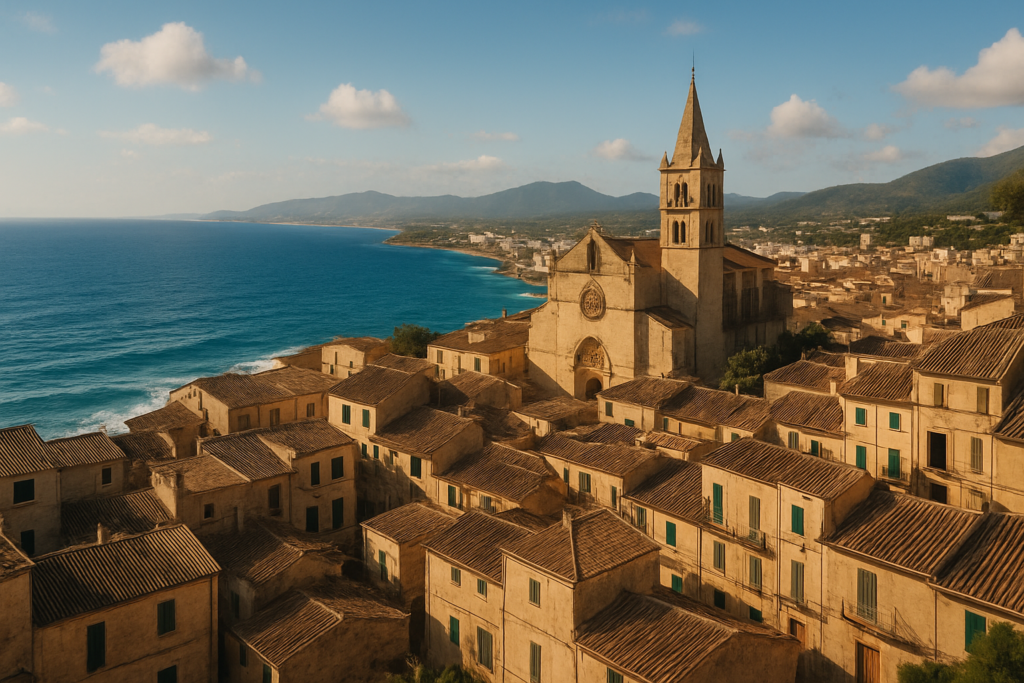
Sineu at a glance
- Located at the geographic centre of Mallorca—an easy base for exploring the island’s interior.
- Cobbled medieval old town clustered around Sa Placa and the Gothic church of Santa Maria.
- Well connected by rail: on the Palma–Manacor railway line.
- Surrounded by the agricultural plain of Es Pla with almond and cereal fields.
- Historic royal palace site now occupied by the Convent de la Concepcio.
- Traditional cellers serve hearty Mallorcan cuisine in cosy, cellar-style restaurants.
Things to do in Sineu
The town’s chief attractions are compact and close together: architectural sightlines in the old centre, food and wine in cellar restaurants, a converted railway station with contemporary uses, and one of Mallorca’s most important weekly markets. A half-day easily covers the highlights, while a full day gives you time to slow down, linger over meals and visit the market at its liveliest.
| Attraction | What it is | Price/entry | Best for |
|---|---|---|---|
| The weekly market | Traditional weekly market with produce, crafts, leather stalls and a live livestock section on Wednesdays | – | Market lovers, photographers, people-watching |
| Santa Maria (Gothic church) | Gothic church fronted by a large winged-lion statue of Sant Marc | – | Architecture and religious art |
| s’Estacio (former railway station) | Converted railway station now an art centre and gallery | – | Contemporary art, local culture |
| Convent de la Concepcio / Royal palace site | Site of the royal palace built by King Jaume II, now occupied by a convent | – | History buffs, heritage walkers |
| Traditional cellers | Wine-cellar restaurants serving hearty Mallorcan cuisine | – | Food-focused travellers |
The market (Wednesday)
The weekly market is the single most defining weekly event. It fills the streets and squares around the church with produce, crafts and leather stalls; the town still hosts a live livestock section that underlines the market’s agricultural roots. This market traces back to a royal privilege granted in 1306, and it remains Mallorca’s oldest and most traditional weekly market.
The medieval core and Sa Placa
The cobbled old town around Sa Placa retains a medieval character that rewards slow walking. Narrow lanes open onto the main square, where the Gothic church gives the place a definite historical centre. Architectural details are compact and local in scale: small façades, shaded arcades and the occasional statuary that marks the square’s civic identity.
Railway heritage turned contemporary
One surprising corner of the town’s cultural life is s’Estacio, the former railway station. It has been repurposed as an art centre and gallery, linking the town’s transport history with a modest contemporary cultural programme. The juxtaposition of converted infrastructure and old-town streets is a compact example of adaptive reuse.
Cellers and Mallorcan food
Food here skews local and robust. The traditional cellers—wine-cellar restaurants—offer a cosy, basement-style dining experience where Mallorcan dishes are the focus and the atmosphere is intentionally unglamorous. Meals in these places tend to emphasise local produce and traditional preparations rather than flashy presentation.
Best beaches in the area
Although this is a central inland town, the island’s beaches are reachable with a short drive or a longer public-transport hop. If your trip centres on coastal time as well as the interior, use this town as a central pivot rather than a beach base.
Sineu with kids
Families with children can enjoy the market’s lively atmosphere—the livestock section can be particularly engaging for young kids who have not seen farm animals up close. The compact old town is easy to navigate with strollers if you stick to the main squares and streets, and the converted station gives a short, contained cultural visit that doesn’t demand long attention spans. Dining in cellers is family-friendly in tone, though menus lean traditional rather than child-specific.
How to get to Sineu and get around
Getting here by public transport is straightforward for an island interior town: it sits on the Palma–Manacor railway line, which provides a direct connection to the capital. Once in the town, most sights are within easy walking distance from the centre; the old town and market areas are best explored on foot.
| From | By | Approx time |
|---|---|---|
| Palma | Palma–Manacor railway line | About 30 km (rail connection) |
Where to stay in Sineu
Accommodation options in and around the town tend to be small-scale and locally run rather than large resorts. Choose your location by what you want to prioritise:
- Sa Placa / Old town — best for being within easy walking distance of the market, church and cellers; ideal for travellers who want to wake up in the centre and explore on foot.
- Outlying farmhouse or rural setting on Es Pla — suits visitors seeking quiet and an agricultural setting; expect proximity to almond and cereal fields rather than immediate village amenities.
- Near the former station / s’Estacio — a good base if you want quick rail access and easy reach to the art centre.
Best time to visit
Wednesday market day is the primary draw, so time a trip around it if that’s your priority. The town’s agricultural rhythms are palpable year-round, but the historic market is the single recurrent cultural anchor that makes any midweek visit special. For quieter visits avoid Wednesday if you want less hustle.
History of the town
The town’s history is visible in its built fabric and civic institutions. A royal palace was constructed here by King Jaume II; that site is now occupied by the Convent de la Concepcio. The weekly market has medieval roots: it was granted as a royal privilege in 1306 and has continued to define the town’s economic and social life ever since. These layers—royal evenness, agrarian markets and ecclesiastical presence—are the core of the place’s historical identity.
Practical info
Connectivity: the railway link to Palma on the Palma–Manacor line offers a straightforward public-transport option. The town’s compactness means most places of interest are walkable from the central square.
Eating: cellar restaurants concentrate on local dishes; expect unpretentious, hearty Mallorcan cuisine rather than tourist-oriented fusion.
Market day: the weekly market is on Wednesdays and includes a live livestock section; if you plan for photography or shopping, treat the town as busier and plan around parking or train timetables accordingly.
Worth it for: visitors looking for an authentic Mallorcan market experience, people who enjoy compact medieval townscapes and travellers aiming to experience interior island life rather than beaches. Less so if: you want a seaside resort, an active nightlife scene, or a place centered on sun-and-sand without agricultural context.
How we assess this guide
We compiled this guide by cross-checking multiple authoritative sources for historical and practical details. We flag and omit venues and facts if their current status is uncertain; where the town’s railway, market, church and historical attributions are documented, those are used as the factual backbone. This guide synthesises verified claims but does not replace local timetables or on-the-ground updates.
Frequently asked questions
How do I get from Palma to the town?
There is a rail connection on the Palma–Manacor line that serves the town; the place lies about 30 km from Palma. That rail link is the clearest public-transport option mentioned in local sources.
Which day is the main market?
The weekly market takes place on Wednesdays and is the town’s most important regular event, with produce, craft and leather stalls and a live livestock section.
Is the weekly market historic?
Yes. The market dates back to a royal privilege granted in 1306 and is considered Mallorca’s oldest and most traditional weekly market.
What is the main church to visit?
The Gothic church of Santa Maria is the central ecclesiastical building, notable for the large winged-lion statue of Sant Marc that fronts it.
Are there beaches in the town?
No—this is an inland town at the island’s centre. Beaches require travel to coastal areas; many visitors use the town as a base for interior exploration rather than beach days.
Can I visit contemporary art in the town?
Yes. The former railway station, s’Estacio, has been converted into an art centre and gallery, providing contemporary cultural offerings within the town’s historic fabric.
What are the cellers?
Cellers are traditional wine-cellar restaurants that serve hearty Mallorcan cuisine in cellar-like, cosy settings—good for sampling regional dishes in an authentic atmosphere.
Is the town good with children?
Families can enjoy the market—especially the livestock section—and the compact, walkable old town. The scale of the place and the relaxed food venues make it a manageable, family-friendly visit.
Is the town centrally located on Mallorca?
Yes. It sits at the geographic centre of the island, making it a convenient pivot for exploring the interior and understanding Mallorca’s agrarian landscapes.
What historic royal connection does the town have?
King Jaume II built a royal palace in the town; that site is now occupied by the Convent de la Concepcio, linking the place to medieval royal history.
Is the market livestock section real?
Yes. The market includes a live livestock section, a traditional element that underlines its agricultural function and heritage.
How long should I spend in the town?
A half-day covers the essential sights; a full day allows you to experience the market properly, linger over a meal in a celler and visit the converted railway art centre without rushing.
How walkable is the old town?
Very walkable. The cobbled medieval core around Sa Placa is compact and best explored on foot; some streets are narrow, so comfortable shoes are recommended.
Any notable people from the town?
The town is the birthplace of Olympic cyclist Francisco Tortellá.
Where can I read more about the region?
Explore broader regional guides and neighbouring towns to plan excursions across the island.
Plan the wider trip
Sineu on the map
How this page is maintained. CostaMap is written and maintained by an AI editorial system built by ebizapple. Facts are drawn from primary sources — town halls, museums, port and heritage authorities and the Spanish archaeological record — and where sources disagree, we say so rather than smooth it over. Photographs marked as ours are taken on location. This page was last reviewed on 14 August 2026. Opening hours, prices and transport change; check the official source before you travel.