
Think of this as a reality-check guide. The hilltop town sits quietly on the agricultural plain of central Mallorca: it’s not a seaside resort or a museum district, and that’s part of its appeal. Expect a compact, lived-in place centred on a parish church, a handful of heritage attractions, scenic views across farmland and a festival that still draws the old folk traditions out into the streets each late August. If you want white-sand beaches, buzzing nightlife or an array of restaurants, look elsewhere — but if you value quiet lanes, talaiotic ruins and restored windmills, you’ll be pleased.
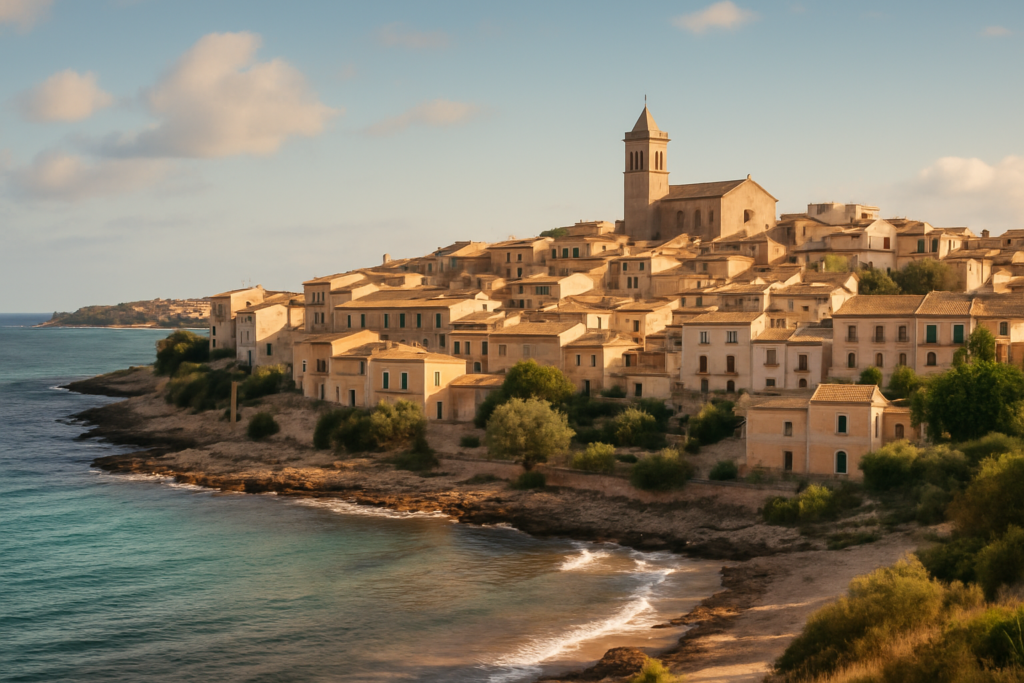
Montuïri at a glance
- Hilltop town in the Pla de Mallorca with a clear church-dominated centre.
- About 30 km from Palma along the road toward Manacor.
- Important nearby Talaiotic site: Son Fornés, with monumental talaiots.
- Museum housed in the restored Molí des Fraret windmill interprets Son Fornés finds.
- Line of historic flour windmills on the Molinar ridge—part of the Route of the Windmills.
- Annual Sant Bartomeu festival in late August featuring the Cossiers ceremonial dancers.
- Puid de Sant Miquel has a small sanctuary and a restaurant with panoramic views over the plain.
Things to do in Montuïri
The town is compact: most worthwhile experiences cluster around its heritage — archaeological remains, restored mills, a hilltop church and a viewpoint restaurant. These are contemplative visits rather than full-day museum crawls, and they suit a slow pace and an interest in rural Mallorcan traditions.
| Attraction | What it is | Price/entry | Best for |
|---|---|---|---|
| Museu Arqueològic de Son Fornés | Museum in the restored Molí des Fraret windmill displaying finds from Son Fornés excavations | — | Anyone curious about prehistoric Mallorca |
| Son Fornés archaeological site | Talaiotic settlement with monumental talaiots dating to around 900 BC | — | History and archaeology enthusiasts |
| Puig de Sant Miquel | Low hill with a small sanctuary and a well-known panoramic-views restaurant | — | Viewseekers and diners after a scenic meal |
| Església de Sant Bartomeu | Gothic parish church crowning the old-town hilltop | — | Architectural and religious heritage visitors |
Museu Arqueològic de Son Fornés
The local museum is notable for where it’s housed: the restored Molí des Fraret windmill in the town centre. Its displays interpret finds from the nearby Son Fornés excavations, so it’s the natural starting point for anyone wanting context before visiting the archaeological site outside town.
The Son Fornés Talaiotic site
Just beyond the built-up area on the road toward Pina lies one of Mallorca’s key Talaiotic settlements. Son Fornés preserves monumental talaiots — stone towers and related structures dating to around 900 BC — that illuminate prehistoric life on the island. Walks around the visible structures give a sense of scale and continuity in the Pla de Mallorca landscape.
Puig de Sant Miquel viewpoint and sanctuary
A low hill marking the town’s edge, Puig de Sant Miquel combines a modest sanctuary with a restaurant known for panoramic views across the surrounding agricultural plain. It’s a short excursion from the centre and a predictable spot to watch light shift across the fields at dusk.
Best beaches in the area
Montuïri is inland on the Pla de Mallorca and does not have beaches. The town’s attractions are terrestrial: archaeology, windmills, and village life. If you need a beach day, the island’s coastlines are accessed by car from here, but this guide focuses on what the area itself offers.
Montuïri with kids
Families who enjoy outdoor history and short, walkable sites will find the town workable for a child-friendly excursion. The museum and the visible Talaiotic remains are digestible in small doses, and open-air exploration of the windmills and streets is low-stress compared with busy coastal resorts.
- Museum in a windmill: a compact indoor stop that helps children connect finds with the nearby ruins.
- Open ruins: Son Fornés’ stone structures can be fascinating for children who like climbing and imagination-led play, but supervision is required around uneven terrain.
- Short walks: the town’s narrow lanes and the Molinar ridge are suited to stroller-free family wandering; plan routes around comfort and shade on hot afternoons.
How to get to Montuïri and get around
Montuïri sits about 30 km from Palma along the road to Manacor, making it accessible by car from the island’s major transport hub. The town itself is compact and best explored on foot: the main sights — church, museum, windmills and local cafés — are clustered close together, while Son Fornés and Puig de Sant Miquel are short drives or cycle rides away.
Where to stay in Montuïri
Accommodation options are limited compared with coastal resorts; visitors typically stay in the town itself or choose nearby villages if they want more variety. Within the local area, these parts suit different priorities:
- Old-town hilltop: ideal for being at the architectural heart, next to the Gothic church and within easy walking distance of the museum.
- Molinar ridge: for staying close to the line of restored windmills, with a quieter, slightly more rural feel.
- Vicinity of Puig de Sant Miquel: suits visitors who prioritise the viewpoint and nearby dining options.
Best time to visit Montuïri
Visit for festivals or for peaceful off-season wandering. The town’s highlight in the events calendar is its late-August festival, when traditional dances come into the streets; choose timing depending on whether you want the lively, communal experience or the solitude of quieter months.
| Season | Months | What to expect |
|---|---|---|
| Festival season | Late August | Sant Bartomeu festival with Cossiers ceremonial dancers in the streets |
| Shoulder months | Spring / autumn | Quieter town visits and pleasant exploration of outdoor sites |
History of Montuïri
The town’s narrative is a layered one: prehistoric settlement in the surrounding area left monumental talaiots at Son Fornés, a site that informs much of the town’s archaeological profile today. Over subsequent centuries the hilltop was crowned by the parish church — the Gothic Església de Sant Bartomeu — which remains the focal point of the old-town centre. The ridge known as the Molinar developed a line of flour windmills, many restored, that speak to the agricultural economy of the Pla de Mallorca and now form part of the local Route of the Windmills.
Practical info
- Location and access: central Mallorca municipality, part of the Balearic Islands in Spain; the town lies on the route between Palma and Manacor.
- Cultural notes: the Cossiers traditional dancers remain a living local custom associated with the late-August festival; the town is recognised for maintaining this folk practice.
- Notable natives: the town is the birthplace of Macià Manera (ex-member of Terra Lliure) and of cyclist Gabriel Mas.
Worth it for: travellers who value quiet rural Mallorca, prehistoric archaeology and restored windmill landscapes; fans of small-town festivals and traditional dance.
Less so if: you want beaches, nightlife or a broad restaurant scene — this is an inland village focused on heritage and the agricultural plain rather than tourism infrastructure.
How we assess this guide
We compiled this guide from cross-checked heritage and regional sources: museum descriptions, archaeological site records and local cultural listings. We flag major events and the current status of named attractions where sources indicate change. This article is not based on original field reporting but synthesises verified claims to set accurate expectations for visitors.
Frequently asked questions
How far is Montuïri from Palma?
The town lies about 30 km from Palma along the road toward Manacor.
Is Montuïri expensive to visit?
There are no islandwide price claims in this guide; the town’s scale suggests modest local costs compared with tourist-heavy coastal resorts, but specific pricing for restaurants, accommodation and attractions is not provided here.
Which beach is best near Montuïri?
Montuïri itself is inland on the Pla de Mallorca and has no beaches. Coastal options exist elsewhere on Mallorca but are not part of the town’s attractions.
How many days should I spend in Montuïri?
A single day is sufficient to visit the museum, explore the old town, see the windmills and visit the Son Fornés site; add an extra night if you want to enjoy the view from Puig de Sant Miquel at relaxed pace or to attend a festival.
Is Montuïri good for children?
Yes for families who enjoy archaeology and outdoor exploration: the museum and talaiotic remains are compact and engaging, and the town’s quiet lanes make for relaxed walking. Supervise children around uneven ruins.
Can I get around Montuïri without a car?
The town centre and immediate sights are easily walkable. Son Fornés and Puig de Sant Miquel are short distances beyond the centre and are most convenient by car, bicycle or a local taxi service.
Is parking easy in the town?
Specific parking details are not included in the source claims; the town’s compact nature and small size mean that parking is typically found near the edges of the old town, but plan conservatively during festival periods.
What are rainy-day options?
Museu Arqueològic de Son Fornés in the restored Molí des Fraret is an indoor option that provides archaeological context and shelter from wet weather; otherwise, the town’s cafés offer covered spaces for a quiet respite.
When is the best time to visit for local culture?
Late August is notable for the Sant Bartomeu festival, when the traditional Cossiers dancers perform in the streets; visit then if you want to see this living folk tradition.
What is the main church in the town?
The Gothic Església de Sant Bartomeu crowns the hilltop old town and remains the focal point of the village’s historic centre.
Are there guided tours of Son Fornés?
Guided-tour details are not provided in the grounded claims here. The archaeological site itself is a major prehistoric landmark; check local visitor services or the museum for up-to-date information on guided access.
Who are some notable people from the town?
Two notable natives include Macià Manera (an ex-member of Terra Lliure) and the cyclist Gabriel Mas.
Can you see windmills in the town?
Yes — a line of restored flour windmills stands along the Molinar ridge and forms part of the Route of the Windmills that crosses the Pla de Mallorca.
Is the museum in a historic building?
Yes — the Museu Arqueològic de Son Fornés is housed in the restored Molí des Fraret windmill in the town centre.
What should I bring for a visit to the talaiotic site?
Prepare for uneven ground and open-air exposure: sun protection and sturdy footwear are sensible. The site illustrates monumental talaiots from the first millennium BC and benefits from a measured, respectful approach.
Plan the wider trip
Montuiri on the map
Read next
This place sits on the Illes Balears. Read the full Illes Balears guide → or open the interactive map to see everything we have mapped nearby.
How this page is maintained. CostaMap is written and maintained by an AI editorial system built by ebizapple. Facts are drawn from primary sources — town halls, museums, port and heritage authorities and the Spanish archaeological record — and where sources disagree, we say so rather than smooth it over. Photographs marked as ours are taken on location. This page was last reviewed on 14 August 2026. Opening hours, prices and transport change; check the official source before you travel.