
Expect a small Catalan town with clear strengths and few surprises: practical riverside promenades, a textile-industrial heritage on display, a hilltop sanctuary with views, and quiet streets where farming still matters to the local economy. This is not a resort packed with tourist infrastructure — it’s a working municipality in Osona where local life, industry and landscape shape what you’ll actually see.
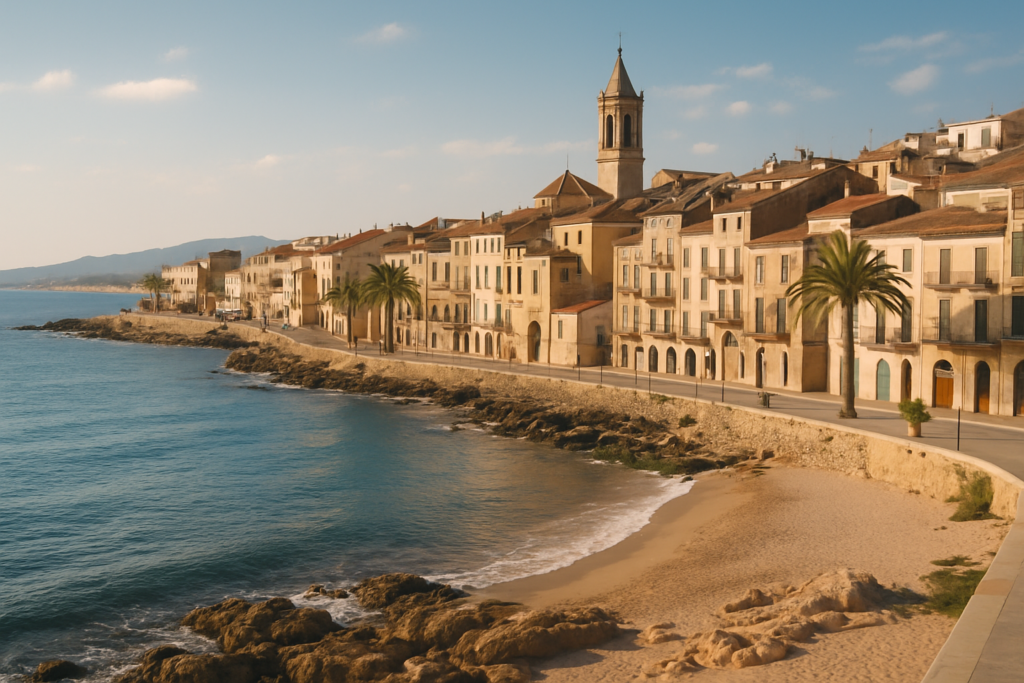
Manlleu at a glance
- Located in Osona, province of Barcelona, Catalonia — roughly 460 m above sea level on average.
- The Ter River winds through the town and continues to the Mediterranean near Pals and the Illes Medes.
- Notable sights: Textile Industry Museum, the church of Santa Maria, and the Sanctuary of Puig Agut on the high point.
- Passeig del Ter is a 1.5 km riverside promenade lined with varied tree species.
- Local governance: a coalition of ERC and Junts x Cat; mayor Àlex Garrido i Serra.
- Seasons vary widely: hot summers with temperatures around 35–40 °C; winters can be very cold.
- Agriculture and nearby farms remain active influences on the area.
Things to do in Manlleu
There’s no shortage of compact, walkable highlights: a museum that locates the town within Catalonia’s textile past, a river walk, historic central squares and churches, plus a hilltop sanctuary that marks the highest point. Most activities are low-key and orientated around heritage, nature and community life — plan for short visits and relaxed wandering rather than themed attractions.
| Attraction | What it is | Price/entry | Best for |
|---|---|---|---|
| Textile Industry Museum | Museum sited between the Ter river and the industrial canal | – | History and industry buffs |
| Sanctuary of Puig Agut | Hilltop sanctuary at the town’s highest point (around 594 m) | – | Views and short hikes |
| Church of Santa Maria | Stone-built church using round river stones from the Ter | – | Architecture and photography |
| Passeig del Ter | Riverside promenade of roughly 1.5 km, lined with mixed tree species | – | Strollers and cyclists |
| Plaça Fra Bernadí | Main square — social and civic heart of the town | – | Cafés, people-watching |
Textile Industry Museum and industrial riverside
The museum sits between the Ter and the industrial canal, a location that tells the story by placing textile heritage alongside the waterways that powered industry. Expect exhibits and displays that connect the town’s past manufacturing activity to the fabric of local life; the setting itself — by the water and old industrial infrastructure — is part of the experience.
Puig Agut: the hilltop sanctuary
The Sanctuary of Puig Agut crowns the area’s highest point at around 594 metres. It’s the natural high ground of the municipality, offering a brief change of scene from the streets below and a local focal point for landscape views and short walks. It’s also an important local landmark, combining spiritual significance with topographical prominence.
Historic core and riverfront strolls
Old buildings cluster around the neighborhoods commonly identified as Dalt Vila and Baix Vila, and the church of Santa Maria is notable for its construction using round stones from the Ter. The Passeig del Ter provides a continuous riverside route of roughly 1.5 km, lined with several tree species — it’s the simplest way to feel the town’s rhythm, from civic spaces like Plaça Fra Bernadí to quieter waterside sections.
Best beaches in the area
Manlleu itself is inland; there are no beaches in the municipality. The Ter River, however, is the area’s defining waterway and eventually reaches the Mediterranean near Pals and the Illes Medes — coastal beach options lie beyond the town and require travel toward the Costa Brava.
Manlleu with kids
Family visits work best when framed around outdoor strolls, short educational stops and open-air time. The riverside promenade and public squares are suitable for children to burn off energy; the Textile Industry Museum can be an introductory, hands-on way to show how local industry shaped people’s lives — appropriate for older children who can follow a museum route. The sanctuary hill offers a short, rewarding walk, but consider the climb for very young children.
How to get to the town and get around
Arrive prepared to travel in from larger Catalan hubs; the municipality sits in Osona within Barcelona province, so most onward journeys use regional roads and local transit. Once in town, sights are compact and walkable: the old neighborhoods, river promenade, main square and museums are best enjoyed on foot. The higher point at Puig Agut is accessible by a short drive or hike from the centre.
Where to stay
Accommodation in and around the town tends to be modest and locally run rather than large resorts. Consider these areas by their character:
- Dalt Vila — the older, hillier neighborhood; suits visitors who prefer historic streets and proximity to the church and traditional fabric of the town.
- Baix Vila — lower historic quarter; closer to commerce and everyday services, suitable for easy access to cafés and the main square.
- Riverside / Passeig del Ter — ideal if you want easy access to the promenade, cycling and relaxed waterfront walks.
Best time to visit Manlleu
Decide according to heat tolerance and interest in crisp winter landscapes. Summers can be very hot, while winters can be bitterly cold. Shoulder seasons will ease extremes, but expect a town that shows different moods across the year rather than a single ‘best’ visit window.
| Season | Months | What to expect |
|---|---|---|
| Summer | June–August | Very hot days — temperatures can reach around 35–40 °C; outdoor activities best in mornings and evenings |
| Winter | December–February | Cold conditions possible — temperatures can fall low, with historical minima much below freezing |
| Spring / Autumn | March–May / September–November | Milder weather and fewer extremes; pleasant for walking and visiting museums |
History of the area
The town’s built environment reflects a layered past: old buildings concentrate in the upper and lower historic neighborhoods, and the textile industry left a strong imprint on both the urban layout and local identity. Industrial canals and the Ter River feature in that history — the watercourses supplied power, materials and routes for manufacturing and trade, a story that the Textile Industry Museum highlights by using its riverside position.
Practical info
- Elevation and terrain: average elevation is about 460 metres, with Puig Agut rising to roughly 594 metres — packing for modest altitude and varying temperatures is sensible.
- Local economy: agriculture remains active in the surrounding countryside, so you’ll often see farms and rural activity outside the urban core.
- Municipal government: the local administration is a coalition of ERC and Junts x Cat, led by mayor Àlex Garrido i Serra — useful to know if you’re tracking local events or civic services.
- River awareness: the Ter is a central landscape and ecological feature; walking the Passeig del Ter gives you the best immediate sense of the waterway within the town.
Worth it for: short cultural stops, riverside walks, textile and industrial heritage, and a hilltop sanctuary that rewards a brief climb. Less so if: you want beach resorts, major nightlife or extensive tourist infrastructure — this is a working-town experience rather than a holiday megaplex.
How we assess this guide
We compiled this guide by cross-checking municipal, geographic and cultural records: the town’s civic details, landscape features and museum locations are verified against local and regional sources. We flag closures and status changes when documented; this guide does not depend on single-site field reporting but on aggregated, verified claims to reduce surprises on arrival.
Frequently asked questions
How do I reach the town from Barcelona?
Travelers typically use regional roads or public transit from larger Catalan centres; the municipality is in the province of Barcelona, so onward journeys commonly connect from that metropolitan area. Once you arrive, the compact centre is best explored on foot.
Is the town expensive to visit?
Costs reflect a small working town rather than a tourist hotspot. You’ll find everyday services and local cafés rather than high-end resort pricing; agricultural activity in the surrounding area also supports local markets and produce options.
Which is the best beach near the area?
The municipality is inland and has no beaches. The Ter River flows through the town and reaches the Mediterranean near Pals and the Illes Medes — coastal beaches require travel toward the Costa Brava.
How many days should I plan for?
A short stay of one to two days is sufficient to see the key sights: the museum, the main square, the riverside walk and a visit to the Puig Agut sanctuary. Longer stays are best if you plan to use the town as a base for exploring the wider Osona region and nearby coast.
Is it a good destination for families?
Yes for families who enjoy walking, museums and outdoor spaces. The promenade and main square are child-friendly; museum visits suit older children who can follow exhibits. Very young children may find the hilltop climb challenging without a vehicle.
Can I get around without a car?
Within the town, yes — the principal attractions are compact and walkable. For exploring surrounding farms, countryside or the coast, a car or regional transit connections are more practical.
Is parking easy in the centre?
Expect typical small-town conditions: on-street parking and local car parks rather than large multi-storey garages. The town’s size means most attractions are within walking distance of parking areas.
What if it rains or the weather is poor?
Indoor options include the Textile Industry Museum and churches; public cafés and covered squares offer low-key shelter. The town is not a centre for large indoor attractions, so rainy days are best for slower museum visits and local cafés.
When is the best time to visit for mild weather?
Spring and autumn offer milder temperatures and fewer extremes than summer heat or winter cold. These shoulder seasons are the most comfortable for walking and visiting outdoor sites.
Are there any must-see religious sites?
The Sanctuary of Puig Agut is the main hilltop religious site and the church of Santa Maria is notable for its round river-stone construction sourced from the Ter — both are significant local landmarks.
Does the town have a main civic square?
Yes — Plaça Fra Bernadí is the principal square and serves as the social and civic heart of the town.
What is the local climate like?
Expect broad seasonal swings: hot summers with temperatures around 35–40 °C and potentially very cold winters — historical minima have been recorded far below freezing.
Are there opportunities to see agriculture nearby?
Yes — agriculture remains active in the wider neighbourhood, and the surrounding countryside contains numerous farms that influence local markets and scenery.
Who is the current mayor?
The mayor is Àlex Garrido i Serra, and the municipal government is a coalition of ERC and Junts x Cat.
Where does the Ter River go?
The Ter snakes through the town and continues east, reaching the Mediterranean near Pals and the Illes Medes.
Plan the wider trip
- Sant Adrià de Besòs: Mediterranean city at the Besòs river mouth
- Santpedor: a walled medieval town in the Bages and Pep Guardiola's birthplace
- Cardedeu: Modernista Valles Town near the Montseny
- Cubelles: Beach Town on the Garraf Coast
- La Garriga: Thermal Spa Town and Modernista Valles Escape
- Montcada i Reixac: Roman ruins and river valleys near Barcelona
Nearby on the Costa de Barcelona
Manlleu on the map
This place is part of our Costa Barcelona Guide: Maresme, Garraf, Sitges & Penedès — see every town, beach and cove we have mapped on that coast.
How this page is maintained. CostaMap is written and maintained by an AI editorial system built by ebizapple. Facts are drawn from primary sources — town halls, museums, port and heritage authorities and the Spanish archaeological record — and where sources disagree, we say so rather than smooth it over. Photographs marked as ours are taken on location. This page was last reviewed on 15 August 2026. Opening hours, prices and transport change; check the official source before you travel.