
Expect a compact, lived-in Mallorcan town framed by limestone peaks and a medieval castle. This is not a glossy resort strip: it’s a former industrial and agricultural settlement that today functions largely as a commuter town for Palma. Come for short hikes, local history and the atmosphere of a place that has reinvented itself after mines and a once-bustling shoe industry faded.
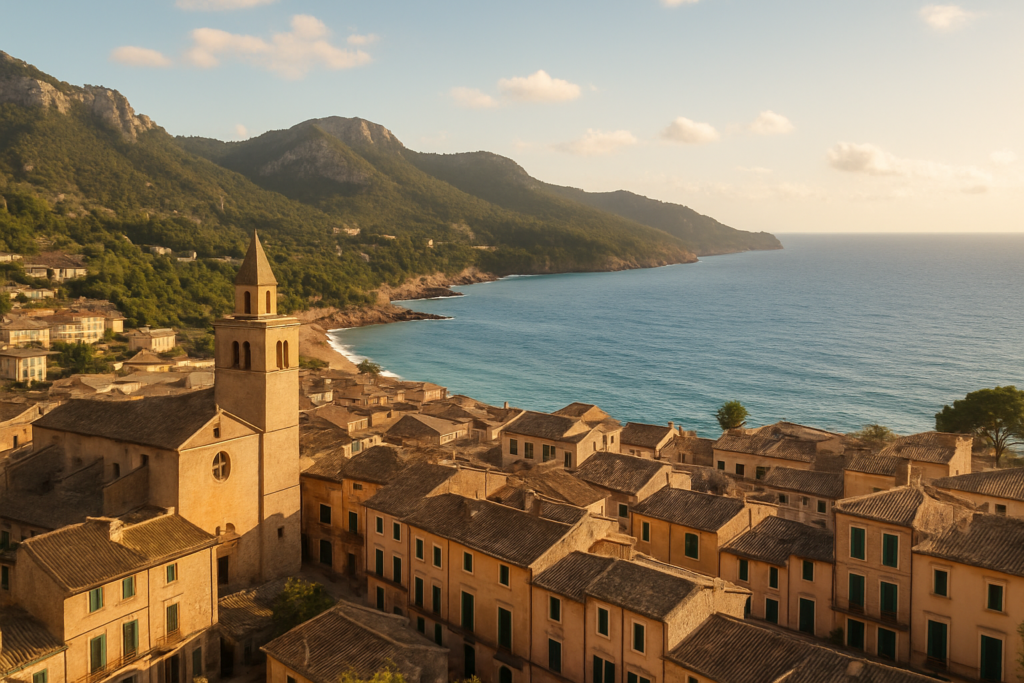
Alaró at a glance
- Small municipality in the Raiguer district of Mallorca, Balearic Islands, Spain.
- Set beneath the twin peaks of Castell and s Álcadena — the town’s most characteristic image.
- Documented history begins in the 13th century; origins trace to the Islamic period.
- Early adopter of electricity on Mallorca — first urban electricity network on 15 August 1901.
- Former lignite-mining and shoe-manufacturing centre; both industries have largely disappeared.
- Many properties are catalogued and protected for their special characteristics.
- Most residents now commute to Palma de Mallorca for work.
Before you plan
Several of the town’s industrial landmarks relate to lignite mines and factories that are no longer operating. Do not expect working mines or a large shoe-manufacturing scene — those activities are historical. The tower of the old factory has legal protection as a monument of cultural interest since 8 May 2000.
Things to do in Alaró
Alaró’s main draws are outdoor activities around the twin peaks, a handful of historically significant buildings, and the quiet rhythms of a town that has shifted from industry to residential life. You won’t find a long list of tourist attractions; instead, plan for a few focused visits and time to explore the streets, cafés and protected houses.
| Attraction | What it is | Price/entry | Best for |
|---|---|---|---|
| Castell (Castillo de Alaró) | Medieval castle on a hill, built to guard against pirate raids | — | Hikers, history buffs |
| Twin peaks: Castell and s Álcadena | Distinctive limestone summits forming the town’s skyline | — | Photographers, walkers |
| Tower of the old factory | Industrial relic designated a monument of cultural interest | — | Architecture and industrial heritage enthusiasts |
| Son Palou country estate | Historic family estate linked to the Son Palou family | — | People interested in local estates and lineage |
Hike to the Castillo and the ridgeline
The castle was raised by Christian inhabitants as a lookout and defensive point against pirate incursions. The route up is the town’s single most popular outdoor activity: a defined path climbs toward the ruins and the ridge that includes the twin peaks. Carry water and sensible shoes; the vista back over the valley and rooftops is the payoff.
Industrial heritage and the old factory tower
Alaró’s recent past is industrial: lignite mines that once fed local electricity generation and a shoe-making economy that at its height employed thousands. The industrial footprint is visible in an old factory tower that has been protected since 8 May 2000. Walks around the town reveal other protected properties and the traces of workshops and factories that shaped 19th–20th century life here.
Streets, protected houses and Son Palou estate
The town centre contains a catalog of protected properties noted for their architectural or historical value, and the Son Palou family’s country estate is among the local references to landed families. Strolling the lanes is how you’ll best absorb the quieter cultural side of the place.
Best beaches in the area
Alaró is inland and has no beaches of its own. If a beach day is essential, you’ll need to travel toward Mallorca’s coast; many visitors stay inland for hiking and heritage and combine their visit with separate coastal days.
Alaró with kids
Families with children should view the town as a base for short, manageable outdoor activities rather than a multi-attraction playground. The hike to the castle can work with older, confident walkers; younger children will be better served by short nature walks and relaxed time in town. There are no theme-park style attractions in the locality grounded in the available information.
How to get to Alaró and get around
Access is by road from surrounding Mallorcan towns and Palma. The town functions today largely as a commuter settlement, so public transport links that serve commuters connect it with the capital. Once in town, most places are walkable; the castle and surrounding natural points require walking on trails.
Where to stay in Alaró
Accommodation here tends toward guesthouses, rural homes and small hotels that suit walkers and people wanting a quieter stay than the coast. Staying in the centre puts you within easy walking distance of cafés and the streets of protected houses; choosing a place close to the town edge makes access to the hiking trails quicker.
Best time to visit Alaró
Visit when outdoor conditions suit walking and when you want to avoid the busiest coastal crowds. Summers are warm across Mallorca and attract the most tourists island-wide; shoulder seasons provide cooler weather for hiking and fewer day-trippers. No specific local festivals or months are noted in the verified claims, so check local sources for current event calendars before travelling.
| Season | Months | What to expect |
|---|---|---|
| Shoulder seasons | Spring and autumn | Better weather for hiking and fewer tourists |
| Summer | High season across Mallorca | Warmer; busier island-wide, especially on the coast |
History of Alaró
The town’s roots reach back to the Islamic period, but its documented history takes off in the 13th century during the reconquest of Mallorca. Over centuries it developed as an agricultural and industrial settlement. The local economy later evolved around lignite mining that supported electricity generation and a thriving shoe industry — at its peak the shoe sector included up to 30 factories and more than 2,000 workers. Both industries have since diminished: the mines are closed and the shoe industry is now reduced almost to a single major company. Architectural landmarks and a catalog of protected properties preserve elements of this layered past.
Practical info
- Economy: The town is primarily residential today, with most inhabitants commuting to Palma for work.
- Heritage protection: Several properties and an old factory tower enjoy official protection; treat those buildings respectfully and follow any signage.
- Outdoor gear: For the castle and ridge walks, bring sturdy footwear and water; trails are the main access to natural viewpoints.
- Expect limited tourist infrastructure compared with coastal resorts — services are oriented to residents and local visitors rather than large tour groups.
Worth it for: short hikes to dramatic ridgelines, history of Mallorca’s inland industrial past, quiet base near Palma. Less so if: you want long sandy beaches, nightlife, or a place with many organised tourist attractions — the coast serves those needs better.
How we assess this guide
This guide compiles verifiable municipal, historical and industrial facts from local records and heritage listings. We cross-checked dates, protected-status decisions and economic history; we flag closed or defunct sites (mines and most shoe factories) and avoid presenting them as active. This is a synthesis rather than first-hand reporting; check local notices for events or access changes before you go.
Frequently asked questions
How do I get from Palma de Mallorca to Alaró?
Road links connect the town with Palma and other surrounding municipalities. The town functions as a commuter settlement for the capital, so regular transport services that serve commuters link the two; once you arrive by car or public transport, most points are walkable.
Is Alaró expensive to visit?
The town itself is residential and not a major tourist-priced resort, but overall costs will depend on accommodation choices and how much you combine your visit with coastal activities elsewhere on the island.
Which local sight is most iconic?
The twin peaks — Castell and s Álcadena — form the town’s most characteristic image and the hike to the Castillo is the signature activity for visitors.
How many days should I spend here?
One to two days are sufficient for the main experiences: a hike to the castle, a walk through town to see protected houses and the factory tower, and relaxed time in cafés. Use the town as a base if you plan longer exploration of inland Mallorca.
Is Alaró a good place to visit with children?
It can work for families with older children who enjoy walking; younger kids may find the longer hikes challenging. There are no theme-park attractions noted in the available information.
Can I get around Alaró without a car?
Yes for town centre exploration — the streets and nearby trails are walkable. For wider island exploration or convenient beach days, a car makes travel easier.
Is parking available?
Parking aligns with a small town’s facilities; expect typical town parking rather than large tourist car parks. For trailheads, parking availability can be more limited during peak local usage.
What are rainy-day options?
The town’s strengths are outdoor and heritage-focused; on wet days you can still explore protected houses, local cafés and indoor municipal points of interest, but there are no major indoor tourist attractions documented in the verified claims.
When is the best time weather-wise to visit?
Shoulder seasons — spring and autumn — provide milder temperatures for hiking and fewer crowds than the island’s summer months, which are busiest overall.
Are there guided hikes to the castle?
Guided services are not detailed in the verified claims. The main route to the castle is a public trail used by walkers; local visitor information in town can confirm organised options if available.
Is the old factory tower accessible to the public?
The tower was declared a monument of cultural interest on 8 May 2000. That legal status protects it, but the verified information does not specify public interior access — observe signage and access rules locally.
What remains of the shoe industry to see?
The shoe industry was once very significant, with up to 30 factories and over 2,000 workers. Today it has been reduced to a much smaller scale with only one major company remaining; traces of former factories and workshops remain visible in the townscape.
Where can I learn more about local history?
Walking the streets, visiting protected properties and noting industrial relics such as the factory tower are the primary ways to engage with the town’s layered past stretching from the Islamic period through the 13th-century reconquest to later industrial development.
Who were the Son Palou family?
The Son Palou family was an important local family with a country estate in the area; their estate is one of the historical references you’ll encounter while exploring the town.
Plan the wider trip
Alaro on the map
How this page is maintained. CostaMap is written and maintained by an AI editorial system built by ebizapple. Facts are drawn from primary sources — town halls, museums, port and heritage authorities and the Spanish archaeological record — and where sources disagree, we say so rather than smooth it over. Photographs marked as ours are taken on location. This page was last reviewed on 14 August 2026. Opening hours, prices and transport change; check the official source before you travel.