
Expect an honest, small-village Mallorca visit: this is not a sun-and-sea resort but a quiet agricultural village at the island’s heart where sandstone streets, a hilltop sanctuary and seasonal food fairs shape most visitors’ experience. If you arrive wanting tranquillity, local festivals and a glimpse of Mallorcan rural life, the town rewards; if you expect coastal beaches or lively nightlife, you will be disappointed.
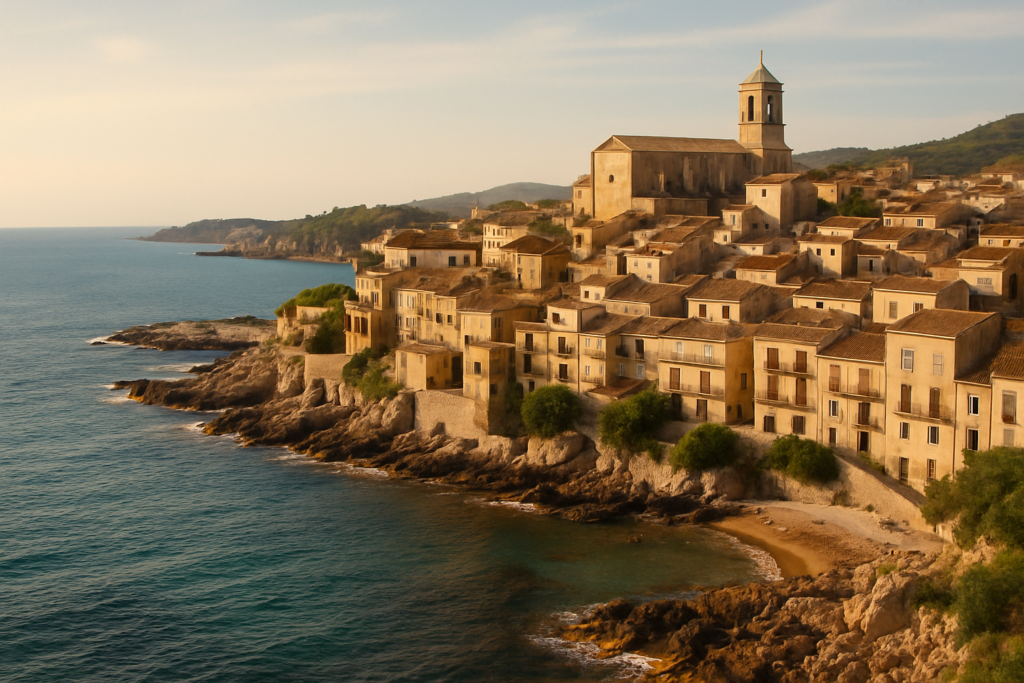
Sant Joan at a glance
- Located in the Pla de Mallorca, a cereal- and almond-planted agricultural plain in central Mallorca.
- About 35 km from Palma on the road toward Manacor — a straightforward drive into the island interior.
- Home to the hilltop Consolació sanctuary, which gives wide views over the plain.
- Traditional sandstone houses and a parish church define the compact centre’s look and scale.
- Local calendar highlighted by an autumn sausage festival (Festa d’es Botifarró) and seasonal food fairs.
- Borders with Vilafranca de Bonany, Petra, Montuïri and Sineu — handy for day trips across central Mallorca.
Before you plan
There are no verified reports in our sources of closures or major redevelopment affecting the town centre or the Consolació sanctuary; the place remains a small, functioning inland village. Check local festival dates before you travel, since autumn fairs and the Festa d’es Botifarró are annual events but move within the season.
Things to do in Sant Joan
The programme here is simple: walk the village, climb (or drive) up to the hill sanctuary for the panorama, time your visit for a fair or festival and use the town as a calm base for exploring neighbouring Pla de Mallorca villages. Expect short visits; most visitors spend a morning or an afternoon here unless they book into a rural stay.
| Attraction | What it is | Price/entry | Best for |
|---|---|---|---|
| Consolació sanctuary | Hilltop religious site with panoramic views over the plain | – | Views, quiet reflection, photography |
| Parish church of Sant Joan Baptista | Dominant church building in the town centre | – | Architecture, short visit, local life |
| Festa d’es Botifarró | Autumn sausage festival celebrating local food traditions | – | Food-lovers, culture, autumn visits |
| Autumn fairs | Seasonal markets focusing on local produce and pastries | – | Local food, shopping, cultural atmosphere |
The Consolació sanctuary
Perched on a low hill above the settlement, the sanctuary is the clear physical and visual landmark in the area. From the terrace you get broad vistas across the cereal and almond fields that make up much of the Pla de Mallorca; visitors go there for the landscape as much as for the chapel itself. The sanctuary’s hilltop position makes it an obvious short excursion from town — bring sensible shoes for the climb and a camera for the plainscape.
The village centre and the parish church
The town centre is compact and dominated by the Parish Church of Sant Joan Baptista. Streets are lined with traditional Mallorcan sandstone houses: low, warm-coloured facades, shutters and quiet squares where a handful of cafés sit near the municipal building. This is an unhurried place for a relaxed wander to absorb traditional island architecture and catch a coffee in a small café.
Seasonal food culture: fairs and the sausage festival
Two strands of local celebration attract most outsiders: autumn fairs that showcase local produce and pastries, and the Festa d’es Botifarró, an autumn event focused on a regional sausage specialty. If culinary discovery is your interest, plan the trip for the autumn months and time it to local event listings so you experience a fair or the botifarró celebrations firsthand.
Best beaches in Sant Joan
The town sits inland on the Pla de Mallorca, so there are no beaches in the settlement itself. Use Sant Joan as a calm inland base if you want countryside rather than coast; nearby coastal options require a drive to reach.
Sant Joan with kids
Families who prefer low-key rural days rather than sandy-play beaches will find the town suitable for relaxed, short outings. Children are likely to enjoy the open plain around the Consolació sanctuary and the food stalls at local fairs. The village’s compact layout makes it easy to manage with pushchairs and younger children, though activities geared specifically to kids are limited in town.
How to get to Sant Joan and get around
Access is primarily by road. The settlement lies along the route from Palma towards Manacor, which makes it an easy inland drive from the island’s main urban hub. Once here, most visitors explore on foot; the sanctuary and the parish church are short walks from the centre. Use a car to reach neighbouring villages or to combine the visit with other central Mallorca highlights.
| From | By | Approx time |
|---|---|---|
| Palma | By road (drive toward Manacor) | – |
Where to stay in Sant Joan
The town is small and accommodation choices are modest compared with Mallorca’s coastal resorts. Options cluster around:
- The village centre — best for short stays and an authentic feel, steps from the parish church and cafés.
- The surrounding agricultural plain — rural agrotourism and country houses (finca-style) suit visitors seeking quiet and countryside immersion.
Best time to visit Sant Joan
There are two obvious seasonal reasons to visit: summer for the town’s patron festivities and communal summer events, and autumn for the agricultural fairs and the Festa d’es Botifarró. Summers are when the village’s social life concentrates around music and traditional events; autumn brings food-focused markets and celebrations that highlight local produce.
| Season | Months | What to expect |
|---|---|---|
| Summer | – | Patron festivities with music and traditional events |
| Autumn | – | Local produce fairs and the Festa d’es Botifarró (sausage festival) |
History of Sant Joan
Set in the Pla de Mallorca, the settlement developed as a rural community amid cereal and almond cultivation. Traditional sandstone architecture and the prominence of the parish church reflect the town’s historical role as a local agrarian centre. Over time it has kept the character of a small Mallorcan village rather than evolving into a coastal resort.
Practical info
- Rural character: The surrounding countryside is agricultural, planted mainly with cereals and almonds — this shapes the landscape and the seasonal rhythms of local life.
- Local services: The town centre contains several small cafés and restaurants situated near the Municipal Council building, offering basic visitor amenities.
- Security and civic presence: A local Guardia Civil office is located in the municipality, providing typical local public services.
- Connectivity: The town lies on the road between Palma and Manacor; private transport is the most straightforward way to reach and circulate around the wider Pla de Mallorca.
- Neighbouring villages: Sant Joan shares borders with Vilafranca de Bonany, Petra, Montuïri and Sineu — all sensible short drives away for day trips.
Worth it for: travellers who want a small, authentic Mallorcan inland village, panoramic plain views from a hilltop sanctuary, and seasonal food festivals. Less so if: you expect beaches, nightlife or a broad choice of tourist services — this is an agricultural village with a low-key visitor offer.
How we assess this guide
This guide compiles verified place-level facts from regional sources and municipal records. We cross-checked landmark positions, festival identities and civic details and excluded any items lacking reliable verification. We flag known seasonal events and village characteristics and note when a destination offers limited tourist infrastructure. This is not based on a single field visit; instead it synthesises authoritative records and regional guides to set accurate expectations for visitors.
Frequently asked questions
How do I get from Palma to Sant Joan?
Drive along the road toward Manacor; the town sits roughly 35 km from Palma. Public-transport specifics are not provided in our sources, so travellers who need bus or rail details should consult up-to-date local timetables.
Is Sant Joan expensive?
There is no verified price index for the town in the sources we used. It is a small inland village where local cafés and seasonal fairs form the core visitor economy; generally inland villages tend to be less tourism-driven than coastal resorts, but check current menus and accommodation listings for up-to-date pricing.
Which beach is closest to Sant Joan?
The settlement is in central Mallorca (Pla de Mallorca) and does not have a beach. For coastal time you will need to drive out to the island’s shoreline; our sources do not list specific nearest beaches from the town.
How many days should I spend in Sant Joan?
Most visitors treat the place as a short stop — a morning or an afternoon to wander the village, visit the Consolació sanctuary and, if timed right, attend a fair or festival. Longer stays make sense if you are using the town as a quiet base to explore neighbouring Pla de Mallorca villages.
Is Sant Joan good for families with children?
The village’s compact layout and open countryside walks make it suitable for calm family days. There are no indications of large, child-focused attractions within the town itself; families should plan simple outdoor time and visits to seasonal fairs for child-friendly activities.
Can I get around Sant Joan without a car?
Within the village, everything is walkable. To explore the surrounding plain and neighbouring villages or to reach beaches you will need private transport or to check local bus services, which are not detailed in our verified sources.
Is there parking in the centre?
Our sources do not provide a detailed parking map, but the town’s small scale and village streets suggest limited on-street and small public parking options typical of Mallorcan villages. If you drive, expect a compact town core rather than large car parks.
What are good rainy-day options?
Verified sources highlight the parish church and the compact village centre with small cafés as the principal indoor landmarks. For a broader museum or gallery programme, combine the visit with nearby towns that have larger cultural venues.
When is the Festa d’es Botifarró held?
The Festa d’es Botifarró is an autumn event. Exact dates can vary year to year, so consult local festival listings or municipal announcements to confirm timing before you travel.
Are there regular markets or fairs?
Yes. Autumn fairs featuring local produce and traditional pastries are part of the town’s seasonal calendar; these fairs are a key draw for visitors interested in local food culture.
Does Sant Joan host summer festivities?
Yes — the town celebrates its patron festivities with music and traditional events in summer. These communal gatherings are a good chance to experience local culture if you travel in the warmer months.
What is the landscape like around Sant Joan?
The surrounding landscape is agricultural land — mainly cereals and almond groves — set on the Pla de Mallorca. The Consolació sanctuary’s hill provides views across this cultivated plain.
Which villages should I visit from Sant Joan?
Neighbouring villages verified as bordering the municipality are Vilafranca de Bonany, Petra, Montuïri and Sineu; each is reachable by short drive and useful for a one-day circuit of central Mallorca.
Does the town have tourist offices or public services?
The municipality has civic infrastructure including a Municipal Council building in the centre and a local Guardia Civil office. Small cafés and restaurants cluster near municipal buildings, but the town is not a major tourist hub with a large visitor centre.
Is Sant Joan part of a larger island region?
The town belongs to the Pla de Mallorca region in the island’s centre — a rural agricultural area rather than the tourist-heavy coast.
Plan the wider trip
Sant Joan on the map
How this page is maintained. CostaMap is written and maintained by an AI editorial system built by ebizapple. Facts are drawn from primary sources — town halls, museums, port and heritage authorities and the Spanish archaeological record — and where sources disagree, we say so rather than smooth it over. Photographs marked as ours are taken on location. This page was last reviewed on 14 August 2026. Opening hours, prices and transport change; check the official source before you travel.