
Expect a compact, cliff-top village whose reputation as a magnet for writers and musicians is the main sightseeing draw. The setting — a string of stone houses clinging to a ridge in the Tramuntana — is lovely, but narrow lanes, limited parking and a handful of focal attractions mean a visit is best paced: arrive early, walk deliberately, and plan onward travel rather than expecting a full-day programme of attractions.
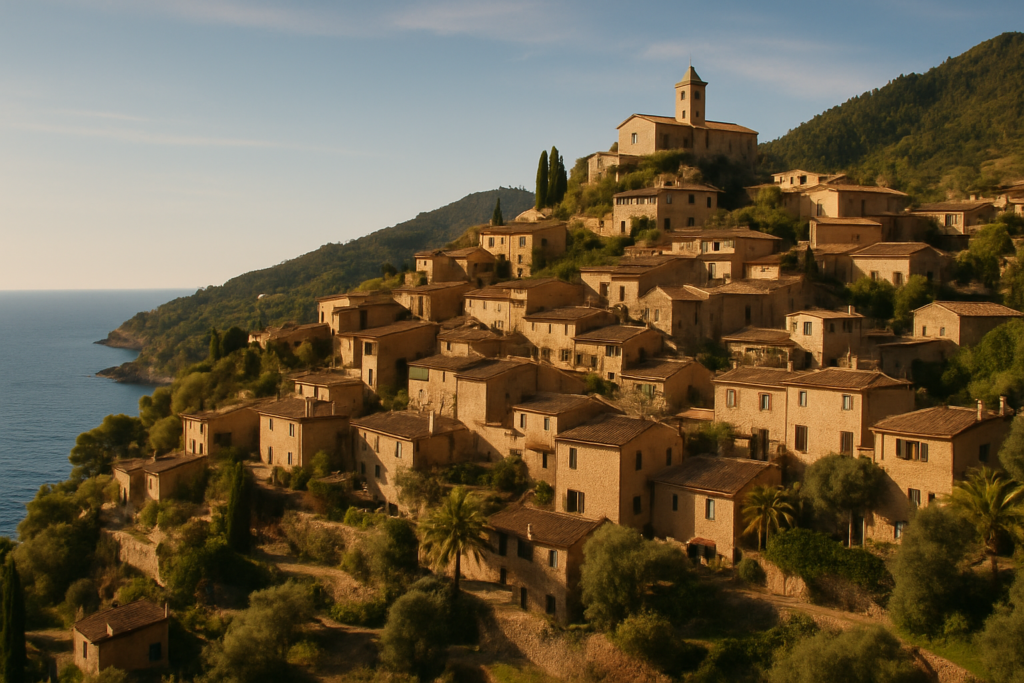
Deià at a glance
- Small coastal village in the Serra de Tramuntana on Mallorca, about 16 kilometres north of Valldemossa.
- Reached via the winding Ma-10 mountain road from Valldemossa and Sóller; parking in the village is limited.
- Known for literary and musical residents—Robert Graves is the most famous; his house is now a museum.
- Key walking links: the GR 221 long-distance Ruta de Pedra en Sec passes through the village.
- Coastal highlights include the pebble cove of Cala Deià and the Sa Foradada peninsula, with its distinctive hole in the rock.
- Son Marroig, an historic estate with gardens and coastal views, lies on the road near the village and is open to visitors.
Things to do in Deià
The village is compact and most visitors come for a handful of linked experiences: short coastal walks, a visit to the Graves house and to Son Marroig, and a relaxed cove lunch. The layout makes it ideal for combining a morning walk with a late lunch and a quiet evening listening to the music scene that persists in low-key ways.
| Attraction | What it is | Price/entry | Best for |
|---|---|---|---|
| Sa Foradada | Rocky peninsula with a distinctive natural hole, reached by a downhill trail from Son Marroig | — | Coastal views, photography, short hikes |
| Son Marroig | Former estate of Archduke Ludwig Salvator with gardens and coastal viewpoints | Open to visitors | History, sea views |
| Cala Deià | Small pebble cove below the village, reached on foot, known for seasonal cove-side restaurants | — | Seafood lunch, swimming (pebble beach) |
| Sant Joan Baptista church & cemetery | Hillside parish church; cemetery where Robert Graves is buried | — | Literary history, quiet reflection |
| Robert Graves’ house (museum) | Writer’s home converted to a museum | — | Literary history, museum visits |
| GR 221 Ruta de Pedra en Sec | Long-distance drystone-route trail that passes through the village | — | Multi-day hikes, day walks to Valldemossa or Sóller |
Sa Foradada and Son Marroig — the coastal combo
The short walk from the Son Marroig estate down to Sa Foradada is the single most reliable way to combine dramatic coastal scenery with a bit of local history. Son Marroig sits on the coast road near the village and its gardens and viewpoints look toward the rock formation with the hole that gives the peninsula its name. The descent to the headland is downhill and exposed in places, so wear shoes suitable for rocky paths and bring water. The hole in the rock is the photographic focus; visitors tend to time the walk to catch golden-hour light for the best photos.
Cala Deià — lunch by the sea
The pebble cove below the village is reached on foot by a steep path. The cove’s small pair of seasonal restaurants are the reason most people come here: they turn the rocky inlet into a quiet lunch destination. Don’t expect a wide sandy beach; the shore is pebbly and compact, so plan accordingly if you care about shoreline comfort. The approach from the village is pleasant and provides a good short down-and-up walk.
Literary trails: Robert Graves and the old village
The parish church of Sant Joan Baptista crowns the hillside and its cemetery is the gravesite of Robert Graves. His former home is open as a museum, and his life in the village—he returned after the war, set up the Seizin Press with Laura Riding and used the village as a setting for stories such as “Hercules my Shipmate”—is the main thread of the literary trail around the lanes. The village’s reputation as a writers’ and musicians’ refuge is tangible in plaques, house histories and the museum exhibits.
Best beaches in Deià
There aren’t long sandy crescents here; the shoreline around the village is mostly rocky or pebble coves. If you’re looking for lounging and sand, nearby towns on the flatter south coast are better options. For what Deià offers, the small pebble cove below the village is the highlight.
| Beach | Character | Facilities / Blue Flag |
|---|---|---|
| Cala Deià | Small, pebble cove below the village; compact and sheltered | Pair of seasonal cove-side restaurants; facilities are limited |
Deià with kids
The village can work for families who enjoy short walks and outdoor scenery rather than child-specific attractions. The short trails to the cove and viewpoints are suitable for children used to walking, but the steep lanes and rocky shorelines mean supervision is necessary. The smaller scale and quiet evenings are a bonus for families seeking a relaxed stay rather than an action-packed holiday. The Ruta de Pedra en Sec offers sections that are family friendly if you pick short stretches between villages.
How to get to Deià and get around
Access is dominated by the Ma-10 mountain road: a scenic but winding route from Valldemossa and Sóller. Because parking in the village is limited, many visitors schedule early arrivals or choose public transport options where available. Once in the village, most places are on foot; lanes are narrow and some houses are accessible only by steps or pedestrian alleys.
| From | By | Approx time |
|---|---|---|
| Valldemossa | By road along the Ma-10 | — |
| Sóller | By road along the Ma-10 | — |
History of Deià
The village’s modern identity is built around a long stretch of cultural history rather than ancient monuments. Robert Graves was one of the earliest foreigners to settle here; he returned after the war, stayed until his death, set up the Seizin Press with Laura Riding and used the local landscapes in many stories. The artistic attraction continued through the 20th century with visiting and resident musicians from the Canterbury scene—Kevin Ayers, Robert Wyatt and Daevid Allen among them—and later performers such as Mick Jagger, Mark Knopfler and Mike Oldfield played in the village in the late 1980s. The house where Graves lived is preserved as a museum, and the parish church and cemetery retain their place in the village narrative.
Practical info
Parking: Village parking is limited; many visitors arrive early or use buses to avoid the squeeze. Roads: the Ma-10 is scenic but winding — allow extra time and expect narrow stretches. Accessibility: the old village is hilly with steps; mobility-impaired visitors will find parts of the village difficult. Connectivity: Son Marroig is open to visitors and provides a clear coastal viewpoint that requires a short walk to reach nearby attractions. Culture: the place retains an active musical and literary heritage that informs local signage and museum content.
Worth it for: visitors who prize literary history, coastal walks with dramatic viewpoints and a compact, atmospheric village atmosphere. Less so if: you want long sandy beaches, bustling nightlife or a village that’s easy to explore by car without parking worries.
How we assess this guide
We compiled this guide from multiple verified local sources and heritage records. We cross-checked cultural claims (literary and musical residents), routes and road access with transport and walking-route references. We flag practical limitations such as limited parking and steep lanes so you can plan to avoid disappointment. This guide does not include first-hand reporting from a single day’s visit; it synthesises verified published information to set accurate expectations.
Frequently asked questions
How do I get to the village from Valldemossa?
Take the Ma-10 mountain road north from Valldemossa; the route is winding and scenic. Allow extra time for narrow stretches and possible traffic. Parking in the village is limited, so consider arriving early or taking public transport where available.
Is the village expensive to visit?
The destination is a small, high-profile village with boutique hotels and niche restaurants; costs can be higher than in non-tourist inland towns. Expect to pay premium prices at the well-known cove-side restaurants and for smaller guesthouses that capitalise on the view.
Which beach is best in the area?
The pebble cove below the village—Cala Deià—is the local focal point. It’s a small, sheltered pebble beach with a couple of seasonal restaurants rather than a long sandy stretch.
How many days should I spend here?
A half-day to a full day suits most visitors who want to see the main sights: a quick walk to Son Marroig and Sa Foradada, a visit to the Robert Graves house and a meal at the cove. Hikers using sections of the GR 221 may stay longer as a staging point between nearby villages.
Is the village good for families with children?
It can work for families who enjoy short walks and quiet outdoor time. Steep lanes and rocky shores mean close supervision is needed for younger children, and facilities are limited compared with larger resorts.
Can I get around without a car?
Yes—once in the village most sightseeing is on foot. However, access by public transport depends on seasonal bus services; many visitors arrive early by bus to avoid parking issues. The Ma-10 from neighbouring towns is the main road link.
Is there public parking available?
Parking exists but is limited. Because the lanes are narrow and spaces few, many visitors either arrive early or choose to travel by bus to avoid the parking squeeze.
What are rainy-day options?
Indoor options are limited: the Robert Graves house is a museum and provides cultural shelter from bad weather, and small cafés give a place to linger. The village’s compact nature means you can move between spots without lengthy outdoor exposure.
When is the best time to visit?
Timed visits in spring or autumn avoid the height of summer crowds on the narrow lanes and keep walking conditions pleasant. The area’s attractions are coastal and outdoor, so mild, settled weather improves the experience.
Is Son Marroig open to visitors?
Yes. Son Marroig, the former estate of Archduke Ludwig Salvator of Austria, lies on the coast road near the village and is open to visitors, with gardens and views over the Sa Foradada peninsula.
Can I walk from here to Sóller or Valldemossa?
Sections of the GR 221 long-distance Ruta de Pedra en Sec pass through the village and link it on foot with Sóller and Valldemossa. These are established walking routes; pick sections that match your fitness and time.
Who are some famous people associated with the village?
The village’s cultural history includes Robert Graves (writer), who lived here and whose house is now a museum. Musicians linked to the place range from Canterbury-scene figures such as Kevin Ayers, Robert Wyatt and Daevid Allen to later performers who played there, including Mick Jagger, Mark Knopfler and Mike Oldfield. Anaïs Nin also visited in the 1920s and wrote a short story set on the village beach.
Is Robert Graves buried in the village?
Yes. The cemetery beside the parish church of Sant Joan Baptista is where Robert Graves is buried.
Are there notable music events or venues?
The village has a long musical pedigree and a low-key live tradition rather than large festivals. Over the decades musicians inspired by or resident in the area have performed locally; visitors can still find occasional concerts or small-venue performances linked to the artistic community.
Is there a connection to literary presses?
Robert Graves collaborated with Laura Riding in Deià to set up the Seizin Press, a historically significant small press associated with their literary circle.
Plan the wider trip
Deia on the map
This place is part of our Balearic Islands Guide: Mallorca, Menorca, Ibiza & Formentera — see every town, beach and cove we have mapped on that coast.
How this page is maintained. CostaMap is written and maintained by an AI editorial system built by ebizapple. Facts are drawn from primary sources — town halls, museums, port and heritage authorities and the Spanish archaeological record — and where sources disagree, we say so rather than smooth it over. Photographs marked as ours are taken on location. This page was last reviewed on 13 August 2026. Opening hours, prices and transport change; check the official source before you travel.