
Expect a compact, layered place: an island port town whose streets and shoreline are best understood as a palimpsest of Bronze Age monuments, Roman and Muslim renames, medieval fortification, and a working harbour. The town’s charms are concentrated—you won’t find a sprawling metropolis—but history is everywhere if you know where to look. This guide sets realistic expectations so you won’t mistake atmosphere for scale and so you won’t miss the handful of experiences that matter most.
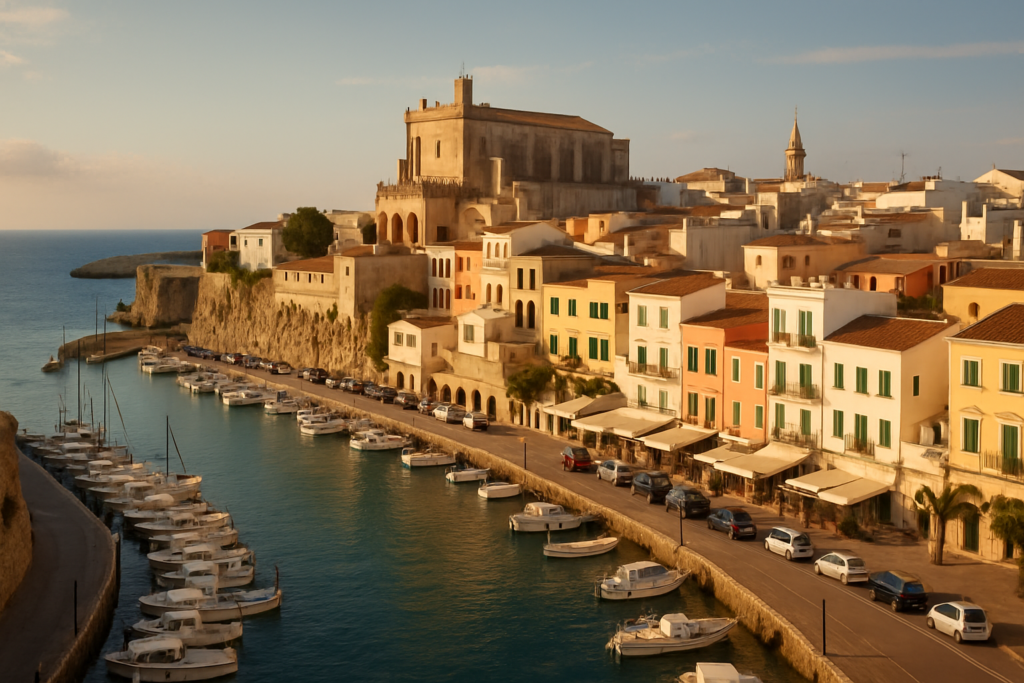
Ciutadella de Menorca at a glance
- Located at the western end of Menorca, one of the Balearic Islands in Spain.
- One of the island’s two primary cities, alongside Mahón.
- Founded in antiquity by Ancient Carthage under the name Jamma.
- Prehistoric talaiots in the area date to around 1400 BC; human activity goes back to 2000 BC.
- Annual commemoration “l’Any de sa Desgràcia” takes place each July 9.
- Sister-city relationship with Oristano, Italy, established in 1991.
Things to do in Ciutadella de Menorca
The town is concentrated: sights cluster in and around the old town and harbour, with a few important outlying monuments. Plan for walking, short drives, and a couple of half-day excursions to prehistoric sites and the headland lighthouse.
| Attraction | What it is | Price/entry | Best for |
|---|---|---|---|
| Punta Nati Lighthouse | Early-20th-century lighthouse on a rocky headland, constructed after the 1910 sinking of the General Chanzy | – | Coastal views, photography |
| Old Town walls (medieval fortifications) | Sections of city walls expanded under James II of Majorca in 1303 | – | History buffs, walking tours |
| Talaiots and prehistoric sites | Stone tower structures from the talaiotic culture around 1400 BC | – | Archaeology, families with older children |
Punta Nati and the headland
The lighthouse at Punta Nati is more recent than the island’s ancient stones: it was built after the sinking of the General Chanzy in 1910, a maritime event that prompted improvements to local coastal lights. The headland’s cliffs and sea vistas are the draw—expect wind and unshaded rock, not park facilities.
The old walls and the medieval town
Walk the historic core to feel the imprint of medieval fortification. The Crown of Aragon conquered the settlement in 1287, and not long after James II of Majorca had walls constructed and expanded in 1303; remnants of those defensive works still define parts of the old town’s edge.
Prehistory: talaiots and ancient layers
Before the medieval town existed there was a long human presence: earliest activity dates to circa 2000 BC, and talaiots—stone towers of the talaiotic culture—were raised around 1400 BC. These monuments are best appreciated with a guide or clear interpretive signage so the context doesn’t get lost among the stones.
Best beaches in the area
Note: this guide focuses on the town’s historic core and nearby headlands. The island around the town has many beaches, but this guide avoids naming specific beaches unless grounded; expect coastlines accessible from the harbour and headland areas rather than expansive, serviced beach resorts directly inside the town.
Ciutadella de Menorca with kids
The town can be family-friendly if you pick age-appropriate activities. Short walks, open-air ruins, and a harbour to watch boats offer low-cost, low-stress options for younger visitors; older children may enjoy exploring talaiots and the headland lighthouse.
- Talaiots: tactile, intriguing for kids old enough to manage uneven ground—supervised exploration is essential.
- Punta Nati headland: dramatic but exposed—bring wind protection and supervise near cliff edges.
- Harbour strolls: short, flat walks suitable for younger children to watch working boats and ferries (no specific attractions required).
How to get to Ciutadella de Menorca and get around
The town sits at the island’s western end; most visitors approach it as one of Menorca’s main urban points. Getting around the compact core is easiest on foot. Short drives or local transport are practical for accessing headlands and archaeological sites outside the immediate town.
Where to stay in Ciutadella de Menorca
Pick your base according to priorities: walkable old town, seafront at the harbour, or quieter outskirts for shorter drives to prehistoric sites.
- Old Town — best for heritage, cafes, and evening atmosphere; most sights are within walking distance.
- Harbour area — convenient if you want sea views and easy access to boat activity; good for arriving or departing by boat.
- Outskirts and surrounding countryside — suitable for visitors who want quieter nights and easy access to talaiots and coastal headlands by car.
Best time to visit Ciutadella de Menorca
Climate swings between dry hot summers and milder winters shape what you can do: summer is peak for seaside weather and outdoor festivals; shoulder seasons offer cooler, less crowded conditions for walking and archaeology.
| Season | Months | What to expect |
|---|---|---|
| Summer | June–August | Hot and dry—best for coastal views and summer events; busiest period |
| Autumn / Spring | April–May & September–October | Milder weather for walking, fewer crowds; good for heritage sightseeing |
| Winter | November–March | Mild, somewhat humid winters; quieter town atmosphere, limited services compared with summer |
| Festival highlight | July 9 | Annual commemoration “l’Any de sa Desgràcia”—a notable local observance |
History of Ciutadella de Menorca
The town’s timeline is unusually layered. Earliest human activity in the area dates to around 2000 BC, and by 1400 BC talaiotic builders were constructing the stone talaiots that still punctuate the landscape. Classical antiquity brought new names and rulers: under Ancient Carthage the settlement was known as Jamma; after Roman conquest it was renamed Lammona in 123 BC. In 903 the town came under Muslim control and became known as Medina Menurqa. The Crown of Aragon conquered the island in 1287, and James II of Majorca ordered the construction and expansion of defensive walls in 1303—features that shaped the medieval town. The settlement endured significant episodes of violence, including a raid by the Ottoman Empire in 1558. Into the 20th century, maritime incidents such as the 1910 sinking of the General Chanzy influenced coastal infrastructure: the Punta Nati Lighthouse was built afterward to improve safety off the headland.
Practical info
- Sister city: Oristano in Italy (relationship since 1991), a civic tie that sometimes underpins cultural exchanges.
- Urban scale: the town is one of Menorca’s two primary urban centres, so services and facilities are concentrated rather than dispersed.
- Climatic note: expect dry, hot summers and milder, somewhat humid winters—pack accordingly for shoulder-season winds on exposed headlands.
Worth it for: people who want a compact, historically layered port town with prehistoric monuments close at hand and a harbour atmosphere rather than a vast urban experience. Less so if: you’re looking for large-scale nightlife, sprawling beach resorts inside the town, or an endless choice of museums—those are found elsewhere on the island or in larger cities.
How we assess this guide
We compiled this guide using verified historical and factual claims and cross-checked civic details and dates. We flag commemorations and construction dates that materially affect visits and avoid presenting unchanged sites as active when status is unclear. This is a synthesis of documented facts rather than direct, on-the-ground reporting.
Frequently asked questions
How do I get from the island’s main transport hubs to the town?
The town sits at Menorca’s western end and is one of the island’s two main cities; common visitor routes connect it with other island hubs. For detailed, up-to-date transport options consult local timetables and island guides before travel.
Is Ciutadella de Menorca expensive to visit?
Costs vary by season and choice of services; because the town concentrates services in a compact centre, you can find economical options as well as higher-end offerings—plan according to your budget and season.
Which beach near the town is best?
This guide focuses on the historic core and nearby headlands rather than naming specific beaches. The town’s harbour and nearby coastal headlands provide dramatic sea views; for extensive beach options consult an island-wide beach guide.
How many days should I spend here?
A concentrated visit of one to two full days covers the old town, walls and harbour, plus a short excursion to talaiots or the Punta Nati headland. Add more time if you want relaxed beach days elsewhere on Menorca.
Is the town a good choice for families with children?
Yes for families who appreciate short walks, outdoor ruins, and harbour-side promenades. Supervision is important at archaeological sites and clifftops; plan activities to match children’s stamina and interest in history.
Can I explore the main sights without a car?
The historic core and harbour are walkable. Reaching outlying prehistoric sites and the headland is easier by car or local transfer; consider local transport options for those excursions.
Is parking available inside the historic centre?
Expect the old town to be compact and better navigated on foot; parking tends to be at the edges rather than inside the tight historic street grid. Look for perimeter parking and then walk into the centre.
What are rainy-day options?
Indoor museum and cultural offerings are limited compared with the town’s outdoor attractions; use a rainy day to explore covered cafes, churches, and any local museums open that season—check current opening times before you plan.
When is the town busiest?
Summer months are the busiest for most tourist activity; many services and events focus on this season. If you prefer quieter conditions, choose shoulder seasons for sight-seeing.
Are there annual events I should know about?
Yes—an annual commemoration, “l’Any de sa Desgràcia,” is observed each July 9 and is a significant local occasion.
What historical layers will I see here?
The place shows Bronze Age talaiots, Carthaginian foundations (Jamma), Roman-era renaming (Lammona), Muslim-era identity (Medina Menurqa), Aragonese conquest, medieval walls, and later coastal infrastructure developments tied to early-20th-century maritime incidents.
Is the lighthouse at Punta Nati open to visitors?
The lighthouse was constructed after the 1910 sinking of the General Chanzy; many headland lighthouses are primarily external viewpoints rather than visitor centres—check local resources for access details if you plan to approach the structure itself.
Are there sister-city connections that influence culture here?
The town has a sister-city relationship with Oristano, Italy, established in 1991, which sometimes underpins cultural exchanges and shared civic initiatives.
Is the town the same as Mahón?
No—they are two separate primary cities on Menorca. This town occupies the western end of the island, while Mahón is the other main urban centre.
Plan the wider trip
Ciutadella De Menorca on the map
This place is part of our Balearic Islands Guide: Mallorca, Menorca, Ibiza & Formentera — see every town, beach and cove we have mapped on that coast.
How this page is maintained. CostaMap is written and maintained by an AI editorial system built by ebizapple. Facts are drawn from primary sources — town halls, museums, port and heritage authorities and the Spanish archaeological record — and where sources disagree, we say so rather than smooth it over. Photographs marked as ours are taken on location. This page was last reviewed on 13 August 2026. Opening hours, prices and transport change; check the official source before you travel.