
A small, stony village tucked high in a citrus valley — expect cobbled alleys, quiet mornings and serious hills underfoot. This guide tells you what the place really is: a walking hub in a UNESCO-inscribed mountain landscape, a tightly preserved population centre with modest services, and a genuine village rather than a resort. Read on to avoid the usual let-downs (crowds on the main square, limited nightlife, steep streets unsuitable for large luggage) and to plan the visit that fits.
Fornalutx at a glance
- On the GR221 Ruta de Pedra en Sec through the Serra de Tramuntana UNESCO cultural landscape — a walking gateway.
- Set in the Sóller valley amid citrus and olive terraces, often listed among Spain’s prettiest villages.
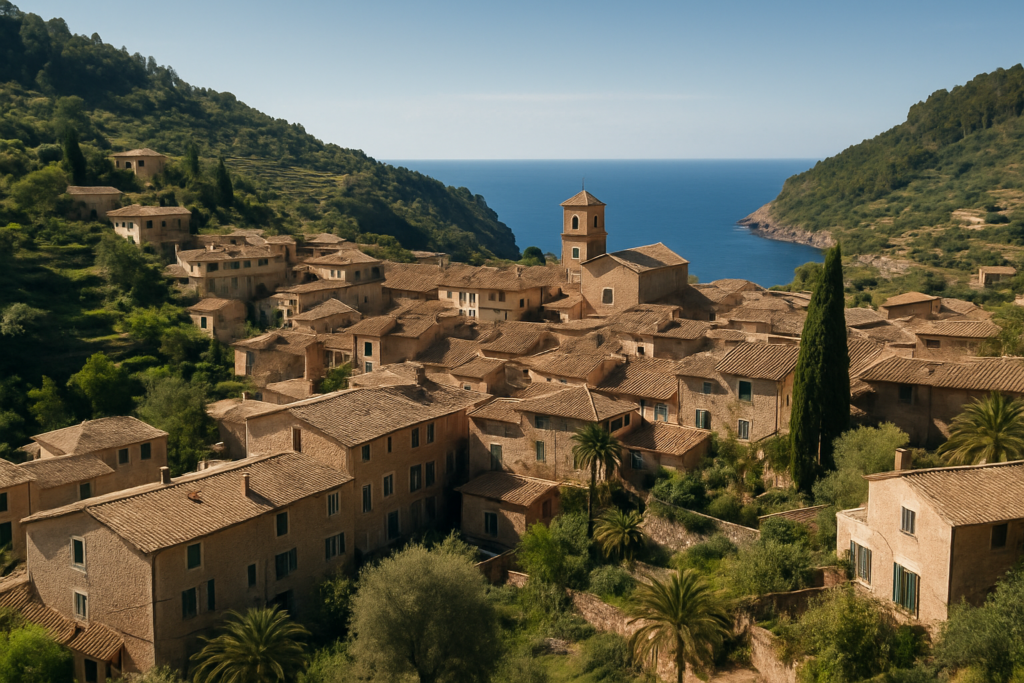
- Traditional Mallorcan stone houses with painted clay roof tiles (teules pintades) are a hallmark of the built fabric.
- The Plaça d’Espanya is the central square, lined with cafés and a general store — the main place for services.
- Three municipal car parks serve visitors arriving by car; the village itself is compact and pedestrianised in parts.
- Basic connectedness: the town council provides half an hour a day of free Wi‑Fi in the main square.
- Languages: Mallorcan Catalan is the most popular local language; all residents also speak Castilian Spanish.
Things to do in the village
The primary appeal here is walking and absorbing a carefully preserved mountain village. Most visitors come for short walks on well-marked trails, exploring stepped lanes, and soaking up the architecture and valley views. Below is a quick comparison of the unmistakable draws you’ll encounter; use it to plan a half-day or a full day depending on how many hikes you want to include.
| Attraction | What it is | Price/entry | Best for |
|---|---|---|---|
| GR221 Ruta de Pedra en Sec | Long-distance drystone route through the Serra de Tramuntana | — | Hikers, multi-day walkers |
| Barranc de Biniaraix | Steep ravine trail leaving from the village toward Sóller | — | Day walks, scenery |
| Plaça d’Espanya | Main square with cafés and a general store | — | Light refreshments, meeting point |
| Traditional stone houses | Mallorcan architecture with teules pintades (painted clay tiles) | — | Architecture and photography |
| Old tower / Town Hall | Historic tower at the east side used as the town hall | — | Local landmarks, civic architecture |
Walking the GR221: the real draw
The long-distance Ruta de Pedra en Sec that passes through here is the cultural spine of the Serra de Tramuntana. If you like marked mountain routes, this is your base to either start a stage or enjoy shorter day walks. Expect classic Mallorcan dry-stone walls, terraced orchards and paths that favour hikers rather than casual stroller traffic. The path network links the valley with neighbouring ridges and ravines; few other activities in the village compete with this.
Barranc de Biniaraix and valley walks
A popular set of stepped, stone streets lead down through a ravine toward the nearby town. These steep alleys are the local walking arteries — they’re atmospheric and photogenic but physically demanding. If you plan to follow them toward the neighbouring town, pack sensible shoes and travel light: the streets are steep and often stepped rather than ramped.
Village features worth pausing at
The Plaça d’Espanya functions as the social core: cafés face the square and a small general store covers basic needs. Architectural details reward a slow pace — the painted roof tiles and stone façades are characteristic, and the church with its large clock offers a visual anchor to the centre. On the east side, an old tower now houses local government functions, a reminder that civic life here remains rooted in traditional buildings.
Best beaches in the area
This guide omits a beach list because the place is a mountain village in the Sóller valley rather than a coastal resort. If you want sand and sea, plan a separate trip to the nearby coast from the town centre.
Fornalutx with kids
Children who enjoy walking, short exploratory hikes and historic streets will find much to like. The compact centre makes it easy to base a family stay around the Plaça d’Espanya where cafés and the general store are conveniently placed. That said, the steep, stepped streets are not stroller-friendly; families with buggies, small children or mobility limits should factor that in and keep outings short or seek flatter nearby trails.
How to get to the area and get around
Access is predominantly by road and foot. The nearest town is Sóller, which functions as the natural service hub; most onward walking routes lead from the village toward that town or into the surrounding mountains. For those arriving by car, there are three municipal car parks that provide space outside the pedestrianised centre.
Where to stay in the village
Accommodation here is generally small-scale: think guesthouses and private rentals set inside restored stone houses. The best places to stay concentrate around the Plaça d’Espanya for easy access to cafés and the daily life of the village. If you prefer evening options, choose a base nearer to the neighbouring town to widen dining and nightlife choices.
Best time to visit the town
There’s no single ‘best’ month printed here, but the village’s appeal is tied to walking conditions and the quieter shoulder seasons typical of Mediterranean mountain villages. Expect the highest pedestrian activity on trailheads and in the square when hiking weather is at its finest; conversely, winter brings a more local, low-key atmosphere.
History of the place
Set within the Serra de Tramuntana, the village sits in a landscape shaped by centuries of terracing and dry-stone construction. That landscape has UNESCO status as a cultural landscape, and the village’s traditional stone houses with painted roof tiles are part of the local vernacular that reflects the region’s agricultural past. Civic structures such as the old tower-turned-town-hall and the parish church with its prominent clock reflect a compact community shaped by both defence and parish life.
Practical info
Parking: three municipal car parks provide the main visitor parking; use those rather than attempting to drive into narrow, stepped streets.
Connectivity: the town council supplies free Wi‑Fi for half an hour per day in the main square — handy for quick checks but insufficient as a full working connection.
Language: Mallorcan Catalan is the most commonly used local language, though all residents also speak Castilian Spanish — this makes basic communication straightforward.
Scale and services: the settlement is small (about 700 inhabitants) and primarily residential; for wider services, the nearest town is the logical next stop.
Worth it for: walkers, photographers, anyone seeking a compact, scenic mountain village in a UNESCO cultural landscape and those who value traditional Mallorcan architecture.
Less so if: you want lively nightlife, long sandy beaches immediately outside your door, or flat, stroller-friendly streets.
How we assess this guide
We compiled this guide from verified local and regional sources and cross-checked factual claims about geography, services and notable features. We flag municipal services (for example, public Wi‑Fi and parking), architectural highlights and the village’s situation on the GR221. This is not a piece of original field reporting; it synthesises authoritative claims so you know what to expect before you arrive.
Frequently asked questions
How do I get from the nearest town to the village?
The nearest town is Sóller; the village sits in the same valley and is connected by local roads and walking routes. Many visitors combine both places in a single outing.
Is the village good for day trips?
Yes — its compact centre and several scenic walks make it a realistic day-trip destination from nearby towns, especially for those who enjoy short hikes and historic streets.
Are there shops and cafés?
The Plaça d’Espanya is the central hub with cafés and a general store that meet basic needs; for a wider range of services you’ll need to go to the nearby town.
Can I park in the village?
There are three generous municipal car parks that serve visitors arriving by car; use them rather than driving into the narrow, stepped lanes.
Is the village child-friendly?
Children who enjoy exploration and hiking will enjoy it, but the steep, stepped streets limit stroller access and make some routes unsuitable for toddlers or anyone needing flat surfaces.
Do people speak English there?
All residents speak Castilian Spanish; Mallorcan Catalan is the most popular local language. While English knowledge varies, basic interactions can usually be handled via Spanish or Catalan speakers in visitor-facing cafés.
Is there public Wi‑Fi?
The town council provides free wireless internet access in the main square for half an hour a day, useful for quick checks but not for long online sessions.
Is the area part of any protected landscape?
Yes — the Serra de Tramuntana is a UNESCO World Heritage cultural landscape, and the long-distance GR221 passes through the village as part of that network.
What makes the architecture special?
The village is noted for traditional Mallorcan stone houses roofed with painted clay tiles called teules pintades; these tiles and the preserved stonework give the place its distinctive character.
How many people live in the village?
The settlement has about 700 inhabitants, keeping the atmosphere small-scale and village-like rather than urban.
Are there guided walks or marked trails?
The GR221 Ruta de Pedra en Sec runs through the area and is a well-known marked route; local trailheads and stepped alleys such as the ones leading into the Barranc de Biniaraix provide clear options for self-guided walking.
How long should I stay to see the main sights?
A half-day visit covers the central square, the main streets and a short valley walk; a full day lets you do longer sections of the GR221 or explore ravines and nearby ridges at a more leisurely pace.
Is the village easy to walk around?
Yes, the centre is compact, but streets are steep and often stepped. Good footwear is recommended; the pedestrian experience is excellent for fit visitors but challenging for those with mobility limitations.
Does the village receive tourism awards or recognition?
The village has received prizes and recognition for tourism and conservation, reflecting efforts to preserve its built and landscape heritage.
Where is the town hall located?
The old tower on the east side of the village serves as the town hall, a conspicuous historic feature in the built centre.
Plan the wider trip
Fornalutx on the map
Read next
This place sits on the Illes Balears. Read the full Illes Balears guide → or open the interactive map to see everything we have mapped nearby.
How this page is maintained. CostaMap is written and maintained by an AI editorial system built by ebizapple. Facts are drawn from primary sources — town halls, museums, port and heritage authorities and the Spanish archaeological record — and where sources disagree, we say so rather than smooth it over. Photographs marked as ours are taken on location. This page was last reviewed on 14 August 2026. Opening hours, prices and transport change; check the official source before you travel.