
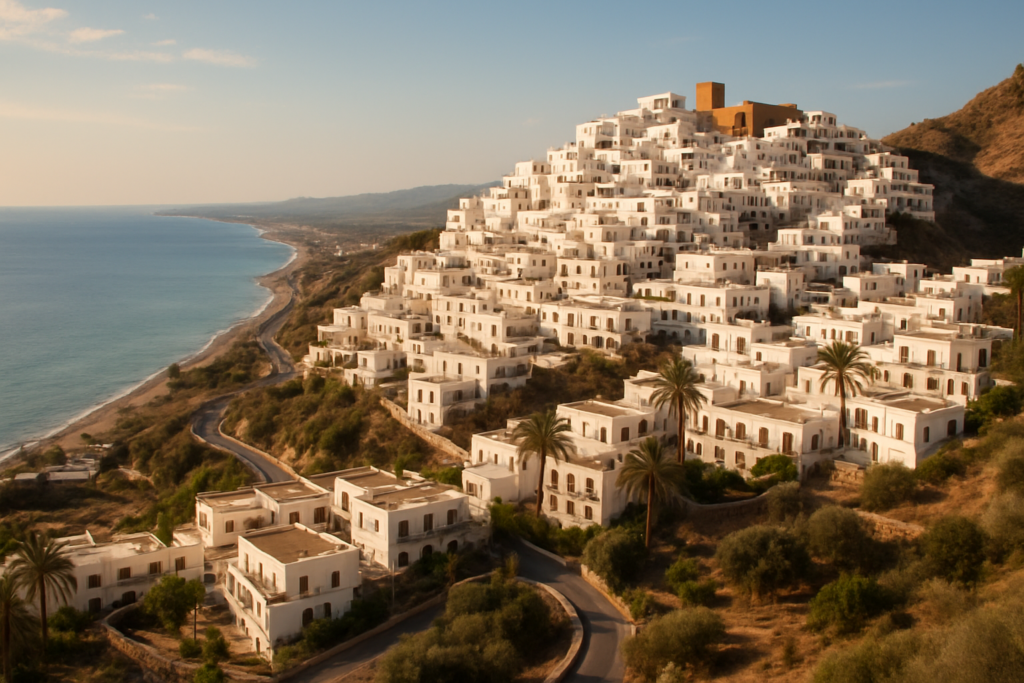
Expect steep, sunlit lanes, whitewashed houses clinging to a hilltop and a very different seaside below. This guide cuts through the brochures: parts of the coast are resort-style, the village is compact and pedestrian, and services connect the two — so plan logistics carefully to avoid heat, crowds or steep walks that catch you unawares.
Mojácar at a glance
- Hilltop white village with a pedestrianised centre and steep streets — bring sensible shoes.
- Coastal resort called Mojácar Playa sits south of the village, linked by local buses.
- Nearest airport: Almería (the town lies roughly 90 km from the provincial capital).
- Sunny, dry climate — more than 3,000 hours of sun a year and average annual temperature around 20 °C.
- Local buses (Line 1, 2 and 3) connect the village, shopping centre, beaches and neighbouring towns.
- History spans Bronze Age settlement through Greek and medieval eras; an Indalo totem is culturally associated with the place.
- Annual rainfall is low — about 200 mm — so pack sun protection and water for walks.
Before you plan
There are no verified closures or redevelopment notices in the source material we used. Public bus services operate between the village, the beach and neighbouring towns — check timetables locally for seasonal changes.
Things to do in the area
Whether you come for the hilltop atmosphere, the coast or simple sunshine, the practical side matters: getting between the village and the beaches is straightforward if you use the local buses; otherwise expect uphill walking. Below is a compact comparison of notable experiences grounded in available facts.
| Attraction | What it is | Price/entry | Best for |
|---|---|---|---|
| The white hilltop village | Traditional pedestrianised centre built on a steep hill | – | Photography, strolling, cafés |
| Mojácar Playa | Coastal tourist resort south of the village | – | Sunbathing, family beach days |
| Local bus routes | Lines linking village, shopping centre, beaches and nearby towns such as Garrucha and Vera | – | Exploring without a car |
The hilltop old town
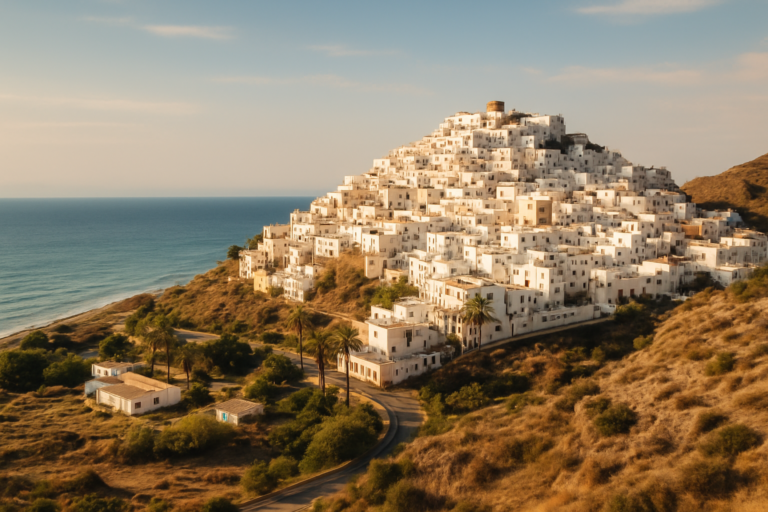
The pedestrianised centre sits on a steep slope and is the town’s defining feature. Wander narrow alleys, look for traditional white façades and small plazas, and accept that moving from the village to the beach involves an incline — most streets are not vehicle-accessible within the core. The Indalo motif appears around town as a cultural emblem tied to local identity.
The coast and Mojácar Playa
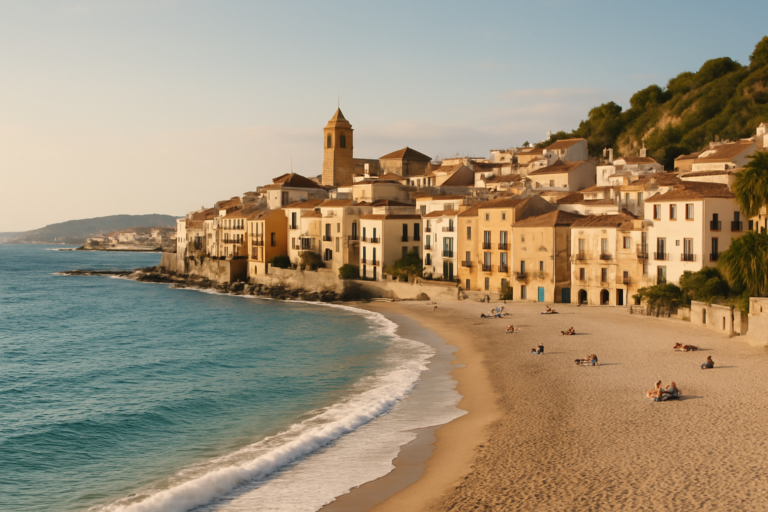
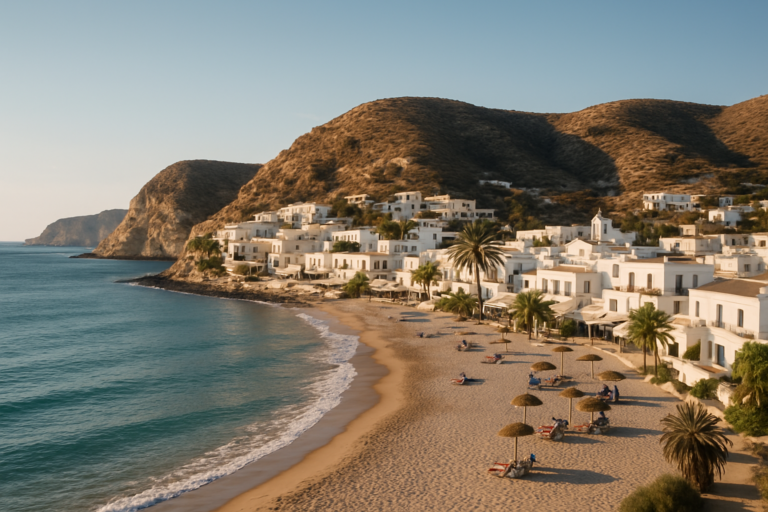
There is a distinct separation between the hilltop settlement and the coastal resort to the south. The beach area functions as the municipality’s tourist hub; if you want sand and sea, head down the hill or use one of the regional buses that link the two.
Using the buses to explore
Public buses provide practical links beyond the immediate area and are useful if you prefer not to drive. Line 1 runs a circular route from the beach through the shopping centre and the village; Line 2 links Mojácar Playa with Garrucha and Vera; Line 3 continues from Vera through Garrucha and Mojácar on to Carboneras and Playa de los Muertos. These routes make day trips and beach-hopping feasible without a car.
Best beaches in Mojácar
The municipality borders the Mediterranean and offers a stretch of coastline centred on Mojácar Playa. Facilities and specific award statuses are not detailed in the available sources, so consider each beach by its general character and how you plan to access it.
| Beach | Character | Facilities / Blue Flag |
|---|---|---|
| Mojácar Playa | Resort beach area serving the coastal tourist zone | – |
| Playa de los Muertos | Reached by bus via the line that continues to Carboneras; more of a destination beach | – |
Mojácar with kids
Families can combine short village walks and long afternoons at the coast. The pedestrianised streets in the old town reduce traffic stress for supervised children, but the steep terrain means little ones will tire quickly. The beach area provides easy sand-and-sea access; using the local buses avoids parking headaches and keeps logistics simpler for family outings.
How to get to Mojácar and get around
The practical entry point for most visitors is the region’s airport, and once you’re in the municipality the local bus network is the primary public transport option tying village, beach and nearby towns together.
| From | By | Approx time |
|---|---|---|
| Almería (nearest airport) | Road transfer (car or bus) | — (distance cited: roughly 90 km from the provincial capital) |
Within the municipality, rely on bus services: Line 1 circulates between the beach, shopping centre and village; Line 2 runs between Mojácar Playa, Garrucha and Vera; Line 3 extends through Garrucha, Mojácar and on to Carboneras and Playa de los Muertos. These links are the backbone of public transport for visitors without a car.
Where to stay in the resort
Accommodation falls into two broad zones — the hilltop village and the coastal resort. Choose according to pace and mobility.
- Old village: best for atmosphere, narrow streets and proximity to cafés and viewpoints; expect steep walks to reach properties.
- Mojácar Playa: better if you prioritise beach time, easier road access and a resort-style layout; logical choice for families and longer beach stays.
Best time to visit
The climate is consistently sunny and dry, which shapes the best seasons for different activities. Summers are hot and excellent for beach holidays; spring and autumn offer milder temperatures and long sunny days for exploring the village without extreme heat.
| Season | Months | What to expect |
|---|---|---|
| Summer | June–September (general seasonal window) | Warm to hot days — average summer temperatures vary between 26 °C and 32 °C; ideal for beachgoing but expect stronger sun. |
| Winter | December–February (general seasonal window) | Milder conditions — average winter temperatures vary between 10 °C and 18 °C; suitable for quieter village visits and walks. |
| Year-round climate note | — | Low annual rainfall (around 200 mm) and more than 3,000 hours of sun make outdoor plans reliable for much of the year. |
History of the town
People have lived here since the Bronze Age, with archaeological evidence placing settlement activity around 2000 BC. Over centuries the settlement grew under the influence of traders — Phoenicians and Carthaginians served the growing communities — and later figures in the Greek era used the name Murgis-Akra. In the medieval period the town was annexed to the Kingdom of Castile on 10 June 1488. In the 19th century severe droughts led to population decline; the tourist boom from the 1960s onward helped reverse that trend and shaped the modern coastal resort separate from the hilltop village. The Indalo symbol remains a local cultural motif tied to regional identity.
Practical info
- Pedestrianised areas: The village centre is pedestrianised and built on steep streets; expect little vehicle access in the core.
- Bus network: Lines 1, 2 and 3 provide the principal public transport links — suitable for transfers between the village, the beach and nearby towns such as Garrucha, Vera and Carboneras.
- Climate considerations: With very sunny, dry weather and roughly 200 mm of rainfall annually, take sun protection and water for daytime walks.
- Distance to provincial capital: The municipality lies about 90 km from Almería city — plan transfers from the airport or long-distance rail accordingly.
Worth it for: Photogenic white streets, relaxed hilltop atmosphere, reliable sunshine and an easy beach/resort option nearby. Less so if: You dislike steep walking, want extensive nightlife, or expect a single unified “town-beach” experience — those are separate here.
How we assess this guide
This guide compiles verified facts about transport routes, climate, history and settlement, cross-checked against authoritative local sources. We flag operating bus routes and avoid presenting unverified opening hours or amenities. We have not conducted first-hand reporting for this article; check local timetables and venue information before travel.
Nearby on the Costa de Almería
Towns near Mojácar
- Garrucha — 6 km north-east
- Vera — 12 km north
- Carboneras — 16 km south, dramatic Cabo de Gata beaches like Playa de los Muertos
- Cuevas del Almanzora — 18 km north, Almanzora valley villages, reservoir and beaches at Villaricos
- Huércal-Overa — 29 km north, the market town of Almería's Almanzora Valley
- Níjar — 37 km south-west, the Cabo de Gata natural park beaches
Places to visit within reach
- Mojácar la Vieja — 1 km, Mojácar la Vieja is an active archaeological dig where researchers
- Playa de los Muertos — 17 km, Playa de los Muertos got its name from centuries of shipwrecks
- Agua Amarga — 24 km, Agua Amarga’s name origin is genuinely disputed
- Rodalquilar — 36 km, Rodalquilar’s population collapsed
For the wider picture, see the Costa de Almería guide, which lists every town on this coast.
Frequently asked questions
How do I get from the nearest airport to here?
Consult the “How to get to Mojácar and get around” section above for the transport table and notes; the nearest regional airport is the usual arrival point discussed there.
Is it expensive to visit?
There are no verified local price averages in the source data. Expect typical cost variations between hilltop boutique stays and more affordable coastal tourist accommodation; plan for seasonal changes.
Which beach is best for families?
Mojácar Playa is the central resort beach area and is the practical choice for family days by the sea, especially if you prefer facilities commonly found in resort zones.
How many days should I spend?
Allow at least one full day for the village and an additional day for the coast. More time lets you relax, use the bus links to neighbouring towns, and avoid hurrying up and down the hill.
Is the old town suitable for small children?
The pedestrianised streets reduce traffic risks, but the steep gradients make it tiring for small children — bring a stroller only if you can manage steep inclines and stairs.
Can I get around without a car?
Yes: local bus services (Lines 1–3) link the village, the shopping centre, the beach and neighbouring towns, allowing visitors to move around without driving.
Is there parking near the hilltop village?
Vehicle access into the pedestrian core is restricted. Cars are generally kept to the edges of the village; specifics about parking facilities are not included in the verified sources, so check locally if you plan to bring a car.
What are rainy-day options?
Given the low annual rainfall and high sunshine totals, rainy days are uncommon; however, indoor cultural stops are limited in the verified material. Use the village cafés and small shops for shelter and local atmosphere if weather turns.
When is the hottest time of year?
Summer months see the highest averages: recorded summer temperatures typically range between 26 °C and 32 °C.
Are there any important festivals to plan around?
The provided sources do not include verified festival dates or descriptions. Check local tourism information for current cultural event listings before travel.
How sunny is the area?
The area enjoys more than 3,000 hours of sunshine per year, making it consistently bright and favourable for outdoor plans.
Is swimming in the sea safe year-round?
Seasonal sea conditions vary; the guide’s sources do not provide specific safety or water-temperature details. Use local beach signage and advice from lifeguards or authorities where present.
How steep are the village streets?
The old town sits on a steep hill with many pedestrianised lanes; expect significant inclines when walking between the village and lower-lying areas.
Can I visit nearby towns using public transport?
Yes. Line 2 links the resort with Garrucha and Vera, and Line 3 continues through Garrucha and Mojácar to Carboneras and Playa de los Muertos, making day trips by bus feasible.
Is the Indalo visible around town?
The Indalo is a local cultural totem associated with the area and appears in various local contexts, reflecting regional identity.
Mojácar on the map
Places worth knowing near Mojácar
How this page is maintained. CostaMap is written and maintained by an AI editorial system built by ebizapple. Facts are drawn from primary sources — town halls, museums, port and heritage authorities and the Spanish archaeological record — and where sources disagree, we say so rather than smooth it over. Photographs marked as ours are taken on location. This page was last reviewed on 11 August 2026. Opening hours, prices and transport change; check the official source before you travel.