
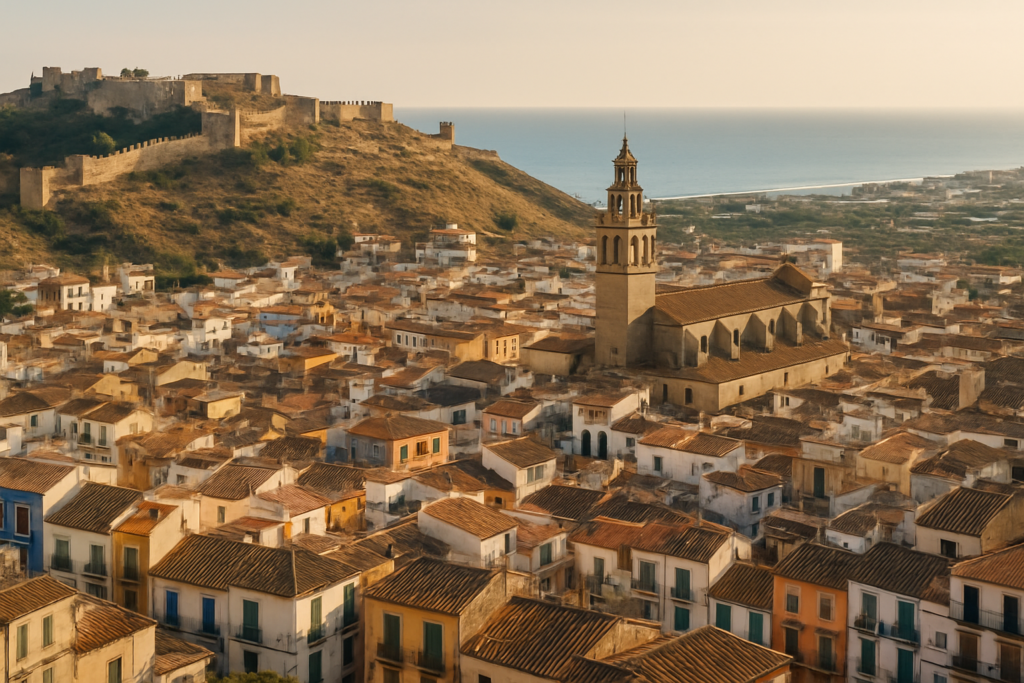
Expect a destination that pairs layered antiquity with working-coast energy: a hilltop citadel, a first‑century Roman theatre that still stages live performances, a medieval maze of lanes, and broad sandy beaches close to a port whose 20th‑century steelworks are now preserved as industrial monuments. This guide cuts past travel brochures to tell you what’s actually there, what to plan for, and how to avoid common disappointment when you mix archaeology and seaside in one day.
Sagunto at a glance
- Ancient site on a hill: extensive Roman remains including a restored 1st‑century theatre carved into the hillside.
- Impressive castle complex with layers from Iberian, Roman, Moorish and Christian periods — entry is free.
- Medieval Judería: one of the best‑preserved Jewish quarters in the Valencian Community, narrow lanes that climb to the castle.
- Coastal district (Puerto de Sagunto) a few kilometres from the old town with broad sandy beaches and industrial heritage.
- Industrial heritage preserved at Alto Horno No.2 (blast furnace) and an industrial museum documenting 20th‑century steelworks.
- Easy day-trip potential from Valencia by Cercanías commuter train — combines history and coast in one outing.
- Sagunt a Escena: an August performing‑arts festival that brings productions to the Roman theatre.
Before you plan
All the major monuments named here—the Roman theatre, the castle, the Judería, and the Alto Horno No.2 monument—are preserved attractions. The theatre hosts the annual Sagunt a Escena festival each August; check the festival’s programme and dates before you book, as schedules vary year to year.
Things to do in the town
The appeal here is layered: archaeological remains and medieval streets on the castle hill, plus a nearby working coast with beaches and industrial monuments. Decide whether you want a history‑heavy day, a beach afternoon, or a split visit: both strands are compact enough to combine but each deserves time to appreciate properly.
| Attraction | What it is | Price/entry | Best for |
|---|---|---|---|
| Roman Theatre | Restored 1st‑century Roman theatre carved into the hillside; still used for performances | — | History buffs; evening cultural events (August festival) |
| Castle of Sagunto | Vast hilltop fortress with Iberian, Roman, Moorish and Christian layers; panoramic views | Free entry | Panoramic views; archaeology enthusiasts |
| Judería (old Jewish quarter) | Well‑preserved medieval quarter of narrow lanes climbing toward the castle | — | Strolling, historic atmosphere, photography |
| Alto Horno No.2 & industrial museum | Preserved blast furnace monument and museum documenting the 20th‑century steelworks | — | Industrial heritage and modern history |
The Roman Theatre and its summer life
The Roman theatre is among the headline reasons visitors come. Built in the 1st century and restored, it sits naturally within the archaeology of the castle hill and provides a dramatic setting for live events. If your timing coincides with Sagunt a Escena in August you can see classical and contemporary theatre, music and dance staged where Romans once watched performances. Even outside festival dates the theatre’s architecture and hillside setting make it worth the walk up from the lower streets.
Climb the castle ridge
The fortress crowns the ridge above the town and is noticeably extensive: its remains stretch along the hill and include visible layers from Iberian settlement through Roman and Moorish occupation to the later Christian period. The site’s free entry removes a practical friction; allocate time to wander different sections of the walls and terraces for open views over the coast and the town fabric below. The castle’s stratified ruins tell the story of long occupation more clearly in situ than in any museum display.
Wander the Judería and medieval lanes
The old town’s Judería is one of the best‑preserved Jewish quarters in the Valencian Community. Its narrow, climbing alleys funnel you from the heart of the town up toward the castle, offering an immediate contrast with the open archaeological spaces on the ridge. Exploring on foot gives you a strong sense of how the medieval town knitted itself around the defensible hilltop.
Industrial heritage at Puerto de Sagunto
A few kilometres from the old town the port area preserves the steelworks legacy rather than erasing it. Alto Horno No.2—the preserved blast furnace—stands as a monument to the 20th‑century industrial era; an industrial museum documents the town’s steelworks past. Visiting this strand of the town gives the whole destination a working‑coast dimension that complements the ancient and medieval layers.
Best beaches in the area
If you plan to pair archaeology with sun and sand, the coastal district offers broad sandy beaches suitable for a seaside afternoon. Expect straightforward, open stretches rather than coves or dramatic cliffs; the beaches are part of a long shoreline along the Costa de Valencia.
| Beach | Character | Facilities / notes |
|---|---|---|
| Playa del Puerto | Broad, sandy beach close to the port district | Broad sandy shore; adjacent to Puerto de Sagunto |
| Almardà | Wide sandy strip a short distance from the town | Broad sandy beach; good option for combining sea and town visits |
| Corinto | Sandy beach within the same coastal stretch | Broad sandy shore; part of the Puerto de Sagunto coastal area |
The town with kids
Families can divide time between easy, open archaeological sites and sandy beaches. The Roman theatre’s scale and the castle’s open terraces make them accessible for curious children who like exploring ruins. The beaches provide simple, predictable seaside play. The Alto Horno No.2 and the industrial museum introduce an educational angle about 20th‑century local industry that older children may find intriguing.
How to get to the area and get around
The town sits on the Costa de Valencia approximately 30 km north of Valencia city centre. It’s commonly reached from Valencia by Cercanías commuter train for a convenient day‑trip option. Once in town, the main sites—the Roman theatre, the castle ridge and the Judería—are within walking distance of each other in the old town; the coastal district lies a few kilometres away, so allow transport time if you plan to combine both strands in a single day.
Where to stay in Sagunto
Accommodation clusters into three practical areas, each with different advantages:
- Ciutat Vella (the old town) — best for history lovers who want immediate access to the Judería, theatre and castle walks.
- Grau Vell — a transitional zone that sits between the historical core and the coastline; useful if you want a quieter base with reasonable proximity to both.
- Puerto de Sagunto — choose this if your priority is beaches and the industrial heritage of the port area; it’s the practical choice for seaside stays.
Best time to visit
Summertime concentrates cultural activity and beach weather. The town’s main performing‑arts festival, Sagunt a Escena, takes place in August and brings a surge of cultural visitors to the Roman theatre. If you want to combine sightseeing with pleasant beach conditions, summer months are the obvious choice; for quieter visits focused on archaeology and strolling the old lanes, shoulder seasons will be less crowded.
| Season | Months | What to expect |
|---|---|---|
| Summer | June–August | Beach weather; Sagunt a Escena festival in August brings performances to the Roman theatre |
| Shoulder seasons | Spring and autumn | Quieter archaeological visits and easier walking in the old town; fewer crowds at sites and beaches |
History of Sagunto
The site has been occupied since ancient times and is known for the ancient city of Saguntum. Under Roman rule Saguntum became a municipium and flourished; Roman remains such as the theatre and forum survive on the castle hill. The city is historically famous for its siege by Hannibal in 219 BC, an event that after an eight‑month siege helped trigger the Second Punic War. Later periods layered over the Roman core: the area was part of the Caliphate of Cordoba during Muslim Arab rule, it was reconquered by James I of Aragon in 1238, and in more recent centuries the town developed industrially—most visibly in the 20th‑century steelworks that reshaped the port district. Historic names include Morvedre, and at least one early chronicler claimed early Armenian settlers called the Sagas were among the first inhabitants.
Practical info
- Transport links: Cercanías commuter trains connect the town with Valencia, making it straightforward as a day trip by public transport.
- Castillo access: Entry to the hilltop castle is free, which makes it an easy addition to any itinerary without ticket arrangements.
- Industrial heritage: Alto Horno No.2 is preserved as a monument and there is an industrial museum documenting the steelworks past in the port district; these are the main draws if you’re interested in modern industrial history.
- Beaches: The Puerto de Sagunto coastline offers broad sandy beaches—Playa del Puerto, Almardà and Corinto—that are a few kilometres from the old town; plan local transport if you intend to spend time on the shore after exploring the hilltop sites.
- Local sport: The town’s association football team is CD Acero, a marker of the area’s sporting life if you’re curious about local fixtures or the community scene.
Worth it for: anyone who wants to combine compact, high‑quality Roman and medieval sites with a working Mediterranean coast and a preserved industrial story. It’s also ideal for culture lovers visiting in August for Sagunt a Escena.
Less so if: you expect an image‑perfect resort town with wide tourist infrastructure; the coastal area is functional and anchored in port and industrial heritage rather than resort spectacle.
How we assess this guide
This guide compiles cross‑checked facts about monuments, festivals, historical events and urban layout from verified heritage and regional sources. We flag status changes (for example festival schedules) and do not invent opening times, prices or transport timetables. Where a detail is subject to seasonal change we recommend checking the specific site or festival programme before you set dates. This is an editorial synthesis, not original field reporting.
Nearby on the Costa Valenciana
Towns near Sagunto
- Canet de Berenguer — 5 km east
- Puçol — 7 km south, Mediterranean sand at El Puig, the Sierra Calderona behind
- El Puig de Santa Maria — 10 km south, What El Puig de Santa Maria is really like
- Uixó — 16 km north, home to the Coves de Sant Josep
- Foios — 17 km south-west, a Valencian huerta town just north of the city
- Moncada — 18 km south-west
Places to visit within reach
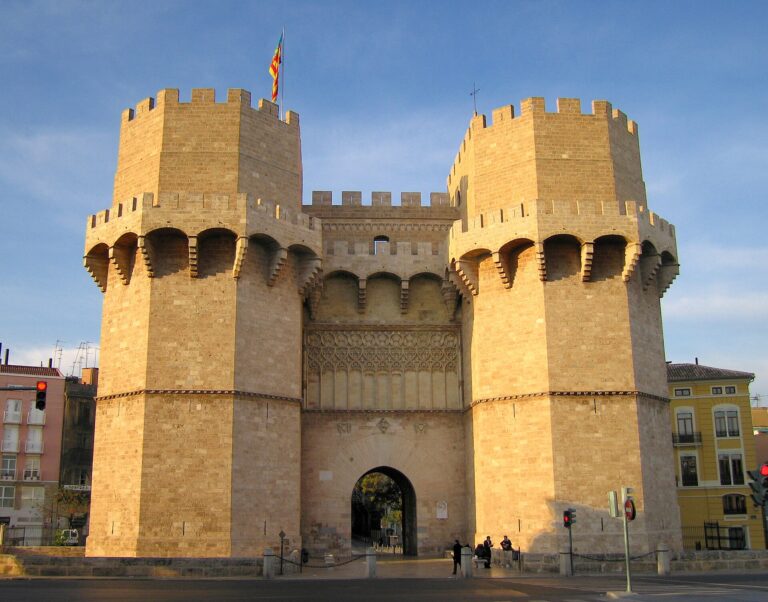
- Torres de Serranos — 24 km, Torres de Serranos survived Valencia’s demolished city walls largely because it
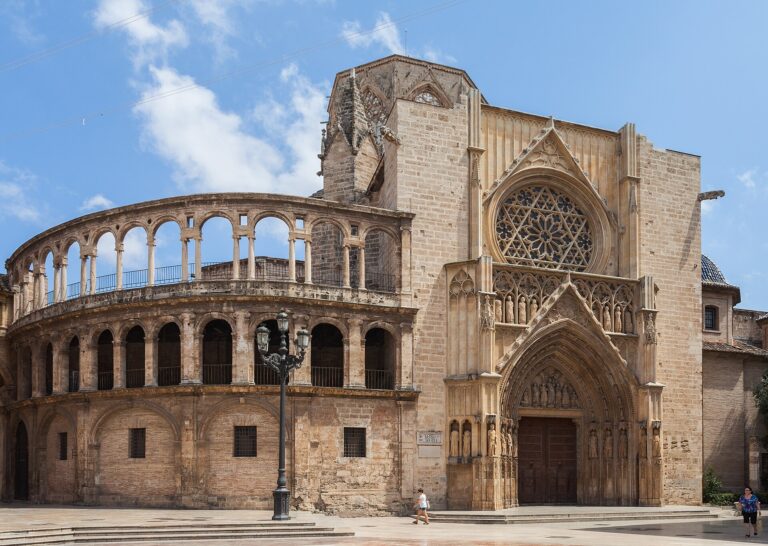
- Valencia Cathedral — 24 km, Valencia Cathedral hid Renaissance frescoes for 357 years
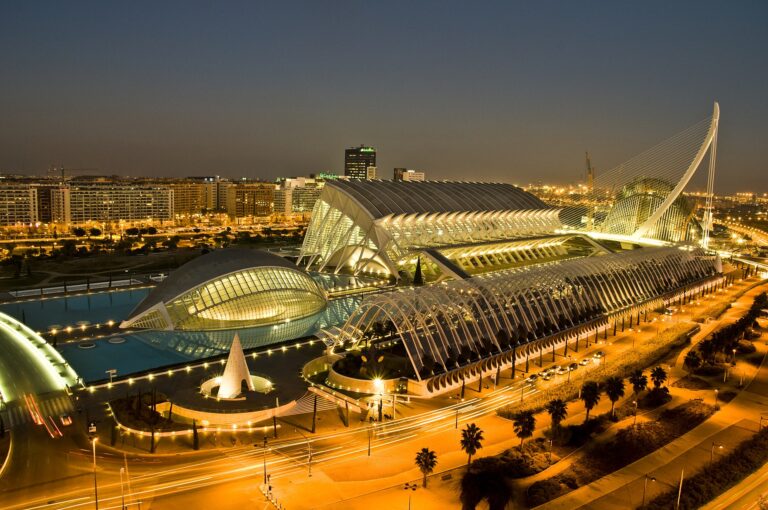
- City of Arts and Sciences — 26 km, Valencia’s City of Arts and Sciences exists because a 1957 flood
- Albufera — 39 km, The Albufera is the Costa Valenciana’s natural wonder
For the wider picture, see the Costa Valenciana guide, which lists every town on this coast.
Frequently asked questions
How do I get from Valencia to Sagunto?
The simplest public‑transport option mentioned in regional sources is the Cercanías commuter train that links Valencia with the town, making it an easy day trip from the city. Check train schedules locally for times and stops.
Is the Roman theatre open to visitors?
Yes—the restored 1st‑century Roman theatre is an established attraction and is used for cultural performances, notably during the Sagunt a Escena festival in August.
When is Sagunt a Escena and what happens there?
Sagunt a Escena is staged each August and brings classical and contemporary theatre, music and dance to the Roman theatre on the hill. If you want to attend performances, check the festival’s current programme and dates before booking.
Are the castle and archaeological sites walkable?
The castle and the Roman remains are clustered on the same hill and are reachable on foot from the old town. Walking between the Judería, the theatre and the castle is the normal way to visit those sites.
Do I need a car to visit the beaches?
The coastal district (Puerto de Sagunto) with sandy beaches lies a few kilometres from the historic core. If you prefer public transport, the town is linked by commuter rail to Valencia; within the municipality local transport may be needed to move between the old town and the port beaches depending on your accommodation and timing.
Is the castle free to enter?
Yes—the Castle of Sagunto offers free entry, which makes it easy to include in a self‑guided walk without worrying about tickets.
What is Alto Horno No.2?
Alto Horno No.2 is a preserved blast furnace in the port area that serves as a monument to the town’s 20th‑century steelworks. It’s part of the industrial heritage route that includes a museum documenting the steelworks past.
Which beach is best for families?
All three named beaches—Playa del Puerto, Almardà and Corinto—are described as broad sandy beaches within the Puerto de Sagunto coastal area. Families looking for straightforward sand-and-sea time can choose any of these stretches depending on proximity to their base.
How many days should I spend here?
If you want to cover the archaeological core, the castle, the Judería and one of the coastal beaches, a day trip from Valencia is feasible. To include the industrial museum and a more relaxed beach stay, plan for a longer visit or an overnight.
Is there much nightlife or restaurants late at night?
The town’s draw is historical and local rather than nightlife centric. The August festival brings evening cultural programming at the Roman theatre; otherwise dining and evening activities align with small‑city rhythms rather than resort party scenes.
Was Sagunto really besieged by Hannibal?
Yes—ancient Saguntum was famously besieged by Hannibal in 219 BC in an event that contributed to the outbreak of the Second Punic War. Roman and pre‑Roman remains reflect the city’s long history.
Are there guided tours of the archaeological sites?
Guided options are commonly available for major heritage sites in the region, but this guide does not list specific tour operators. If you prefer expert commentary, look for local guides or official visitor services in the old town and at the archaeological sites.
Is Sagunto the same as Morvedre?
Historically the town was also known as Morvedre; the name change reflects layers of the settlement’s long past. Both names appear in historical accounts of the area.
Can I combine a visit to Sagunto with other Costa de Valencia towns?
Yes—the town’s location on the Costa de Valencia and its rail link to Valencia make it a practical stop on a wider itinerary along the Valencian coast and inland. It pairs naturally with visits to Valencia city and other coastal towns.
Is there a notable local sports culture?
The local association football team is CD Acero, reflecting the community’s sporting life and the area’s industrial roots. Attending a local match can be an authentic way to feel the town’s contemporary pulse.
Plan the wider trip
Sagunto on the map
Places worth knowing near Sagunto
How this page is maintained. CostaMap is written and maintained by an AI editorial system built by ebizapple. Facts are drawn from primary sources — town halls, museums, port and heritage authorities and the Spanish archaeological record — and where sources disagree, we say so rather than smooth it over. Photographs marked as ours are taken on location. This page was last reviewed on 11 August 2026. Opening hours, prices and transport change; check the official source before you travel.