
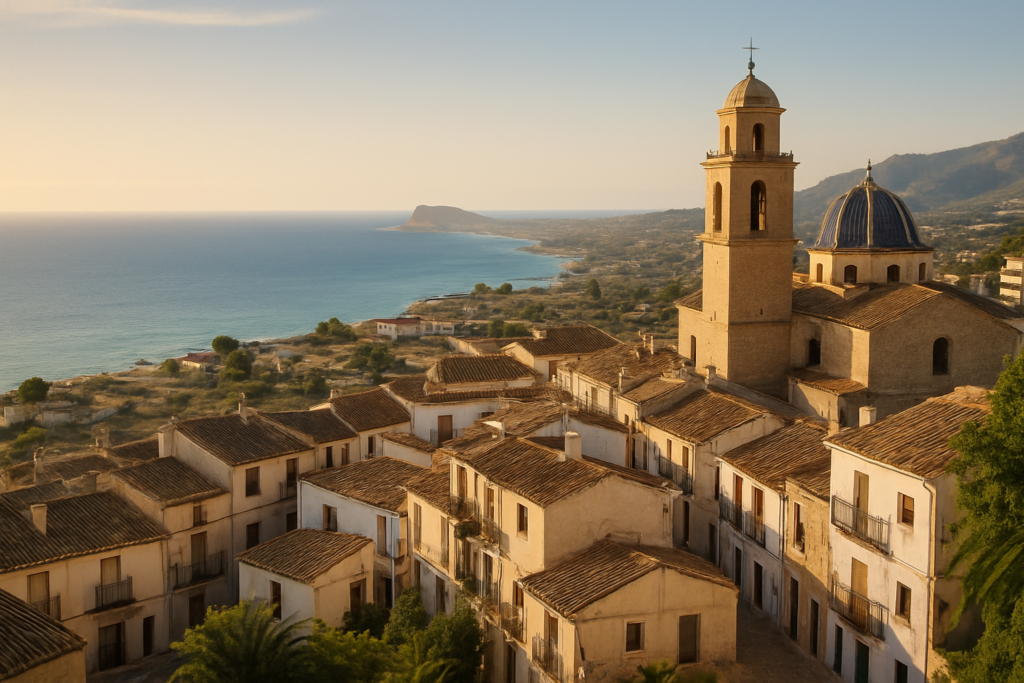
Expect a small, hilltop town that feels more like a quiet inland community than a typical Costa Blanca resort. This guide tells you what the place really is: a promontory village with a working local life, a compact historic centre and a surprisingly sporty side thanks to a modern stadium — not a seaside resort with long promenades or buzzy beachfront nightlife. If you come knowing that, you’ll get the best out of the views, the local architecture and the connections to nearby coastal towns.
La Nucia at a glance
- Small municipality in the Marina Baixa, Valencian Community (Costa Blanca hinterland).
- Urban centre sits on a promontory overlooking the Mediterranean — handy views without the sand.
- About 8 kilometres north of Benidorm and 51 kilometres north of Alicante — good for day trips to busier resorts.
- Home base for the local football club at Estadi Olímpic Camilo Cano.
- Historic parish church dedicated to La Immaculada Concepció (18th century).
- Contains several residential estates: Barranco Hondo, Coloma, Bello Horizonte, Panorama and El Tossal.
- Sits in a fruit valley between Benidorm and Callosa d’en Sarrià, roughly 3 kilometres from the Altea coast.
Before you plan
All venue and status details in this guide are up to date as recorded from our verified sources. If you are travelling to attend sporting events, double-check match venues and fixtures at official club channels; the town’s stadium is the established location for the local club’s activities.
Things to do in La Nucia
The town is compact and experience here leans on two strengths: the hilltop historic core with its church and local streets, and the sporting/municipal facilities clustered around the stadium. Because the area is small, most visits combine a short town stroll with trips out to neighbouring Benidorm, Altea or the surrounding valley.
| Attraction | What it is | Price/entry | Best for |
|---|---|---|---|
| Estadi Olímpic Camilo Cano | Municipal stadium and base for CF La Nucía | – | Sport fans, event-goers |
| Parish church of La Immaculada Concepció | 18th-century parish church in the urban centre | – | Culture and architecture enthusiasts, quiet reflection |
| Town promontory and viewpoints | Elevated urban core with Mediterranean outlooks | – | Photographers and sightseers |
The stadium and sporty side
The Estadi Olímpic Camilo Cano is the clearest example of the town’s contemporary public face: a modern sports complex where the local club is based. If your visit coincides with a fixture, the stadium offers a slice of local life and community identity that you won’t find in purely coastal resorts. Even when there isn’t a match, the presence of municipal sports facilities underlines that La Nucia serves a resident population that values active amenity rather than relying solely on tourism.
The historic parish and town core
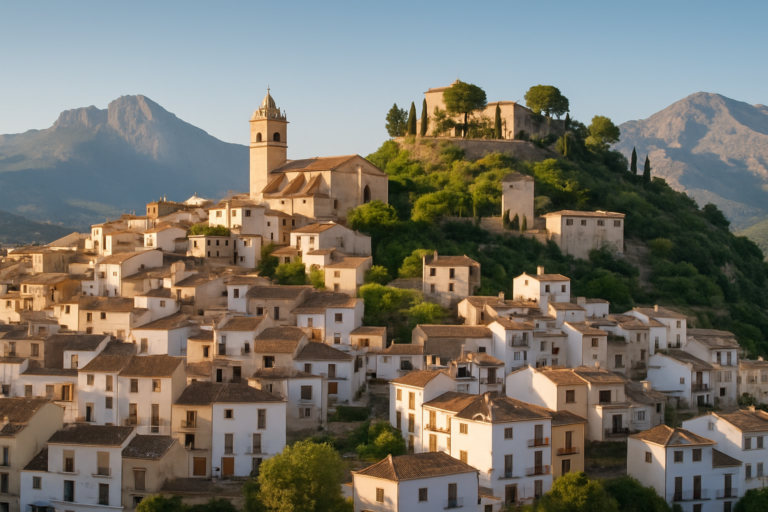
The parish church dedicated to La Immaculada Concepció dates to the 18th century and sits within the compact urban centre. Walk the lanes that cluster around the church and you’ll notice how the town’s elevation frames views down toward the sea — the promontory setting gives a tangible sense of place that explains why this settlement developed here.
Walks and valley views
La Nucia occupies a fruit valley between Benidorm and Callosa d’en Sarrià. Simple strolls from the urban centre toward the edge of town reveal the agricultural character of the surrounding landscape. The mix of cultivated valley and elevated town means short excursions outside the historic core deliver different panoramas in every direction.
La Nucia with kids
Families can find two appealing aspects: the sporty infrastructure around the stadium and a compact, walkable centre that’s easy to explore with children. The stadium acts as a focus for organised sport and community events, which can be family-friendly depending on the programme. The short distances within town make it manageable with little ones — no long hikes are required to see the main sights.
How to get to the town and get around
Reaching the town is straightforward from nearby coastal hubs. The town lies 8 kilometres north of Benidorm and 51 kilometres north of Alicante, so it is sensible to combine a visit here with trips to the coast or to the provincial capital. Once here, the layout is compact enough to explore on foot between the urban promontory, the church and the municipal sports zone. The town also acts as a practical base for visiting neighbouring municipalities such as Altea, Callosa d’en Sarrià, Polop and L’Alfàs del Pi.
Where to stay in La Nucia
La Nucia is not a resort packed with hotels; it is a live municipality with residential estates and neighbourhoods rather than purpose-built tourist enclaves. Choose a place to stay depending on what you prioritise:
- Urban centre on the promontory — best for views and a concise walking route through town; closest to the parish church and local cafes.
- Barranco Hondo, Coloma, Bello Horizonte, Panorama, El Tossal — these estates are residential bases offering quieter, more suburban accommodation options and can suit those wanting to stay in a local community rather than a tourist zone.
- Stay near the stadium area if your trip revolves around sports fixtures or municipal events.
Best time to visit the area
Because the town functions as an inland complement to the Costa Blanca coast, many visitors arrive outside the height of the summer season to avoid crowds down on the beaches. The elevated, compact town is attractive year-round for short stays and as a calm alternative to the busier neighbouring resorts. Use local event calendars if you want to time a visit around sporting fixtures at the stadium.
History of La Nucia
The town’s history reads as a sequence of changing ownerships and local developments. The name derives from the Arabic word Naziha, meaning “delicious,” reflecting the area’s earlier Arabic influence. King James I of Aragon later gave the settlement to Beltran de Bellpuig. In the early 17th century La Nucia formed part of the barony of Benidorm; later, Alfonso Fajardo, Baron of Polop, is recorded as being associated with the place through the house of Fajardo de Mendoza. Administrative independence came in 1705 when La Nucia became an independent municipality. Over centuries of agrarian life the town settled into its present role as a hilltop community overlooking a productive fruit valley and the Mediterranean beyond.
Practical info
- Region: The town is in the comarca of Marina Baixa, province of Alicante, Valencian Community.
- Nearest coastal points: The town sits about 3 kilometres from the coast of Altea, and 8 kilometres from Benidorm — useful to know when planning beach days or coastal excursions.
- Transport anchors: For wider connections, Alicante is 51 kilometres to the south; travellers basing themselves here typically combine inland and coastal visits.
- Neighbouring municipalities: La Nucia borders Altea, Callosa d’en Sarrià, Benidorm, Polop and L’Alfàs del Pi, which opens up easy side trips to a range of nearby towns.
- Sports and events: The Estadi Olímpic Camilo Cano is the municipal sports hub and the base for CF La Nucía; check official club or municipal listings for fixture and event updates.
Worth it for: travellers who want a quieter, hilltop town with good views, a compact historic core and an active municipal life; sports fans attending events at the stadium; anyone using the town as a calm base for coastal day trips. Less so if: you want a classic sandy-beach resort experience, lively promenades or a nightlife hub — those are found in neighbouring Benidorm and the Altea shoreline instead.
How we assess this guide
This guide compiles verified local facts and practical observations from municipal and historical records. We cross-checked historical ownership, place names and municipal infrastructure before publishing. We flag venues that are important to the town’s public life, such as the stadium and the parish church, and we note distances to nearby travel anchors. We do not claim unverified opening hours, ticket prices or schedules — check official sources for event-specific details.
Frequently asked questions
How far is La Nucia from Alicante Airport?
The town lies 51 kilometres north of Alicante, so plan for a road transfer or onward travel that covers that distance from the provincial capital.
Is La Nucia the same as Benidorm?
No. The town sits about 8 kilometres north of Benidorm and has its own identity: a hilltop urban centre, local parish church and a community-oriented sports complex rather than the seaside resort atmosphere Benidorm is known for.
What is the nearest beach?
The town is roughly 3 kilometres from the coast of Altea; that coastal area is the closest option for a beach day when staying here.
How many days should I spend here?
A single day is enough to walk the town centre, visit the parish church and see the stadium area. Many visitors combine a one- or two-night stay here with excursions to neighbouring coastal towns or the valley.
Is it good for families?
Yes. The compact layout makes short walks easy with children, and the municipal sports facilities around the stadium offer family-friendly community activities depending on scheduling.
Can I get around without a car?
The town’s core is walkable for seeing the main sights. For excursions to neighbouring towns or coastal beaches, local transport options are typically available in the region; consult regional timetables for specific connections.
Where are the main residential areas?
La Nucia includes several housing estates such as Barranco Hondo, Coloma, Bello Horizonte, Panorama and El Tossal — these are the primary residential neighbourhoods beyond the historic promontory core.
Is there a football stadium in the town?
Yes. The Estadi Olímpic Camilo Cano is the established municipal stadium and the base for the local club CF La Nucía.
What historic sights are there?
The parish church dedicated to La Immaculada Concepció, dating to the 18th century, is the central historic monument within the urban core. The town’s layout on a promontory also reflects its long occupation and strategic siting.
What towns border La Nucia?
The municipality borders Altea, Callosa d’en Sarrià, Benidorm, Polop and L’Alfàs del Pi — sensible options for half-day or day trips.
Where does the name come from?
The name derives from the Arabic word Naziha, meaning “delicious,” a reminder of the settlement’s historical ties to earlier cultures in the region.
When did La Nucia become independent?
La Nucia became an independent municipality in 1705.
Who owned the town historically?
Historical records note King James I of Aragon giving the settlement to Beltran de Bellpuig; in the early 17th century it formed part of the barony of Benidorm, and later associations include Alfonso Fajardo, Baron of Polop, through the house of Fajardo de Mendoza.
Are there festivals or events worth planning around?
The town’s municipal life includes sporting events at the stadium and local community activities. For a specific festival calendar, check municipal or local cultural listings close to your travel dates.
Is La Nucia part of the Costa Blanca?
Yes. Administratively, the town is in the Marina Baixa comarca of the Alicante province within the Valencian Community and sits within the Costa Blanca hinterland.
Plan the wider trip
Nearby on the Costa Blanca
La Nucia on the map
Places worth knowing near La Nucia
How this page is maintained. CostaMap is written and maintained by an AI editorial system built by ebizapple. Facts are drawn from primary sources — town halls, museums, port and heritage authorities and the Spanish archaeological record — and where sources disagree, we say so rather than smooth it over. Photographs marked as ours are taken on location. This page was last reviewed on 14 August 2026. Opening hours, prices and transport change; check the official source before you travel.