
Barcelona province · Catalonia, Spain
Costa del Maresme map and travel guide: Calella, Canet, Arenys and Mataró
Long sandy beaches, Modernisme in Canet and Mataró, and the R1 coast train from Malgrat de Mar to El Masnou.
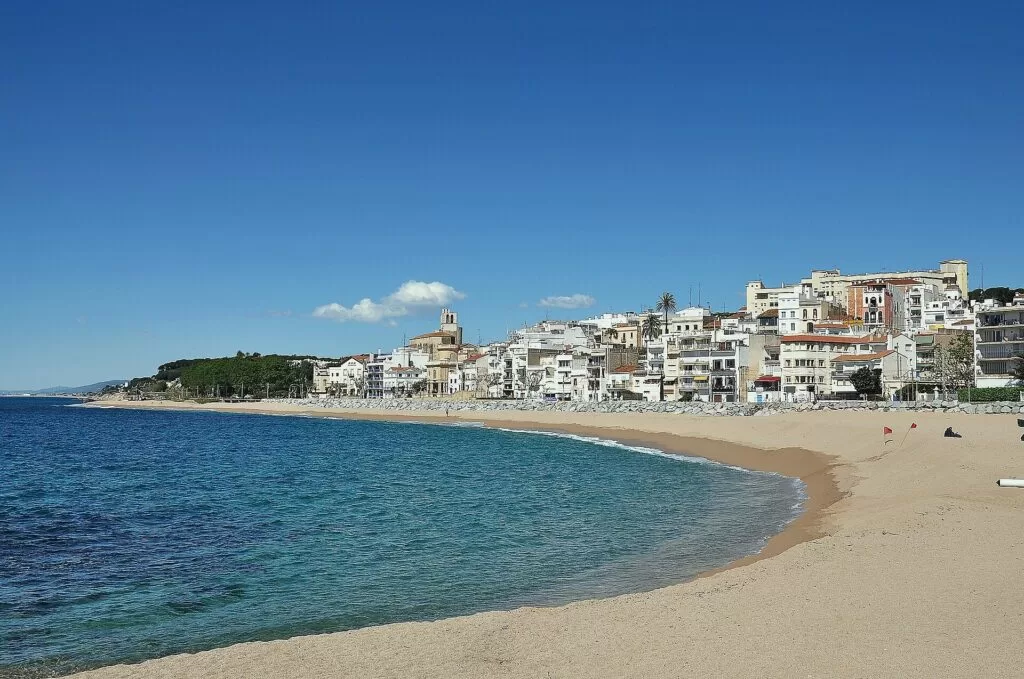
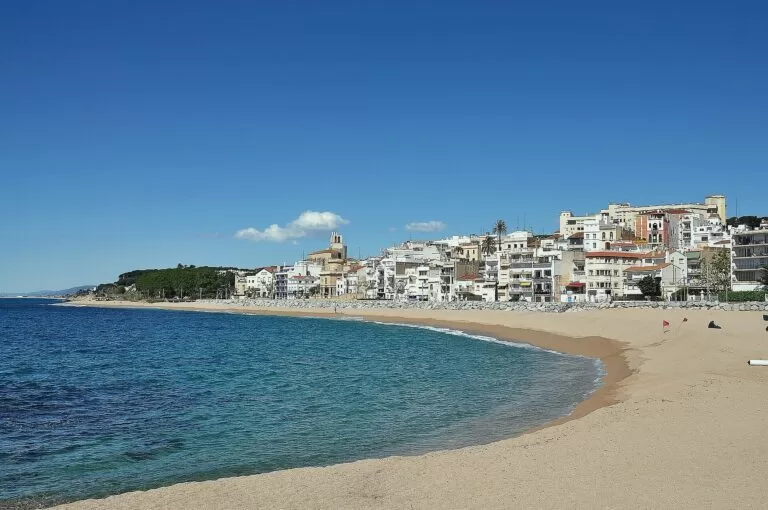
Sant Pol de Mar · Photo: Alberto-g-rovi, CC BY-SA 4.0
The Costa del Maresme is the coast of the Maresme comarca in Barcelona province, a narrow strip of land between the Mediterranean and the Serralada Litoral, Montnegre and Corredor hills (Catalunya.com). The Consell Comarcal puts the comarca at 398.5 km² and 30 municipalities, about 30 km north-east of Barcelona, with Mataró as the administrative capital (Consell Comarcal del Maresme, Consell Comarcal del Maresme). This map and guide runs from Malgrat de Mar and Calella through Sant Pol, Canet and Arenys to Mataró and El Masnou, with the R1 train, weather and campsites.
At a glance
- Where the coast of the Maresme comarca in Barcelona province, about 30 km north-east of Barcelona; the Consell Comarcal puts it at 398.5 km² and 30 municipalities.
- The brand part of the Costa Barcelona, which Catalonia’s tourist board places between Barcelona city, the Costa Daurada and the Costa Brava.
- By train the R1 runs along the coast; Barcelona–Mataró, opened on 28 October 1848, was the first railway in the Iberian Peninsula.
- On CostaMap 11 coastal town guides, five places on the coast and three campsites on the coast (one inland).
- Climate an annual mean of 16.1 °C and 588 mm of rain at Barcelona Airport (AEMET, 1981–2010).
- Hills behind the Serralada Litoral and the Montnegre i el Corredor parks, and the Montseny inland.
Map of the Costa del Maresme
This page is the CostaMap map of the Maresme coast. The map shows the places on this coast that have a CostaMap page: the lighthouse of Calella, Canet’s castle and house-museum, Mataró’s museum and Roman Iluro, and the campsites. Tick a place type to filter it, and click a marker to see the place in the panel. The town guides for Malgrat, Pineda, Calella, Canet, Arenys and Mataró are in the areas below.
Place type
Area · next level
 Coast map
Costa del Maresme
Click a marker to see the place here. Three areas from Malgrat and Calella to Mataró, with the Montseny inland.
Choose your areaChoose your area
The guide follows the coast from north to south: the resort beaches between the Tordera and Calella, then the smaller towns from Sant Pol to Caldes d’Estrac, and finally Mataró and the Baix Maresme towards Barcelona. Only places on or near the sea are in the lists; Granollers, Hostalric and the other inland towns follow as day trips.
North: Malgrat de Mar to Calella
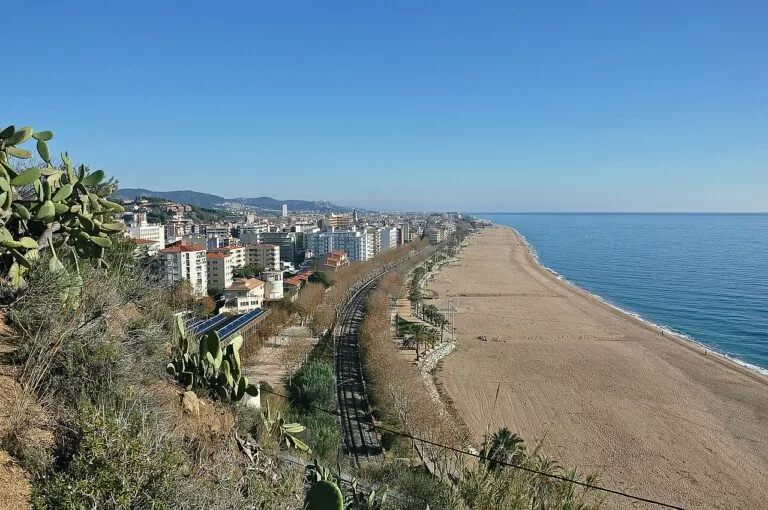
The resort beaches between the Tordera and Calella, where the Maresme has its most hotel activity, with the Montnegre i el Corredor hills behind.
- Malgrat de Mar – the last coastal town of the Maresme, bounded by the Tordera river, with four beaches.
- Tordera – the Pont de Ferro, and a Sunday market that is one of the largest open-air markets in Catalonia.
- Santa Susanna – between the sea and the Montnegre-Corredor park, with the 1,200 m Les Dunes beach.
- Pineda de Mar – a certified Family Tourism destination; La Riera beach has the Blue Flag.
- Calella – known as the tourist capital of the Costa del Maresme, with more than 650 years of history.
- Calella Lighthouse – inaugurated on 15 December 1859, with a viewpoint over the sea and the Montnegre.
Middle: Sant Pol de Mar to Caldes d’Estrac
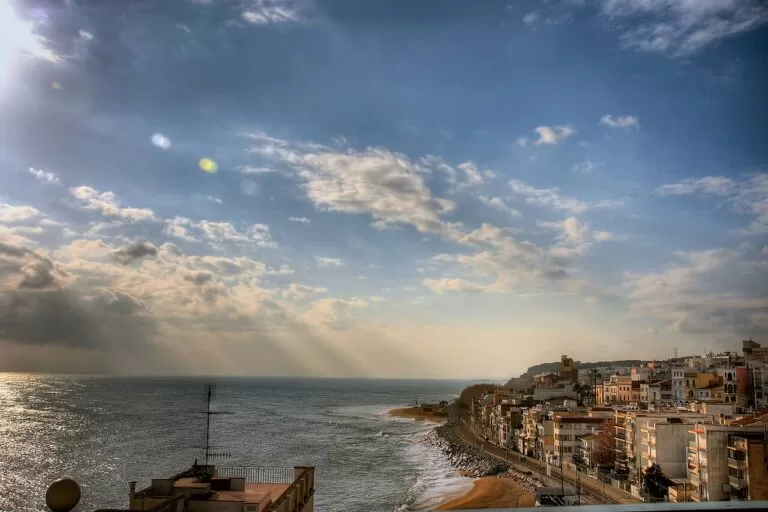
Smaller towns: the white houses of Sant Pol, Modernisme in Canet, the fishing port of Arenys and the thermal baths of Caldes d’Estrac.
- Sant Pol de Mar – narrow streets and white terraced houses, with the Firamar maritime fair at the end of August.
- Canet de Mar – Modernism by the sea, entered along the tree-lined Riera de Sant Domènec.
- Lluís Domènech i Montaner House-Museum – dedicated to the architect (1849–1923); free on the first Sunday of the month.
- Castle of Santa Florentina – the home of Ramon de Montaner, restored and enlarged by his nephew Domènech i Montaner.
- Arenys de Mar – the port of almost the whole Maresme fishing fleet, with a daily afternoon fish auction.
- Caldes d’Estrac – also called Caldetes, with 19th-century thermal baths, the only publicly owned ones in Catalonia.
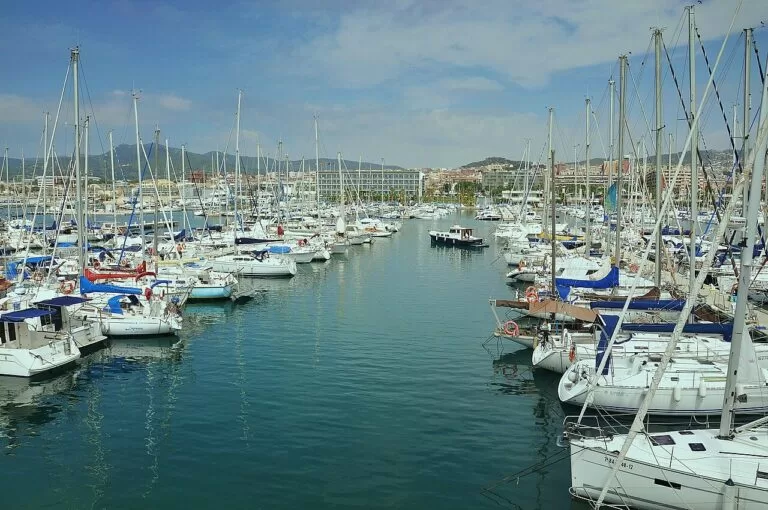
South: Mataró to El Masnou
Mataró, the capital of the comarca, then the marinas and the DO Alella vineyards on the way down towards Barcelona.
- Mataró – the capital of the Maresme, about 30 minutes from Barcelona, with Gaudí’s first work.
- Mataró Museum – in Can Serra, a manor house built in 1565, with an exhibition on Roman Iluro.
- Iluro – the Roman town under Mataró, told in the museum’s exhibition Iluro, ciutat romana.
- Argentona – an inland Maresme town with the Museu del Càntir, more than 4,000 pieces.
- Vilassar de Mar – where Casa Marimon (Can Lari) was built in 1918 for a Barceloneta shipyard owner.
- Premià de Mar – one of the five marinas of the Maresme, between Vilassar and El Masnou.
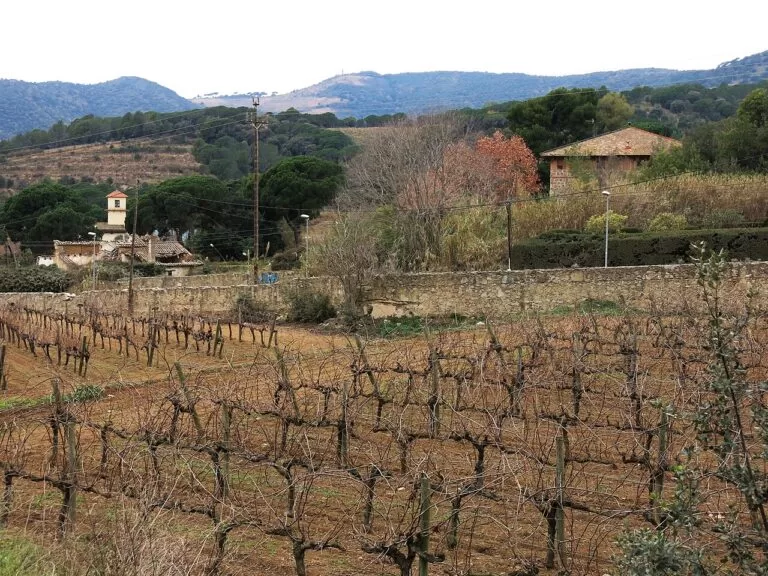
- Alella – an ancient town of wine in DO Alella, Catalonia’s smallest designation of origin.
- El Masnou – between the sea and the DO Alella vineyards, twenty minutes from Barcelona.
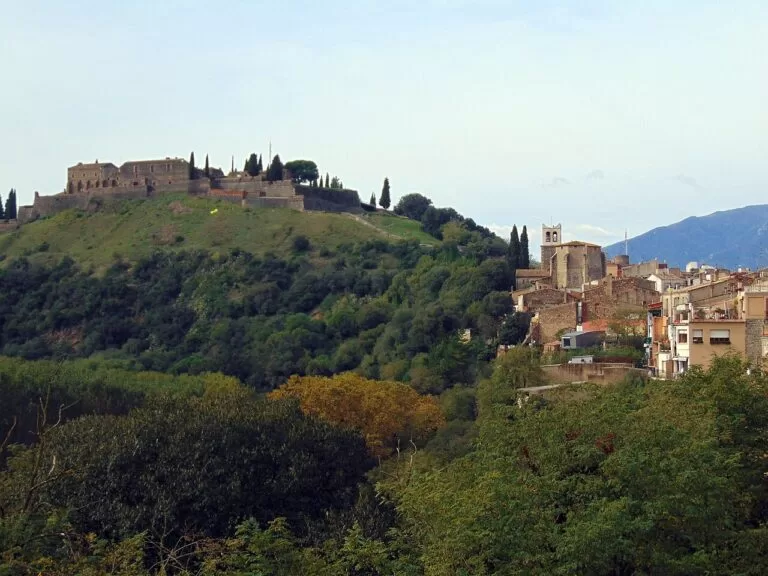
Inland day trips
Behind the coastal hills lie the Vallès Oriental, Hostalric in La Selva and the Montseny. These towns are not on the sea, so their pages are not in the lists above:
- Granollers – the capital of the Vallès Oriental, with the Porxada, a Renaissance grain market on Plaça Gran.
- Cardedeu – a town of the Vallès Oriental, listed by the Turisme Vallès tourist board.
- Sant Celoni – a gateway to the Montseny, straddling the provinces of Barcelona and Girona.
- Hostalric – in La Selva, with more than 600 m of wall and eight cylindrical towers.
- La Garriga – a spa town whose Illa Raspall is four buildings by the architect Manuel Joaquim Raspall.
- Caldes de Montbui – the Font del Lleó thermal spring, where the water emerges at 74 °C.
Explore by interest
Pick a theme. Each tile opens the part of this guide that covers it.
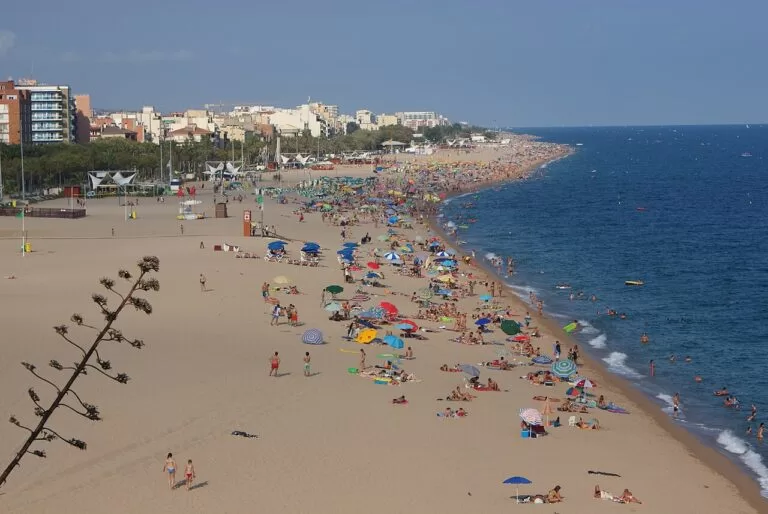
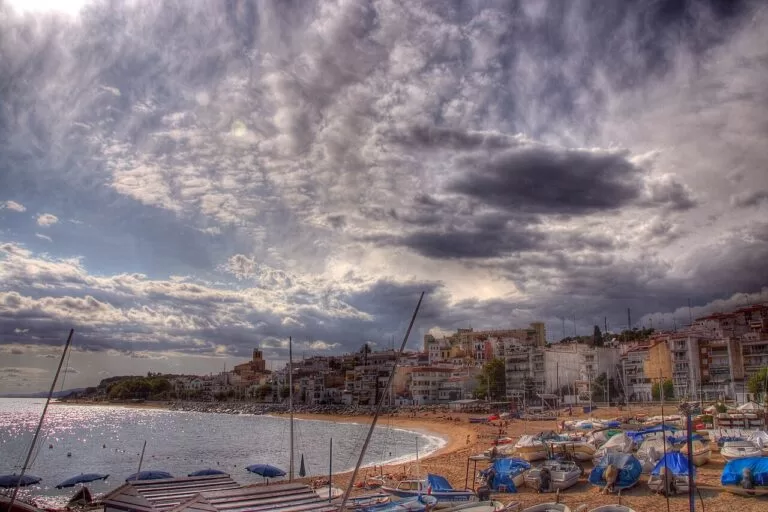
Best beaches and coves on the Costa del Maresme
The selection below is ours, from north to south. Lengths and labels are as given by the Maresme tourist board, checked in October 2026; we mention a Blue Flag only where the source says so. The tourist board counts 50 beaches on the Maresme coast (Turisme Maresme).
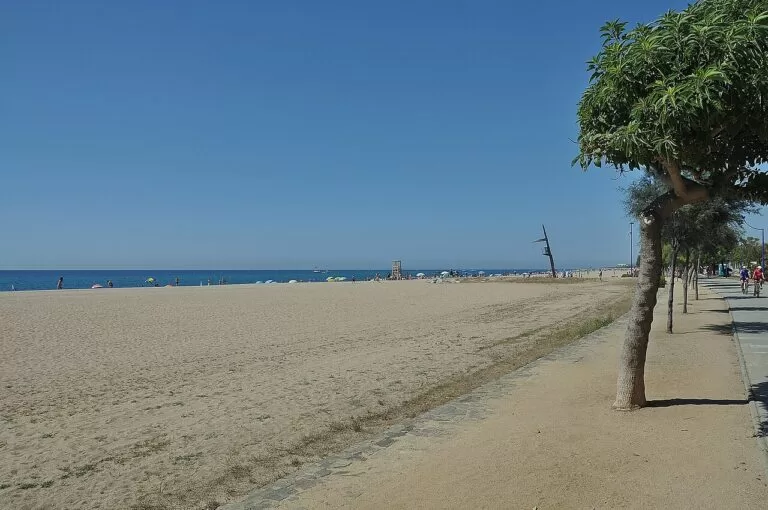
L’Astillero
A Blue Flag beach in the heart of Malgrat’s hotel area (Turisme Maresme). North of it, Punta de la Tordera beach reaches the protected mouth of the Tordera (Turisme Maresme).
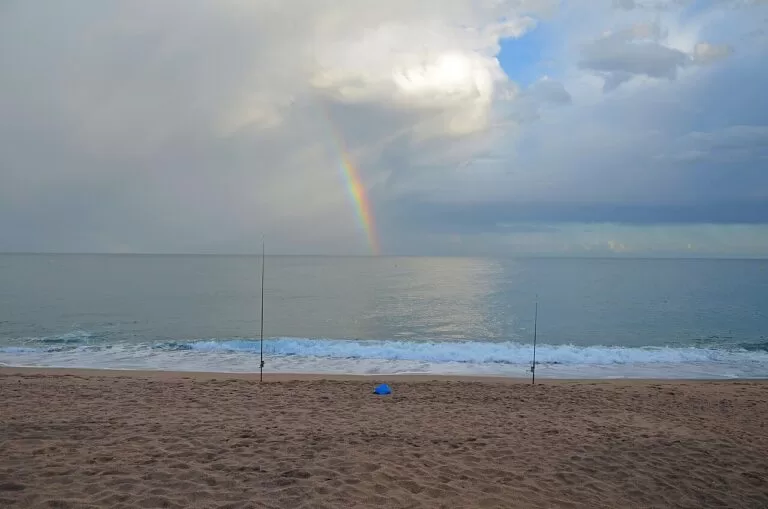
La Riera
A Blue Flag beach between Poblenou and Els Pescadors (Turisme Maresme); Els Pins, further along, is surrounded by pine trees (Turisme Maresme).
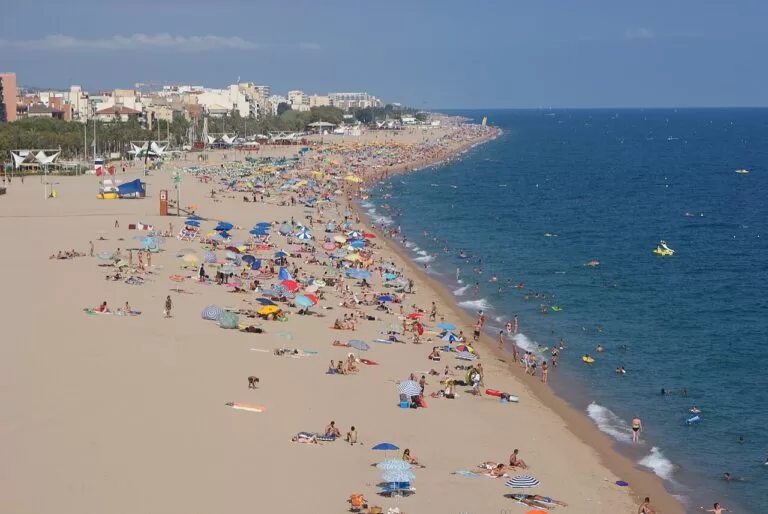
Platja Gran, Calella
1,338 m long and 60 m wide on average, with six access points, three of them adapted for reduced mobility (Turisme Maresme).
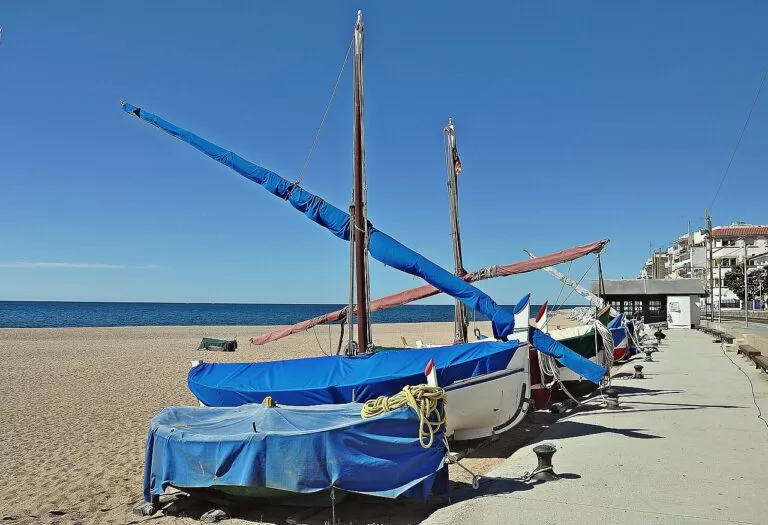
Les Barques
Sant Pol’s town-centre beach, next to the train station and the Nautical Club (Turisme Maresme).
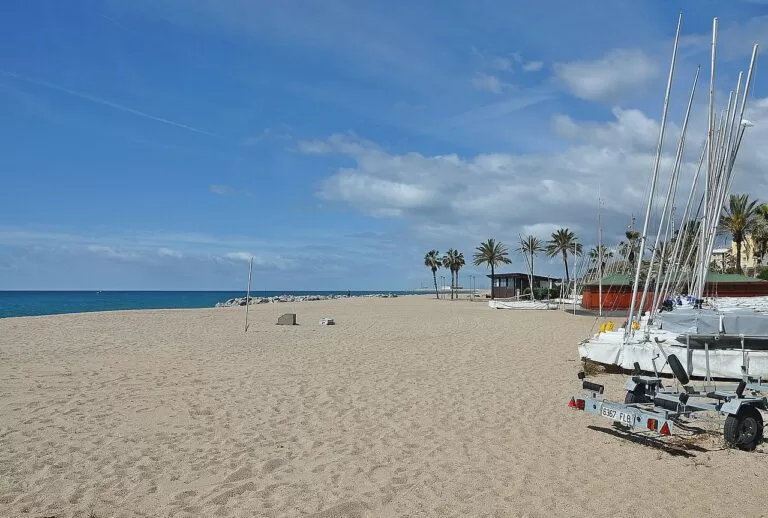
Platja de Canet
The town beach of Canet de Mar, 1,500 m long (Turisme Maresme).
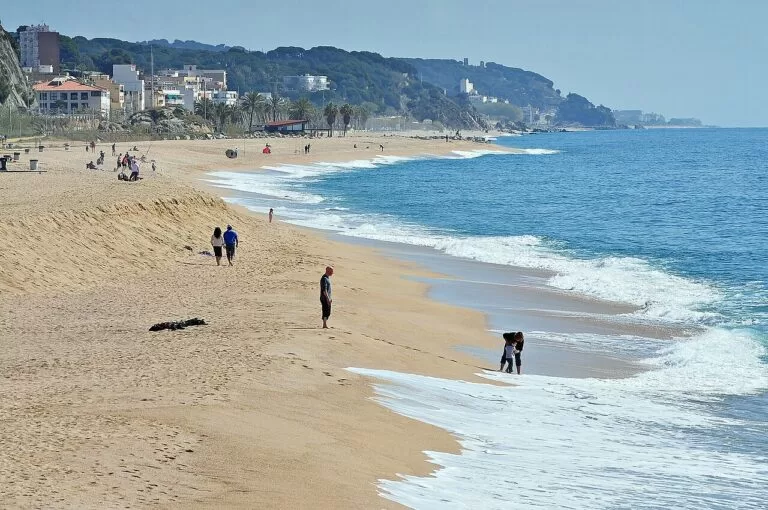
El Cavaió
Arenys de Mar’s main beach, about 1,000 m long and about 90 m wide, naturalised since 2009 (Turisme Maresme).
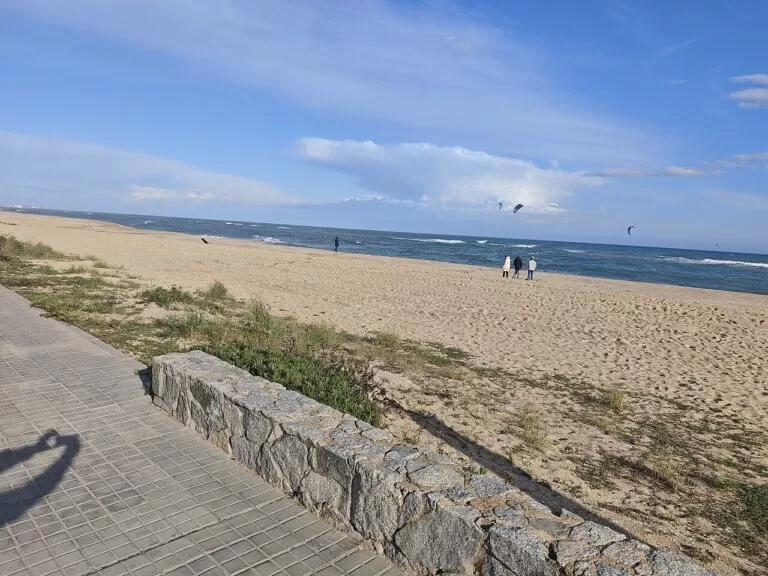
Tres Micos
A Blue Flag beach, separated from Sant Vicenç de Montalt by the Riera del Gorg (Turisme Maresme). Kalima, also in Caldes d’Estrac, has the Blue Flag too (Turisme Maresme).
Also worth knowing: Les Dunes in Santa Susanna is 1,200 m long and 50 m wide, with very coarse sand (Turisme Maresme), and Malgrat Centre is the beach most used by Malgrat’s residents (Turisme Maresme). Roca Grossa, a rocky cove with clear water, is one of Calella’s icons (Turisme Maresme). Sant Vicenç de Montalt has 300 m of golden sand, pet-friendly and with the Blue Flag (Turisme Maresme), and El Balís in Sant Andreu de Llavaneres is listed as 50 m long and 90 m wide (Turisme Maresme).
Where to stay on the Costa del Maresme, town by town
Calella, Malgrat de Mar and Pineda de Mar have the most hotel activity on the coast (Catalunya.com); the towns further south are smaller, and Mataró is the capital. The R1 train runs along the whole coast.
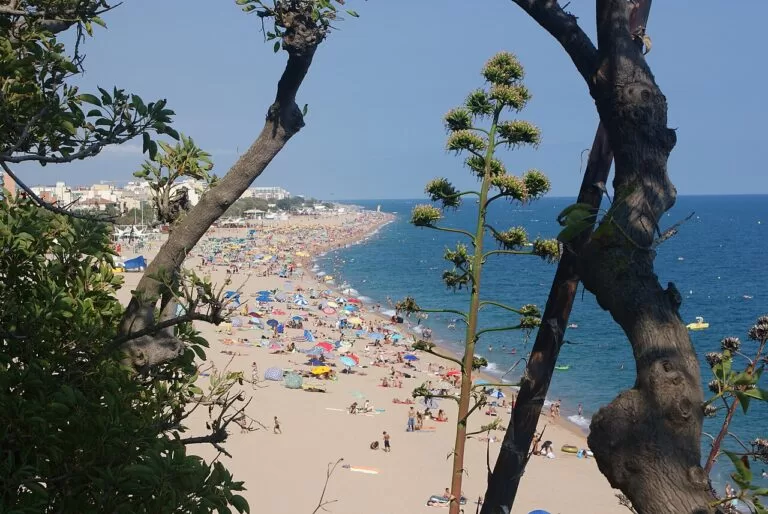
Calella
The tourist capital of the Costa del Maresme, with the 1,338 m Platja Gran and a lighthouse from 1859.
Beach holidays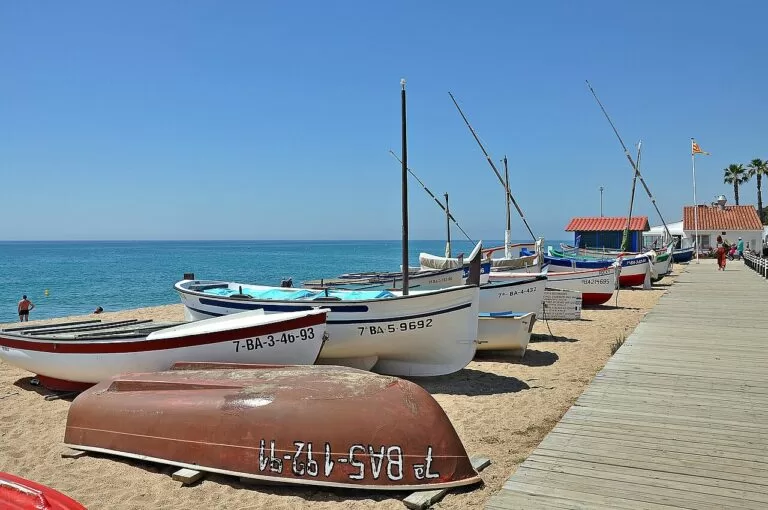
Malgrat de Mar
The last coastal town of the Maresme, with four beaches and the Tordera delta.
Beaches and birds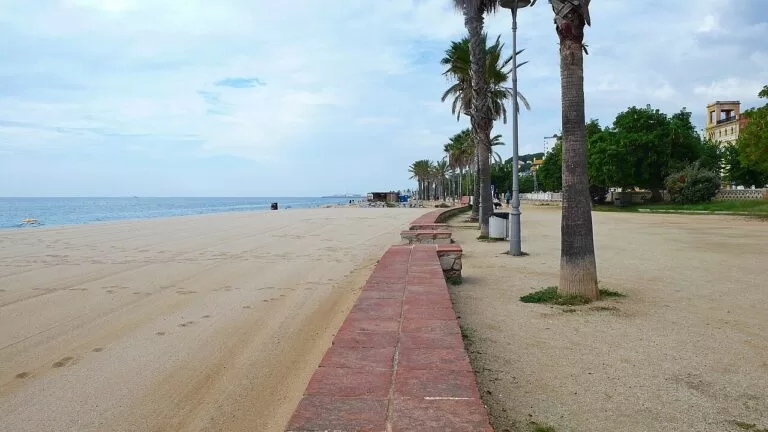
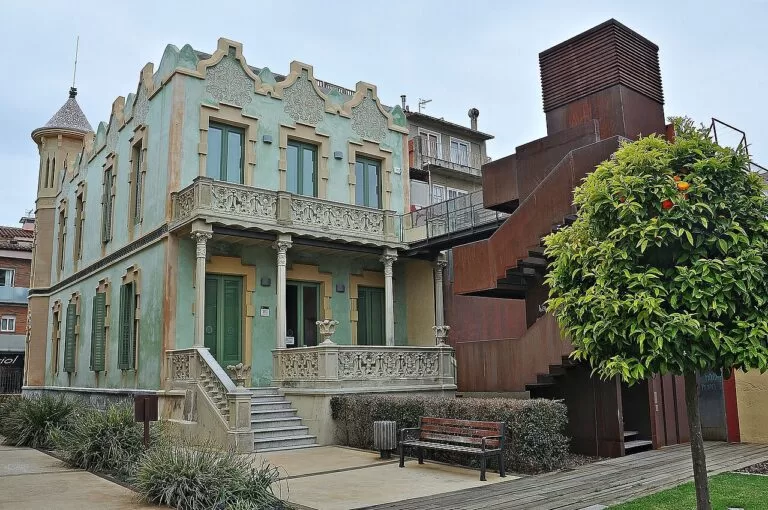
Canet de Mar
Modernism by the sea, with the Domènech i Montaner house-museum and the castle of Santa Florentina.
Architecture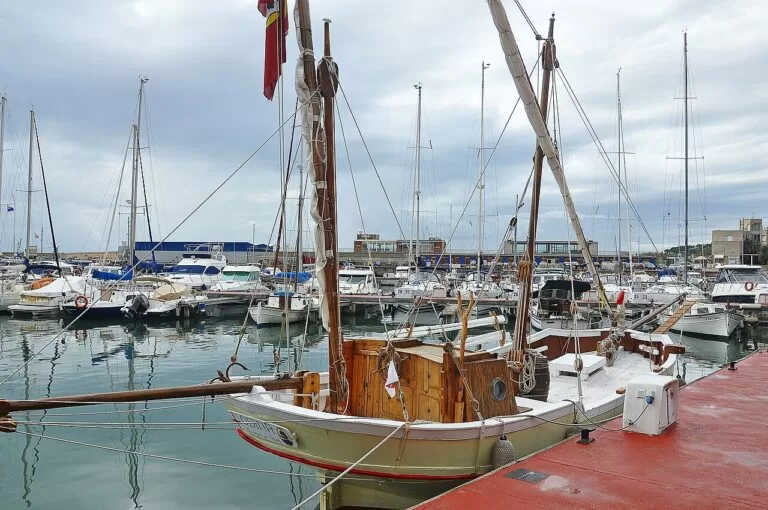
Arenys de Mar
The port of almost the whole Maresme fishing fleet, with a daily afternoon fish auction.
Harbour and seafood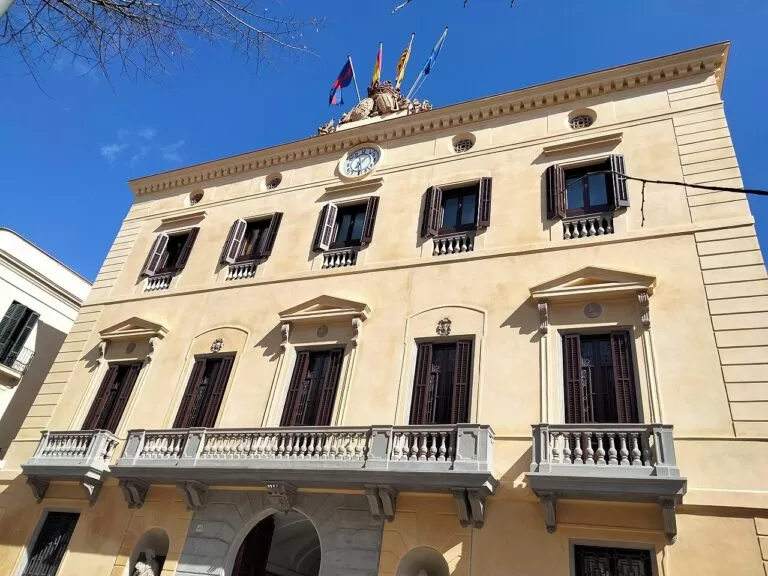
Mataró
The capital of the Maresme, about 30 minutes from Barcelona, with Gaudí’s first work and Roman Iluro.
City and historyCampsites on the Costa del Maresme
These campsites have a CostaMap page. Càmping Bellsol is on the seafront in Pineda de Mar (Càmping Bellsol), El Globo Rojo is opposite the beach of Canet de Mar (Costa Barcelona) and Camping del Mar is in front of the beach in Malgrat de Mar (Camping del Mar). Vila Village is inland, in Hostalric (Catalunya.com). Locations are as each source states them.
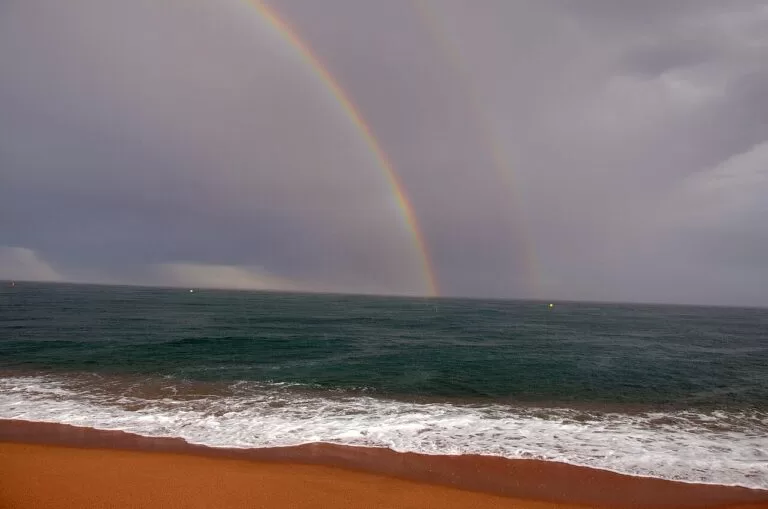
Càmping Bellsol
At Passeig Marítim 46 in Pineda de Mar and open 365 days a year.
See the campsite →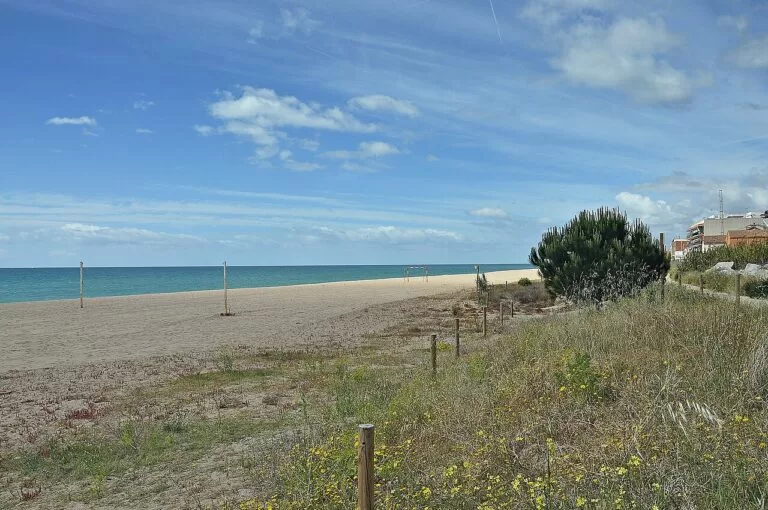
Camping Globo (El Globo Rojo)
A first-category campsite on the N-II at km 660.9, opposite the beach of Canet de Mar.
See the campsite →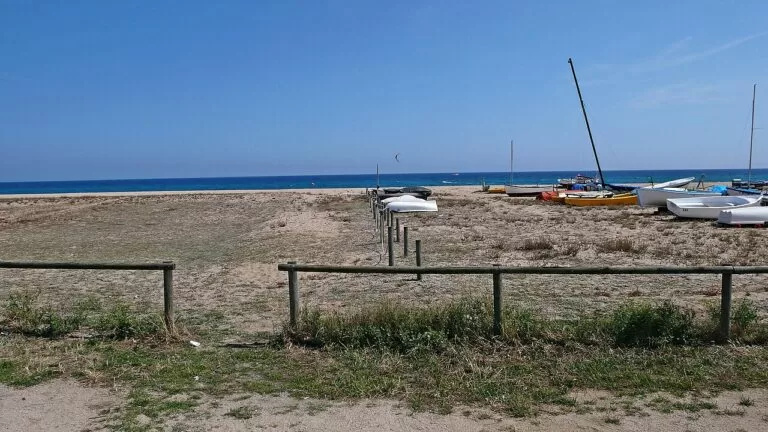
Camping del Mar
On Avinguda Pomareda in Malgrat de Mar, just in front of the beach.
See the campsite →
Vila Village
A tourist complex in Hostalric, inland in La Selva, whose campsite has eighty pitches.
See the campsite →Things to do on the Costa del Maresme
Modernisme in Canet and Mataró
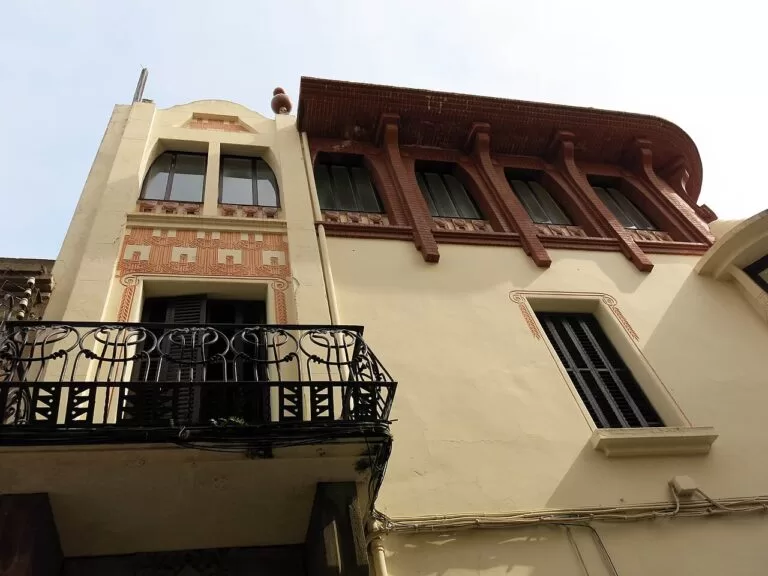
Canet de Mar presents itself as Modernism by the sea (Turisme Maresme). The Lluís Domènech i Montaner House-Museum is dedicated to the architect (1849–1923); adults pay 5 €, entry is free on the first Sunday of the month and it is closed on Mondays (Casa Museu Domènech i Montaner). The Castle of Santa Florentina was the home of Ramon de Montaner i Vila, who commissioned his nephew Domènech i Montaner to restore and enlarge it (Ajuntament de Canet de Mar).
In Mataró, Antoni Gaudí built his first work in 1883, the Nau Gaudí, for the workers’ cooperative La Obrera Mataronense; it uses parabolic arches, now houses the Bassat contemporary art collection and entry is free (Cultura Mataró, Patrimoni Cultural). In Vilassar de Mar, Casa Marimon (Can Lari) was built in 1918 for a Barceloneta shipyard owner (Catalunya.com).
Roman Iluro, museums and the lighthouse
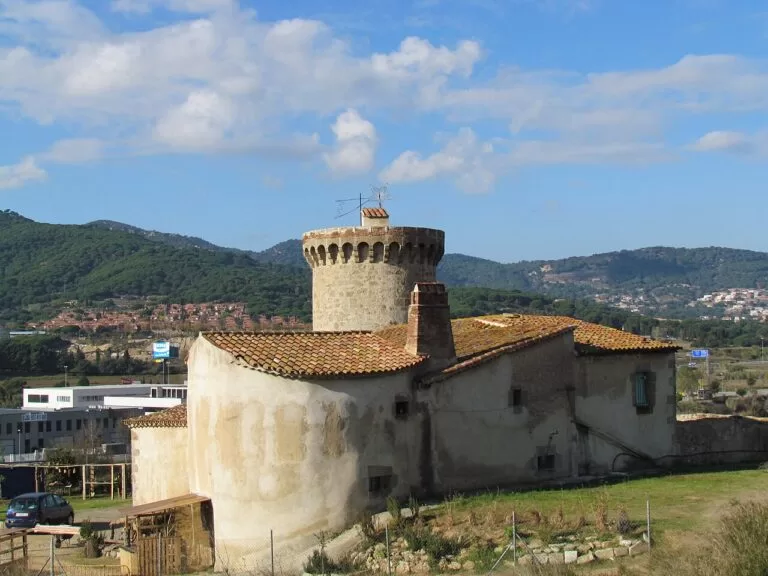
The Mataró Museum is housed in Can Serra, a manor house built in 1565, and its permanent exhibition includes Iluro, ciutat romana, on Roman Mataró (Cultura Mataró); see also Iluro. The basilica of Santa Maria dates from the 18th century (Catalunya.com), and its Capella dels Dolors is one of the finest examples of Catalan religious Baroque (Patrimoni Cultural). In Argentona, the Museu del Càntir, founded in 1975, has more than 4,000 pieces from the Bronze Age to Picasso (Museu del Càntir).
Building of Calella Lighthouse began on 9 October 1856 to plans by the engineer Marià Parellada, and it was inaugurated on 15 December 1859 (Turisme Maresme). The port authority describes a 10-metre white cylindrical tower, the first lighthouse in Catalonia to be electrified, in 1916, with a range of 18 nautical miles (Port de Barcelona). In Arenys de Mar, the church of Santa Maria has a baroque altarpiece by Pau Costa, and the Museu Marès de la Punta shows bobbin lace (Turisme Maresme); in Caldes d’Estrac, the Palau Foundation exhibits sixty works by Picasso (Turisme Maresme).
Lluís Domènech i Montaner House-Museum
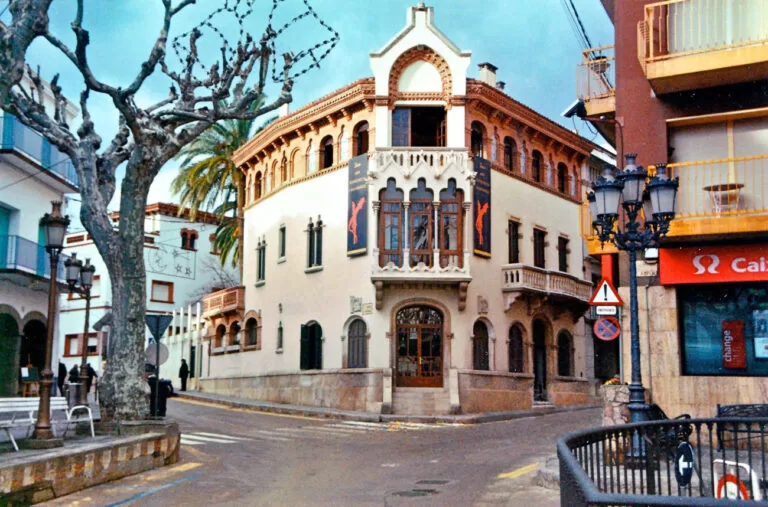
Adults pay 5 €; entry is free on the first Sunday of the month, and the museum is closed on Mondays.
Read the guide →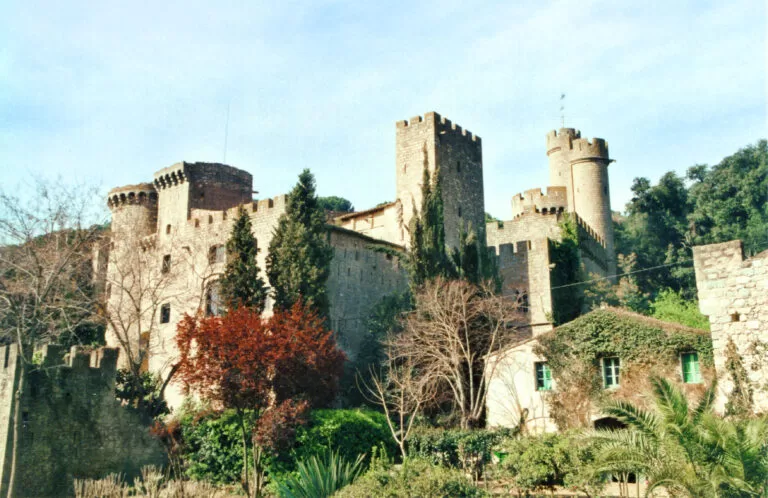
Castle of Santa Florentina
Ramon de Montaner i Vila’s home, restored and enlarged by his nephew, the architect Lluís Domènech i Montaner.
Read the guide →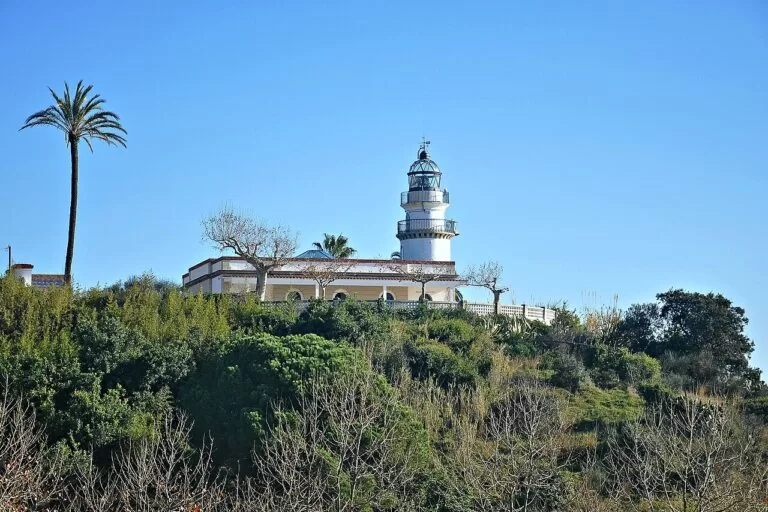
Calella Lighthouse
Begun in 1856 and inaugurated on 15 December 1859; its light is 46 m above sea level.
Read the guide →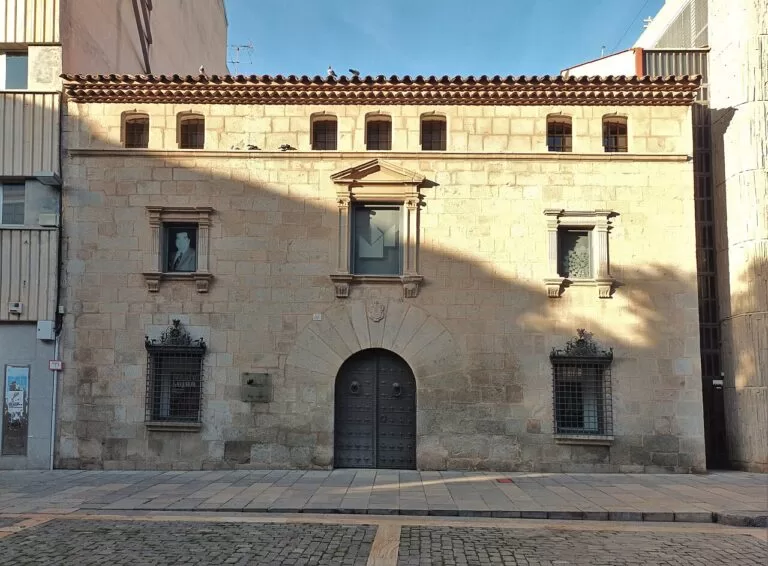
Mataró Museum
In Can Serra, a manor house of 1565 at El Carreró 17, with a permanent exhibition on Roman Iluro.
Read the guide →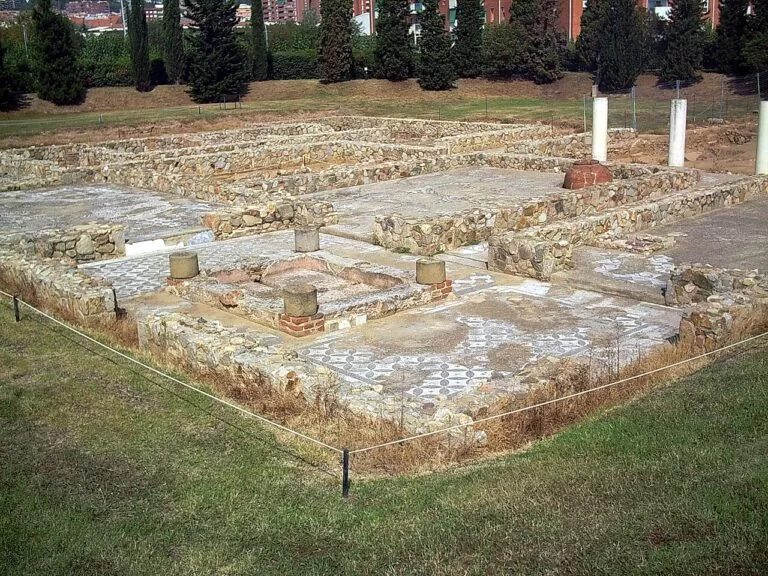
Iluro
The Roman city under Mataró, presented in the exhibition Iluro, ciutat romana at Can Serra.
Read the guide →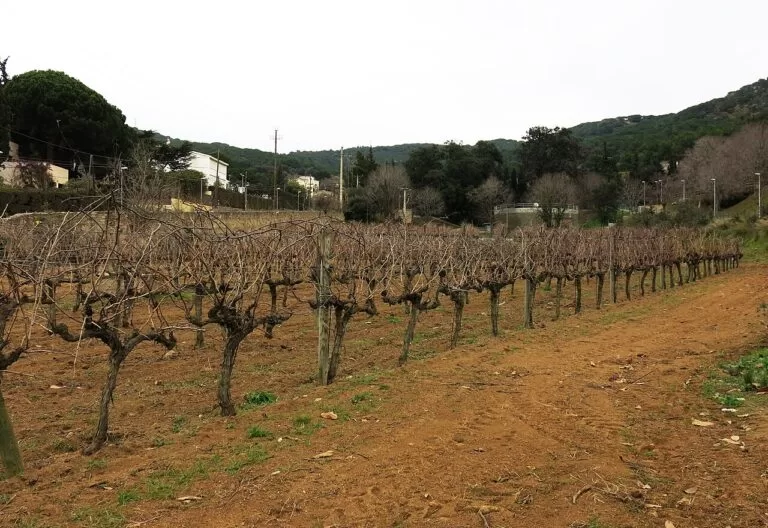
Strawberries, peas and DO Alella
Strawberries, potatoes, flower-growing and vineyards are among the Maresme’s best-known farm products (Catalunya.com); Catalonia’s tourist board recommends the Maresme strawberries, and Calella holds a strawberry fair, the Fira de la Maduixa, in May (Catalunya.com). Sant Andreu de Llavaneres is known for the Pèsol Garrofal de Llavaneres pea and the Coca de Llavaneres (Turisme Maresme), and Arenys de Mar holds the Calamarenys squid days in October and November (Turisme Maresme). In Mataró, the traditional markets are El Rengle and Plaça de Cuba (Femturisme).
DO Alella is Catalonia’s smallest designation of origin and the closest to Barcelona; Prodeca gives it 223 hectares of vineyard on sauló, a free-draining granitic sand, and its best-known wines are whites from the native Pansa Blanca grape (Prodeca). Catalan Wines lists 200 hectares and 7 wineries (Catalan Wines). Alella offers winery tours and tastings (Femturisme).
The coastal hills, the Montseny and the Tordera delta
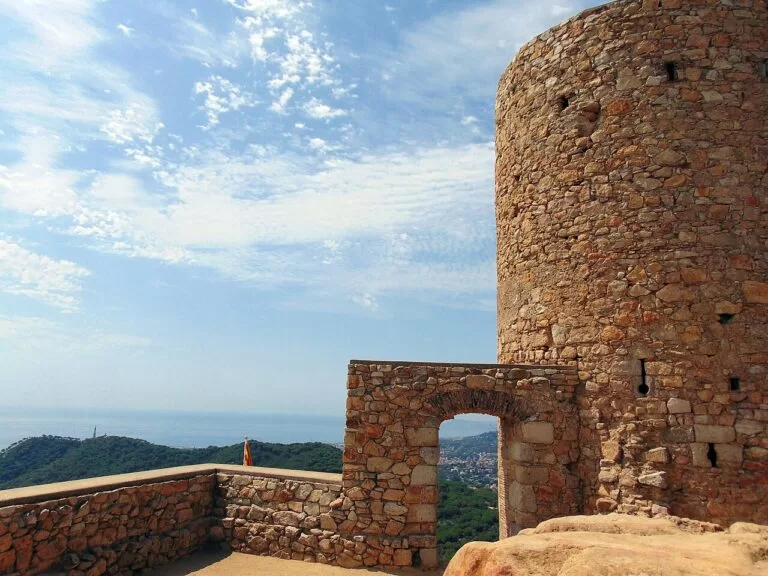
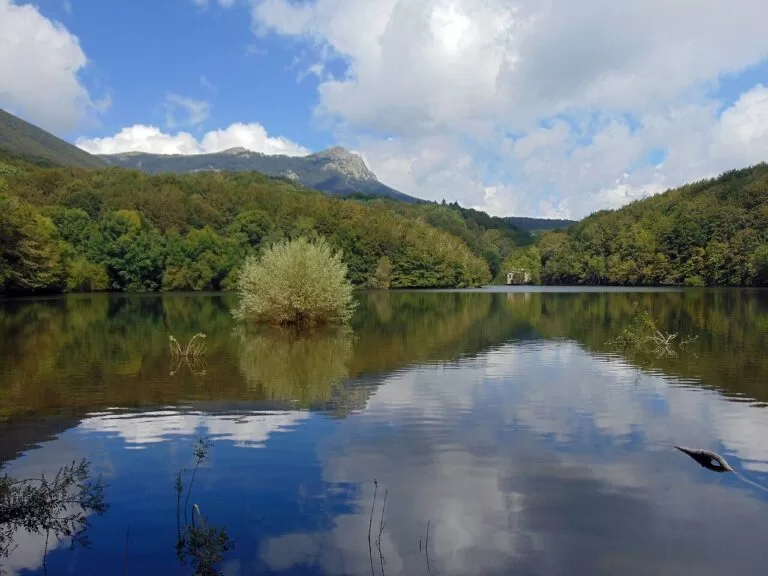
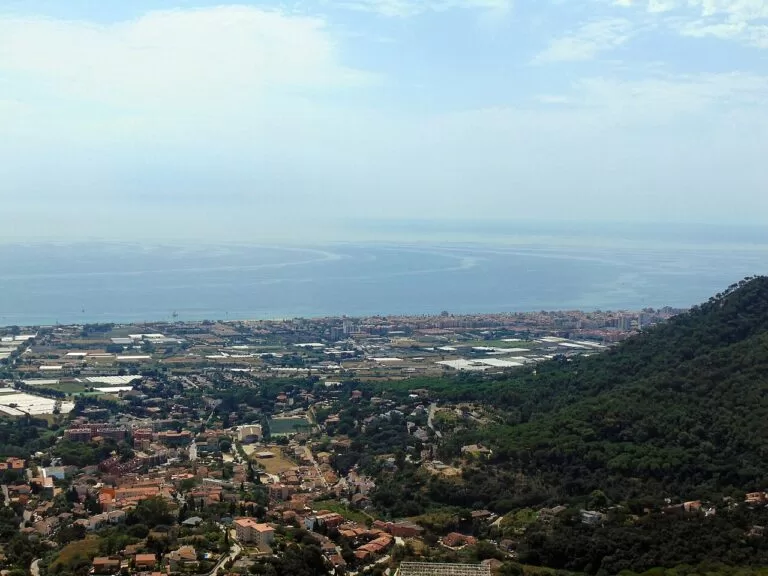
Behind the beaches, the Parc del Montnegre i el Corredor protects 15,000 ha between the Maresme and the Vallès Oriental (Parcs de la Diputació de Barcelona). The Parc de la Serralada Litoral covers 11,450 ha in 15 municipalities and never exceeds 600 m in altitude (Parcs de la Diputació de Barcelona), with one of the country’s most important granite landscapes (Parcs de la Diputació de Barcelona). Inland, the Parc Natural del Montseny covers 30,120 ha (Parcs de la Diputació de Barcelona); UNESCO declared the Montseny Biosphere Reserve on 28 April 1978 and enlarged it to 50,166 hectares in 2014 (Parcs de la Diputació de Barcelona).
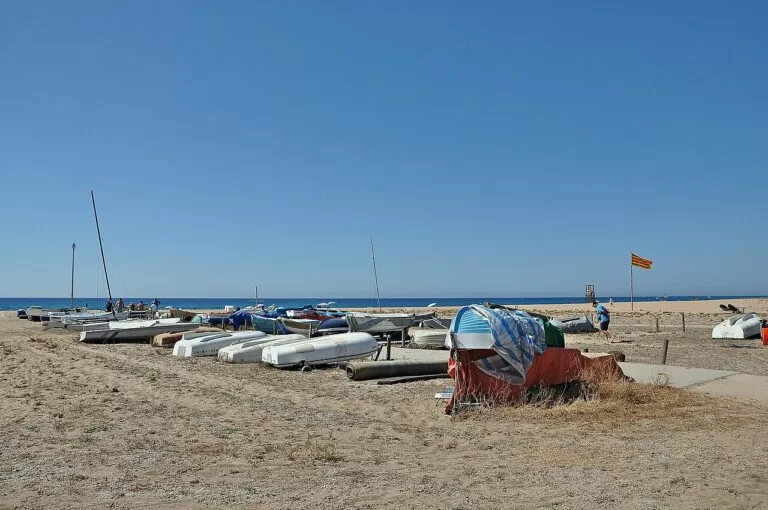
At the northern end of the coast, a bird observatory overlooks the Tordera delta (Turisme Maresme). On the water, the Maresme has five marinas: Arenys de Mar, Port Balís, Mataró, Premià de Mar and El Masnou (Catalunya.com); Port Balís in Sant Andreu de Llavaneres has 764 moorings (Catalunya.com), and Sant Vicenç de Montalt has a nautical base (Turisme Maresme).
When to go to the Costa del Maresme
Average temperature and rainfall at Barcelona Airport (AEMET station 0076), for 1981–2010 (AEMET). We found no AEMET normals for a station on the Maresme coast itself.
The annual mean at Barcelona Airport is 16.1 °C, with 588 mm of rain on 53.3 days; July averages 305 hours of sunshine and January 151 (AEMET). Calella’s strawberry fair is in May (Catalunya.com), Sant Pol de Mar holds the Firamar maritime fair at the end of August (Turisme Maresme), and Sant Roc on 16 August in Arenys de Mar is a Heritage Festival of National Interest (Turisme Maresme).
Itineraries
Both plans use places with their own CostaMap page and the R1 train, which stops in Calella, Arenys de Mar and Mataró. The Montseny and Vic are easier by car.
Three days
Day 1
Calella
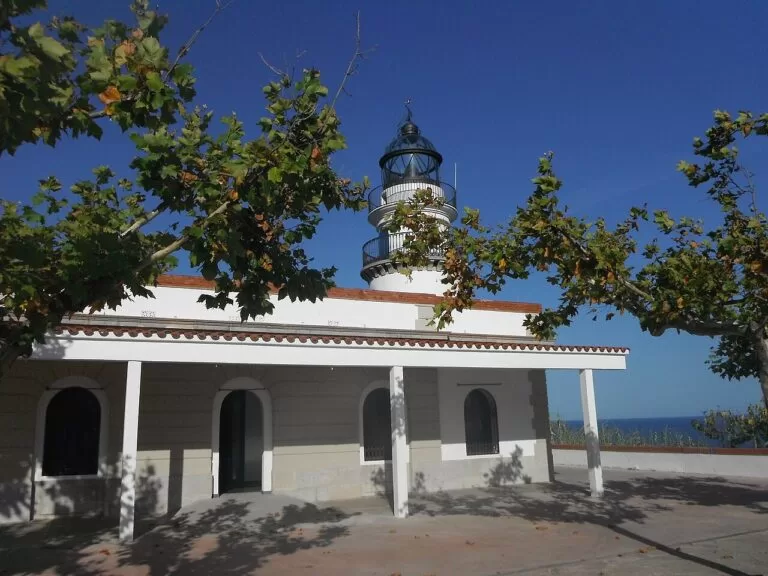
Start the morning on the Platja Gran in Calella, 1,338 metres long, with six access points. Walk in the shade of the pines in Parc Dalmau, then follow the coast to the lighthouse, where the interpretation centre lets you climb to the top and the viewpoint looks over the sea and the Montnegre i el Corredor. From July to September it opens Tuesday to Sunday, 5 to 9 pm; the rest of the year only at weekends and on holidays, 10 am to 2 pm. End the day at the rocky cove of Roca Grossa.
Day 2
Canet de Mar and Sant Pol
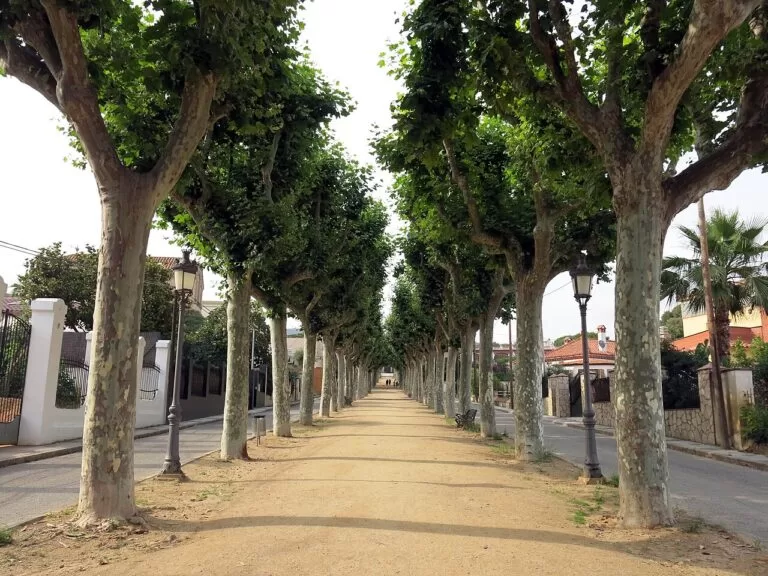
Enter Canet de Mar along the Riera de Sant Domènec, lined with century-old trees, and spend the morning in the house-museum of Lluís Domènech i Montaner (1849–1923), who restored and enlarged the Castell de Santa Florentina for his uncle. Adult entry is 5 €, it is free on the first Sunday of the month, and it is closed on Mondays. In the afternoon move on to Sant Pol de Mar, with its narrow streets and white terraced houses. Les Barques, the town-centre beach, lies next to the train station and right beside the Nautical Club.
Day 3
Mataró
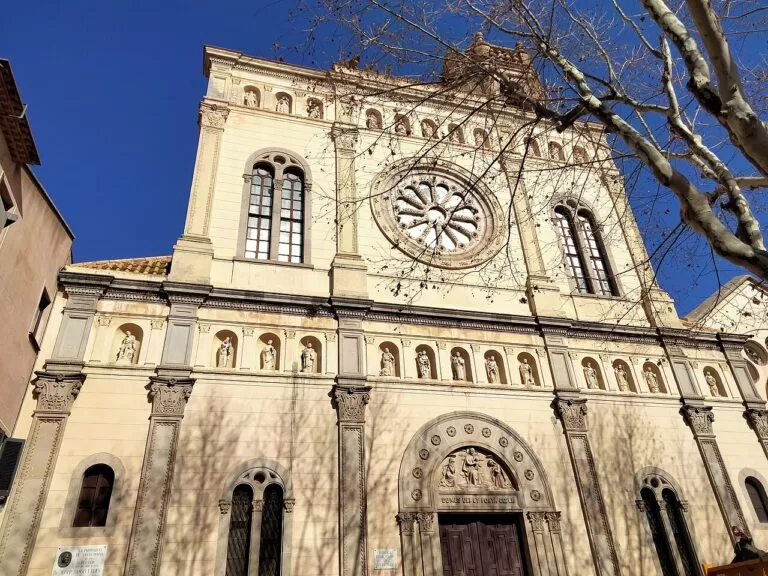
Mataró is about 30 minutes from Barcelona. Begin at Can Serra, a manor house built in 1565, where the Museu de Mataró shows the Iluro exhibition on the Roman town. Then the basilica of Santa Maria and its Capella dels Dolors, one of the most outstanding examples of Catalan religious Baroque. Finish at the Nau Gaudí, Gaudí’s first work (1883), with the Bassat contemporary art collection. Entry to both is free; both close on Mondays, open only 5 to 8 pm from Tuesday to Friday, and the Nau Gaudí opens only when an exhibition is on.
Seven days
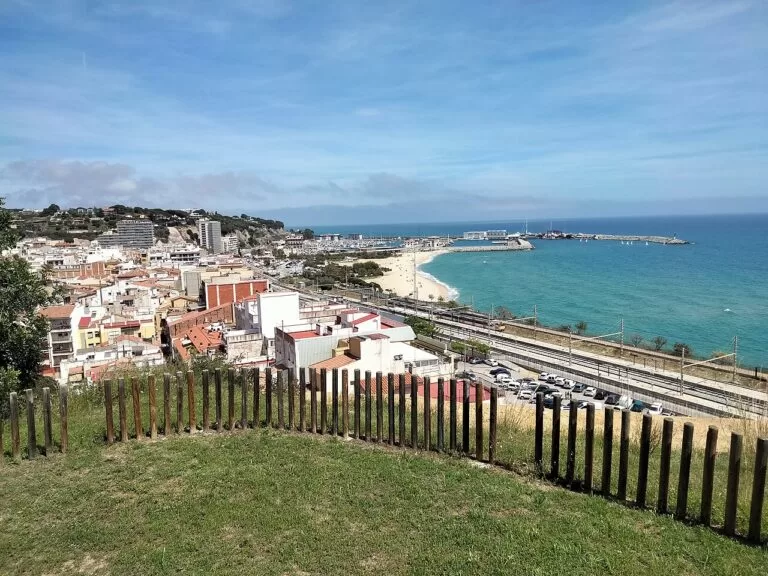
Days 1–3: as above, based in Calella or Mataró.
Day 4
Arenys de Mar and Caldes d’Estrac
Morning in Arenys de Mar: the modernist covered market on the Riera is open every morning except Sunday, and on Saturday mornings the open-air weekly market fills the Riera. Swim at El Cavaió, the main beach. Almost the whole fishing fleet of the Maresme is based in the port, and the fish auction takes place every afternoon when the boats return. End the day in Caldes d’Estrac, reached by the R1 train, where the 19th-century thermal baths next to Plaça de la Vila are the only publicly owned ones in Catalonia; the water emerges at 38 °C.
Day 5
Alella and the Baix Maresme
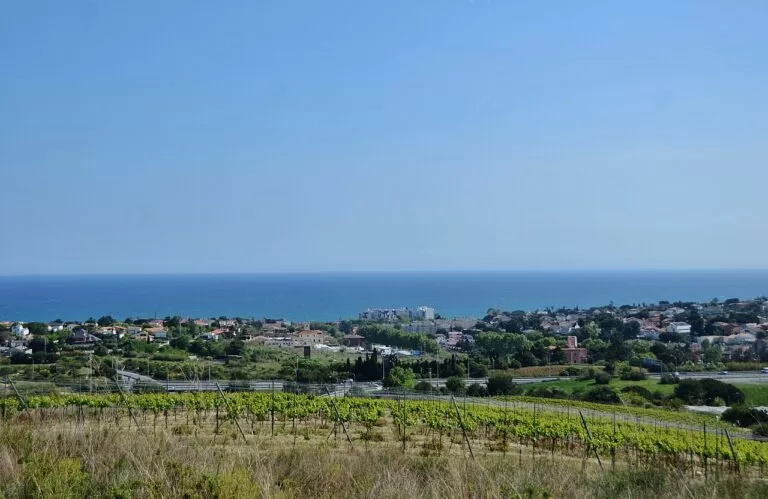
Start among the vineyards of Alella, an ancient town of wine with winery tours and tastings. DO Alella is Catalonia’s smallest DO and the closest to Barcelona, best known for whites from the Pansa Blanca grape. At midday visit the Museu del Càntir in Argentona, with more than 4,000 pieces from the Bronze Age to Picasso: it is closed on Mondays and opens 11 am to 2 pm, plus 5 to 8 pm from Wednesday to Saturday. End at Casa Marimon (Can Lari) in Vilassar de Mar, built in 1918 for a Barceloneta shipyard owner.
Day 6
The Montseny
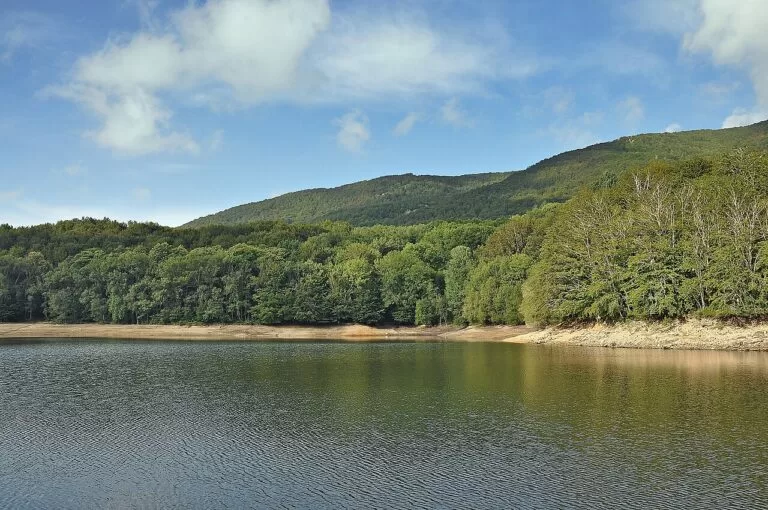
From Arenys de Mar the C-61 climbs inland over Collsacreu towards the motorway exit for Sant Celoni, one of the main gateways to the Montseny Natural Park. The park covers 30,120 ha, UNESCO declared it a biosphere reserve in 1978, and its highest summit is the Turó de l’Home, 1,706 m. The park office is at Masia Mariona in Mosqueroles, on the BV-5119. Before a walk, check the Pla Alfa fire-danger level (0 to 4). On the way back, stop in the walled town of Hostalric, with more than 600 m of wall and eight cylindrical towers.
Day 7
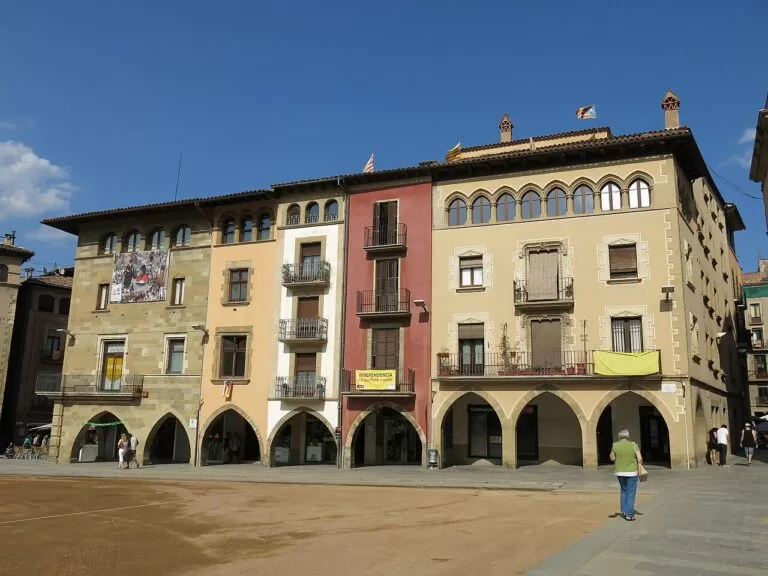
Vic
Vic, the capital of Osona, lies about 70 km from Barcelona. Go on a Tuesday or Saturday, when the weekly market fills the Plaça Major, held there since the 9th century, with stalls of local produce, flowers, crafts and poultry. Then see the cathedral, where the bell tower and crypt survive from Bishop Oliba’s 11th-century Romanesque building and Josep M. Sert decorated the central nave, the 2nd-century Roman Temple and the Vic Museum of Medieval Art. Before driving back, try the local salchichón, a cured sausage.
Getting to and around the Costa del Maresme
By air
Barcelona–El Prat (BCN, ICAO LEBL) is the nearest large airport (OurAirports). From it, Sagalés Airport Line bus 603 serves several Maresme towns and Blanes (Aena). Girona–Costa Brava (GRO, ICAO LEGE) is 10 km from Girona and 85 km from Barcelona (OurAirports, Aena).
By train
The R1, the Maresme or coast line, runs 95.1 km with 31 stations from Molins de Rei to Maçanet-Massanes, stopping at Mataró, Arenys de Mar, Calella and Blanes. Between L’Hospitalet and Mataró trains run every 6 minutes at peak times on weekdays, and trains to Blanes and Maçanet-Massanes every 30 minutes (Rodalies de Catalunya). The Barcelona–Mataró railway, the first in the Iberian Peninsula, opened on 28 October 1848 (Rodalies de Catalunya).
By car
The C-32 motorway runs along the Maresme. According to a Generalitat press release of December 2014, from 1 January 2015 drivers with VIA T pay by distance on the stretch between Mataró and Palafolls (Govern de Catalunya). Check current tolls before you drive.
Practical and safety
- Fire: from 15 March to 15 October any activity with fire risk within 500 m of woodland needs authorisation, and burning plant waste is banned all year (Generalitat de Catalunya). The Pla Alfa rates forest-fire danger daily from 0 (low) to 4 (extreme) (Generalitat de Catalunya).
- On the beach: the Mossos d’Esquadra advise bringing only what you need, no valuables, and asking someone you trust to watch your things when you swim (Mossos d’Esquadra, Mossos d’Esquadra). The emergency number in Catalonia is 112.
- Tourist tax: outside Barcelona city, from 1 April 2026 Catalonia’s tax is €0.90 per person per night at campsites and €1.80 in 4-star hotels (Agència Tributària de Catalunya); it does not apply to under-17s and is charged for at most 7 nights (Agència Tributària de Catalunya).
- Museums on Mondays: the Domènech i Montaner house-museum in Canet de Mar is closed on Mondays.
- Car parks: remove all valuables from your car, which is not a safe, and dial 112 if you see suspicious people near it (Mossos d’Esquadra).
Costa del Maresme FAQ
Where is the Costa del Maresme?
In Catalonia, Spain: it is the coast of the Maresme comarca in Barcelona province, north of Barcelona city, up to Malgrat de Mar, the last coastal town of the Maresme.
Is there a map of the Costa del Maresme?
Yes, this page. The map above shows every place on this coast with a CostaMap page, and the areas below link the town guides for Malgrat, Pineda, Calella, Canet, Arenys and Mataró.
Is Calella on the Costa Brava?
No. Calella is in the Maresme, in Barcelona province, which Catalonia’s tourist board places under the Costa Barcelona brand, between Barcelona, the Costa Daurada and the Costa Brava.
How do I get from Barcelona to the Maresme?
By the R1 train, which runs along the coast to Mataró, Arenys de Mar, Calella and Blanes, or by Sagalés bus 603 from Barcelona airport.
Which is the capital of the Maresme?
Mataró, the administrative capital of the comarca, about 30 minutes from Barcelona.
Are there campsites on the Maresme?
Yes. Càmping Bellsol in Pineda de Mar, El Globo Rojo in Canet de Mar and Camping del Mar in Malgrat de Mar are by the beach.
Neighbouring costas
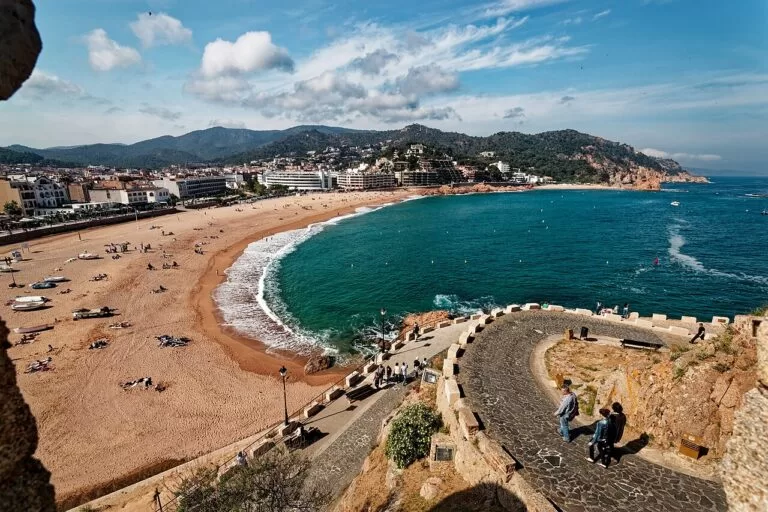
Costa Brava
Beyond Malgrat de Mar: the coves of Girona province, Tossa de Mar, Cadaqués and Girona airport.
Costa Brava guide →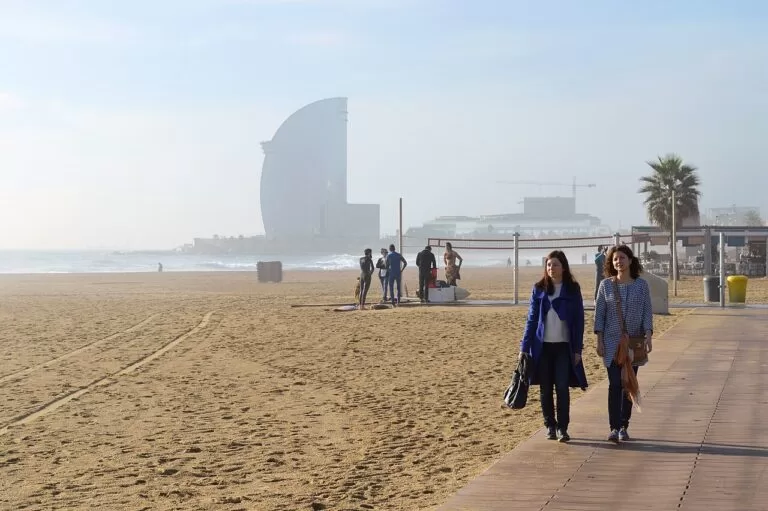
Costa de Barcelona
The Costa Barcelona brand from Barcelona city to the Garraf and the Penedès, of which the Maresme is a part.
Costa de Barcelona guide →Sources and freshness
Checked 5 October 2026 · 95 sources Show
Checked 5 October 2026. The Maresme tourist board (Turisme Maresme) on the beaches and the towns of Malgrat de Mar, Tordera, Santa Susanna, Pineda de Mar, Calella, Sant Pol de Mar, Canet de Mar, Arenys de Mar, Caldes d’Estrac, Sant Vicenç de Montalt, Sant Andreu de Llavaneres and El Masnou; its beach pages for Platja Gran, L’Astillero, Malgrat Centre, Punta de la Tordera, Les Dunes, La Riera, Els Pins, Les Barques, Canet, El Cavaió, Tres Micos, Kalima, Sant Vicenç and El Balís; and the Calella Lighthouse centre and El Masnou nautical museum. Consell Comarcal del Maresme (the comarca, municipalities). Catalunya.com on the Costa Barcelona, the Maresme, Calella lighthouse, Hostalric, La Garriga, Vila Village and Port Balís; Costa Barcelona on El Globo Rojo. Town councils: Arenys de Mar, Canet de Mar (Santa Florentina, Casa Museu Domènech i Montaner), Cultura Mataró (Can Serra, Nau Gaudí), Caldes de Montbui, Vic markets; Museu del Càntir. Heritage: Patrimoni Cultural on the Nau Gaudí, the Capella dels Dolors and the Porxada of Granollers; Port de Barcelona on Calella lighthouse. Wine: Prodeca on DO Alella, Catalan Wines. Inland and comarques: Femturisme on Mataró, Argentona, Alella, Hostalric, Sant Celoni, Granollers, Cardedeu, La Garriga, Caldes de Montbui, Vic and Manlleu; Terres de Girona on Hostalric; Consell Comarcal del Vallès Oriental on Sant Celoni and Granollers; Turisme Vallès. Parks: Parcs de la Diputació de Barcelona on the Montnegre i el Corredor, the Serralada Litoral, its landscape, the Montseny and the biosphere reserve. Campsites, from their own websites: Càmping Bellsol (home), Camping Globo, Camping del Mar; Barcelona Campings on Bellsol. Transport: Rodalies (R1, lines), Barcelona City Council on the 1848 railway, Aena (Barcelona–El Prat, buses, Girona–Costa Brava), OurAirports (LEBL, LEGE), Sagalés Airport Line, Govern de Catalunya on the C-32, Club Nàutic El Balís. Tax: Agència Tributària de Catalunya (IEET, rates). Safety: Generalitat on fire and the Pla Alfa; Mossos d’Esquadra (holidays, beaches). Climate: AEMET normals 1981–2010 for Barcelona Airport.
Photo credits · 46 photos from Wikimedia Commons Show
Photos from Wikimedia Commons, not altered except for cropping: Sant Pol de Mar by Alberto-g-rovi (CC BY-SA 4.0); Calella by Alberto-g-rovi (CC BY-SA 4.0); Sant Pol de Mar by miki (CC BY-SA 3.0); Mataró by Alberto-g-rovi (CC BY 3.0); Hostalric by Josep Maria Viñolas Esteva (CC BY-SA 4.0); Calella by Mari0T (CC BY-SA 3.0); Sant Pol de Mar by miki (CC BY-SA 3.0); Alella by Enric (CC BY-SA 4.0); Castell de Burriac by Josep Maria Viñolas Esteva (CC BY-SA 4.0); Montseny by Josep Maria Viñolas Esteva (CC BY-SA 4.0); Malgrat de Mar by Alberto-g-rovi (CC BY 3.0); Malgrat de Mar by Alberto-g-rovi (CC BY 3.0); Pineda de Mar by marek7400 (CC BY 3.0); Calella by Mari0T (CC BY-SA 3.0); Sant Pol de Mar by Alberto-g-rovi (CC BY-SA 4.0); Canet de Mar by Alberto-g-rovi (CC BY 3.0); Arenys de Mar by Alberto-g-rovi (CC BY 3.0); Caldes d’Estrac by Friviere (CC BY-SA 4.0); Calella by Mari0T (CC BY-SA 3.0); Pineda de Mar by Alberto-g-rovi (CC BY 3.0); Malgrat de Mar by Alberto-g-rovi (CC BY-SA 4.0); Canet de Mar by Alberto-g-rovi (CC BY 3.0); Arenys de Mar by Alberto-g-rovi (CC BY 3.0); Mataró by Enric (CC BY-SA 4.0); Pineda de Mar by marek7400 (CC BY 3.0); Canet de Mar by Alberto-g-rovi (CC BY 3.0); Malgrat de Mar by Alberto-g-rovi (CC BY 3.0); Hostalric by Alberto-g-rovi (CC BY-SA 3.0); Canet de Mar by Enfo (CC BY-SA 4.0); Mataró by Jramis (CC BY-SA 3.0); Canet de Mar by jordi domènech (CC BY-SA 3.0); Canet de Mar by jordi domènech (CC BY-SA 3.0); Calella by Alberto-g-rovi (CC BY-SA 4.0); Mataró by Martinge636 (CC BY-SA 4.0); Torre Llauder, Mataró by Friviere (CC BY 3.0); Alella by Enric (CC BY-SA 4.0); Serralada Litoral by Josep Maria Viñolas Esteva (CC BY-SA 4.0); Calella by Albert Pujadas (CC BY-SA 3.0); Canet de Mar by Enfo (CC BY-SA 4.0); Mataró by Enric (CC BY-SA 4.0); Arenys de Mar by Enric (CC BY-SA 4.0); Alella by MARIA ROSA FERRE ✿ (CC BY-SA 2.0); Montseny by Alberto-g-rovi (CC BY 3.0); Vic by Enric (CC BY-SA 4.0); Tossa de Mar by Txllxt TxllxT (CC BY-SA 4.0); Barcelona by DimiTalen (CC0).