
Expect a compact, quietly confident mountain village rather than a bustling resort. This is a place for people who want Tramuntana peaks, short walks from a sleepy centre, and a handful of well‑marked attractions rather than nightlife or long sandy beaches. If you arrive expecting Palma‑style tourism or a seaside promenade, you’ll be disappointed; if you come for mountain scenery, archaeology and a nature park, you’ll be glad you made the short drive out of the capital.
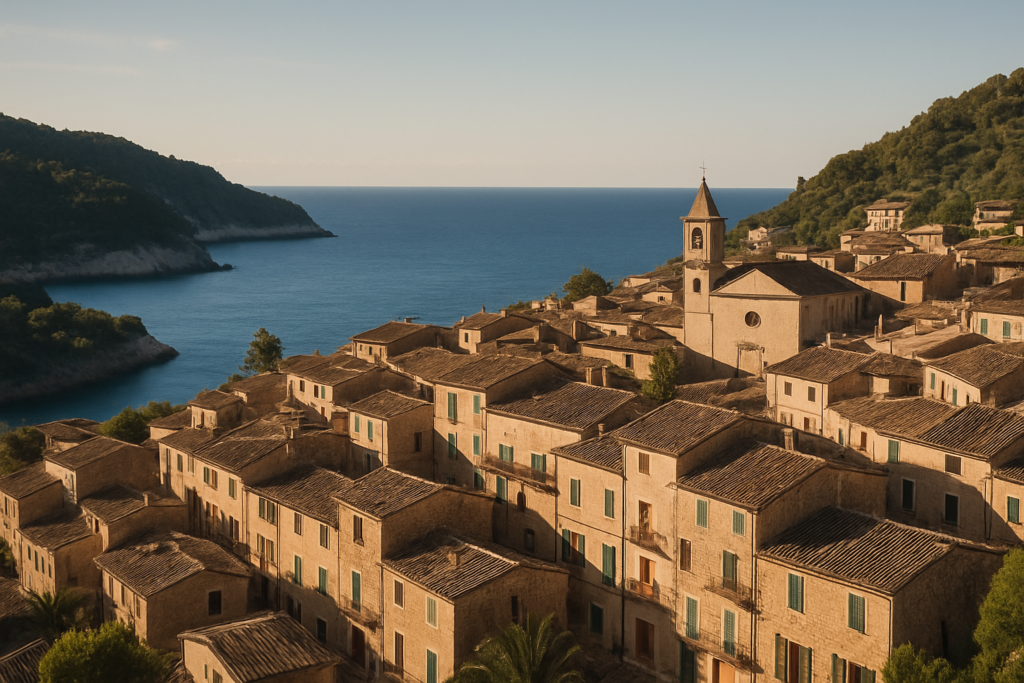
Puigpunyent at a glance
- Small mountain village situated a short drive west of Palma in the Serra de Tramuntana.
- Base for hikes up Puig de Galatzo and other western Tramuntana routes.
- Home to La Reserva Puig de Galatzo, a nature and adventure park with trails and waterfalls.
- Has Bronze Age archaeology: Talaiot del Serral de ses Abelles and a 3,200‑year‑old sword found locally.
- The parish church sits at the centre of the village, a natural meeting point for visitors.
- The Bronze Age sword discovered here is on display at the Majorca Museum.
Things to do in Puigpunyent
The main draw is the landscape and what the landscape offers: walks, viewpoints and a small but interesting archaeological trail. Activities cluster around three strengths — nature (waterfalls and mountain trails), archaeology (Bronze Age remains), and the village core (church and local lanes). Below is a quick comparison of the top attractions to help you decide how to spend a morning or a day.
| Attraction | What it is | Price/entry | Best for |
|---|---|---|---|
| La Reserva Puig de Galatzo | Nature and adventure park with waterfalls and trails | — | Families, walkers who want organised trails |
| Puig de Galatzo | Iconic Tramuntana peak rising above the village | — | Hikers and photographers seeking mountain views |
| Talaiot del Serral de ses Abelles | Bronze Age megalith / talaiotic structure | — | History buffs and curious walkers |
| Parish church (village centre) | Local church at the heart of the village | — | Anyone looking for a simple orientation point or local character |
La Reserva Puig de Galatzo — waterfalls, short trails and family‑friendly nature
La Reserva Puig de Galatzo is the most visitor‑focused outdoor attraction here. It’s a nature and adventure park with marked trails and waterfalls, so it functions well as a half‑day outing. Trails range from easy walks suitable for families to rougher paths if you want to progress toward higher ground. Expect woodland, stepping stones and short sections where the path follows ravines or small streams — the general feel is mountain‑park rather than formal botanical garden.
Hike Puig de Galatzo — summit for the views
Pujing up to Puig de Galatzo is the classic local objective. The peak dominates the skyline above the village and rewards a fairly short but sometimes steep ascent with expansive views of the western Tramuntana and, on clear days, back toward Palma. The routes starting from the village are popular: the town functions as a simple trailhead with parking and a central meeting place at the church.
Talaiot del Serral de ses Abelles and the Bronze Age background
Archaeology is one of the quieter pleasures here. Talaiot del Serral de ses Abelles is a local Bronze Age megalithic site you can visit on foot from the village, giving a tangible sense of human presence in these mountains for millennia. That sense is amplified by the discovery — identified in 2019 by Jaume Deya and Pablo Galera — of a Bronze Age sword at the talaiot; specialists date the sword to around 3,200 years old and believe it was made near the end of the Talaiotic culture’s prevalence. The sword is now on display at the Majorca Museum, which is useful to know if you want to see the find without disturbing the site.
Best beaches in the area
The village is inland, set amid the Tramuntana Mountains, so there are no beaches in the immediate vicinity. If you want a sea day you’ll need to drive back toward Palma or the island’s western coast. Use the village as a base for mountain days and plan a separate coastal excursion when you want sand and swimming.
Puigpunyent with kids
This is one of the better mountain villages on Mallorca for families who travel with active kids. La Reserva Puig de Galatzo provides the most obvious family‑friendly outlet with trails that can be adapted to stamina and age. Short, marked routes and waterfalls make for a good half‑day, while easier routes out of the village centre are suitable for pushing a buggy for a bit or for very young walkers accompanied by adults. The archaeological sites are compact and engaging for older children with an interest in history.
How to get to Puigpunyent and get around
The village lies a short drive west of Palma and is easily reached by car. For most visitors the simplest way to visit is to rent a car in Palma and drive out — that gives full access to trails, parking near the village and the freedom to link hikes with visits to other Tramuntana spots. Once you’re here the town itself is compact and easily explored on foot; trails and attractions such as La Reserva are reached on short drives or walks from the centre.
Where to stay in Puigpunyent
Accommodation in and around the village tends toward small guesthouses, rural fincas and self‑catering properties rather than large hotels. Pick a base according to how you want to spend your time:
- Village centre — best for a short walk to the parish church, cafes and using the village as a trailhead.
- Rural fincas and countryside near the reserve — suit walkers and families who prefer direct access to trails and nature.
- Properties on the lower valley roads — good if you plan to split time between the mountains and day trips to Palma.
Best time to visit Puigpunyent
There’s no single correct season: spring and autumn are popular for walkers because temperatures are milder and the mountains are green; summer is hotter and busier on the island generally but still quieter here than on the coast; winter brings fewer day‑trippers and can be used for off‑season hiking. If you prefer cooler walking weather choose shoulder seasons, while families with school holiday constraints commonly visit in summer and should expect to combine mountain days with coastal outings.
History of Puigpunyent
The area has a deep human history visible in its Bronze Age archaeology. The Talaiot del Serral de ses Abelles is a megalithic structure that testifies to prehistoric settlement in these mountains; it was excavated in 1950 by historian and archaeologist Guillem Rosselló Bordoy. In recent years, archaeologists Jaume Deya and Pablo Galera identified a Bronze Age sword at the talaiot in 2019 — specialists date the object to roughly 3,200 years old and associate it with the declining phase of the Talaiotic culture. These finds are a reminder that the Serra de Tramuntana has attracted human activity for several millennia, long before the present village centre with its parish church was established.
Practical info
- Access: The village is a short drive west of Palma, making Palma the usual staging point for visitors heading into the Tramuntana here.
- Village layout: The parish church stands at the centre of the village and serves as a convenient orientation point for parking and meeting.
- Museum display: The Bronze Age sword found in Puigpunyent is on display at the Majorca Museum, so you can view the find there without visiting the megalith in the field.
- Walking: Puigpunyent is a popular starting point for hiking routes in the western Serra de Tramuntana, so plan routes and equipment accordingly rather than expecting paved promenades.
- Facilities: The village is small; bring supplies from Palma or plan short trips into nearby towns for larger shops and services.
Worth it for: walkers, families who like nature‑park days, and anyone with an interest in Bronze Age archaeology. Less so if: you expect a beach resort, nightlife or a wide choice of restaurants and shops — the village is quiet and focused on the mountains.
How we assess this guide
We compile these notes by cross‑checking verifiable sources about local sites and discoveries, and we flag archaeological finds and museum displays explicitly. We do not conduct first‑hand reporting here; instead we summarise established facts so you have realistic expectations before you go. Any recent closures or changes would be called out in a freshness box.
Frequently asked questions
How do I get from Palma to Puigpunyent?
The easiest way is to drive: Puigpunyent lies a short drive west of Palma, so car access from the capital is the usual route for visitors. The village serves as a compact trailhead into the western Tramuntana.
Is Puigpunyent expensive to visit?
Costs depend on how you travel. The village itself is small and doesn’t have large tourism infrastructure, so accommodation tends toward independent guesthouses and rural fincas rather than big hotels; bring supplies from Palma if you want cheaper supermarket options. Exact prices vary and are not covered here.
Which beach is closest?
Puigpunyent is inland, set amid the Tramuntana Mountains, so there are no beaches in the village. Nearest beaches require a drive back toward Palma or along the island’s coast; plan a coastal day separately from your mountain activities.
How many days do I need to see Puigpunyent?
A day is enough to sample La Reserva Puig de Galatzo and do a shorter local hike or visit the talaiot; two to three days gives you time for a more substantial ascent of Puig de Galatzo and a relaxed exploration of the village and nearby lanes.
Is Puigpunyent good for families with children?
Yes. La Reserva Puig de Galatzo offers marked, adaptable trails and waterfalls that are family‑friendly. The village’s compact size also makes it easy to base a family for short mountain outings.
Can I get around without a car?
The guideable fact is that the village lies a short drive from Palma and functions as a trailhead; public transport details are not provided here. For full flexibility — reaching trailheads, La Reserva and dispersed archaeological sites — a car is the most practical option.
Is parking available in the village?
The village is compact and commonly used as a starting point for hikes, so expect parking options near the centre and at trailheads; specific parking locations and capacities are not detailed here.
What are good rainy‑day options?
Puigpunyent’s main attractions are outdoor: waterfalls, trails and megaliths. On a wet day you can still visit the parish church and use the village as a quiet base, or travel to Palma where museums such as the Majorca Museum display the Bronze Age sword found at the talaiot.
When is the best time of year to hike here?
Spring and autumn are generally preferred for walking in the Tramuntana because temperatures are moderate and the countryside is green. Summer is warmer and busier on the island overall; winter is quieter with fewer day‑trippers.
What is the Talaiot del Serral de ses Abelles?
It is a Bronze Age megalithic structure in the area, excavated in 1950 by Guillem Rosselló Bordoy and associated with the prehistoric Talaiotic culture of Mallorca.
Where can I see the Bronze Age sword found in Puigpunyent?
The Bronze Age sword identified at the talaiot is on display at the Majorca Museum, so you can view the find there rather than only at the archaeological site.
Who discovered the Bronze Age sword and when?
The sword was identified at the Talaiot in Puigpunyent in 2019 by Jaume Deya and Pablo Galera; specialists date it to roughly 3,200 years old and link it to the late Talaiotic period.
Is Puigpunyent part of the Serra de Tramuntana?
Yes — the village sits amidst the Tramuntana Mountains and is a popular starting point for hiking routes in the western part of the range.
What is the centre of the village like?
The parish church stands at the centre of the village and provides a clear meeting and orientation point for visitors wanting to explore narrow streets, local lanes and nearby trailheads.
Plan the wider trip
Puigpunyent on the map
How this page is maintained. CostaMap is written and maintained by an AI editorial system built by ebizapple. Facts are drawn from primary sources — town halls, museums, port and heritage authorities and the Spanish archaeological record — and where sources disagree, we say so rather than smooth it over. Photographs marked as ours are taken on location. This page was last reviewed on 14 August 2026. Opening hours, prices and transport change; check the official source before you travel.