
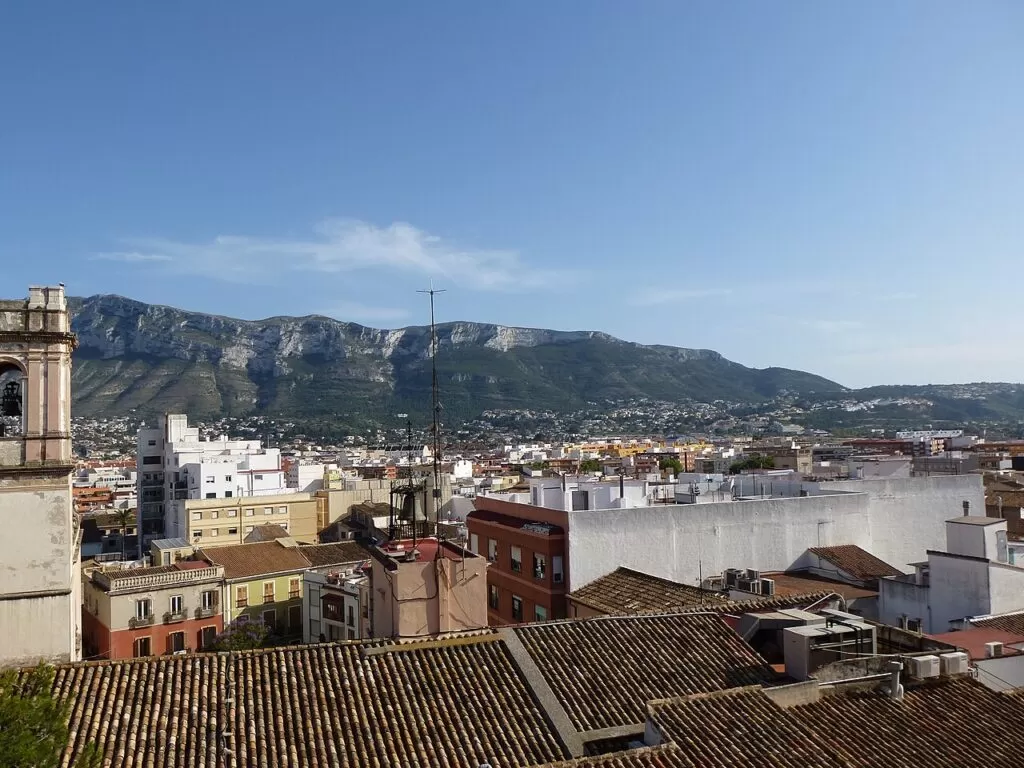
Dénia is a port town of about 47,000 people on the northern Costa Blanca, and it suits visitors who want a working town with a castle, long sandy beaches, rocky coves and the ferries to Ibiza and Formentera rather than a high-rise resort. Stay in the centre and port area if you travel without a car, in Les Marines for flat sandy beaches, or at Les Rotes for snorkelling coves. It is part of our Costa Blanca guide.
Quick facts
- Where: Dénia (Spanish: Denia), in the Marina Alta comarca of Alicante province, at the northern end of the Costa Blanca. The tourist office is at Plaça de l’Oculista Buigues 9, phone +34 966 422 367.
- Residents: about 47,000 in the official municipal figures for 2024–2025; the town hall’s own register is higher because it counts people who have not renewed their registration.
- Beach: yes. The municipality has more than 20 km of coast: wide sandy beaches at Les Marines to the north, and a family beach followed by rocky coves at Les Rotes to the south (Dénia Turismo).
- Nearest airports: Alicante–Elche, about 100 km by road, and Valencia, about 113 km (Dénia Turismo). There is no airport train; most people take a bus, a transfer or a hire car.
- By tram: TRAM line 9 reaches Dénia from Benidorm in 82 minutes, with 17 departures a day (Dénia Turismo).
- Language: Valencian and Spanish are both used; Spanish works everywhere.
- Market day: Friday mornings, fruit and vegetables on Carrer de la Via; the covered municipal market opens Monday to Saturday.
- Ferries: Baleària sails from the north quay to Ibiza (about 2 h 15 min), Formentera (about 2 h) and Palma.
Where to base yourself
Dénia is spread along the coast rather than packed into one centre, so the area you choose decides whether you can walk to dinner, to the sand or to the ferry. Four bases cover most trips.
The centre and the port
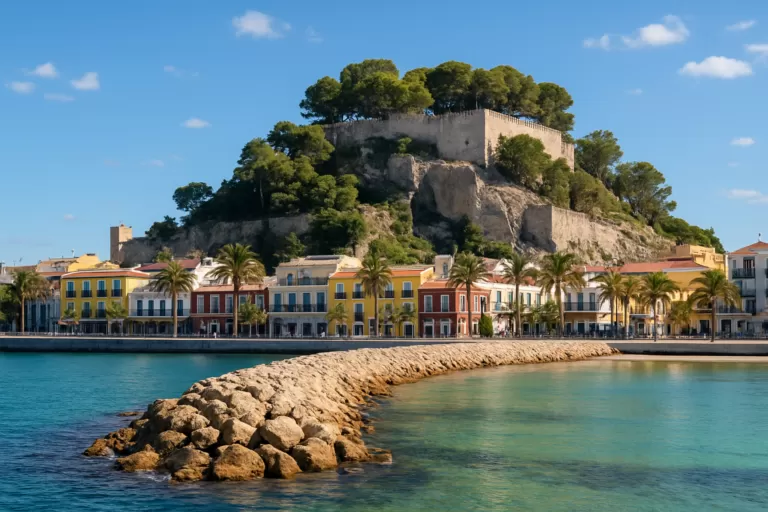
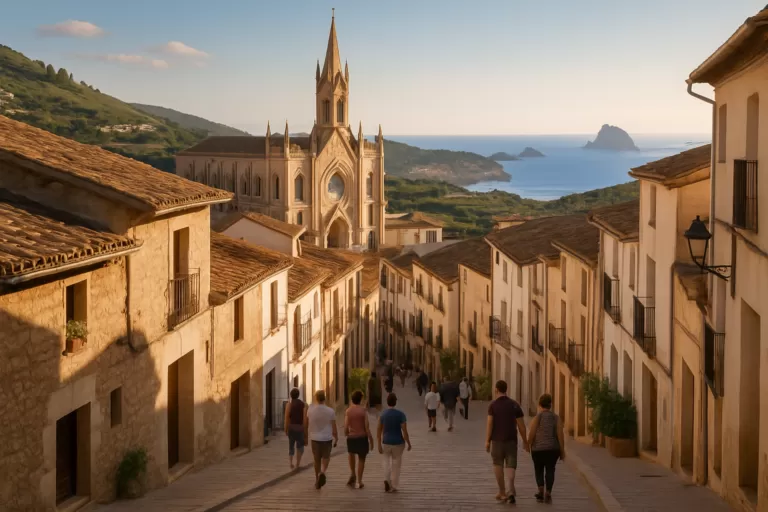
The old town sits below the castle and runs down to the harbour, with the town hall, the covered market, the tourist office and most restaurants within a few minutes’ walk. This is the base for visitors without a car, for anyone taking an early ferry, and for a short stay built around the town itself. The TRAM station is on Passeig del Saladar and the bus station is also in town. The trade-off is that the beach is a walk or a short ride away, not at your door.

Les Marines
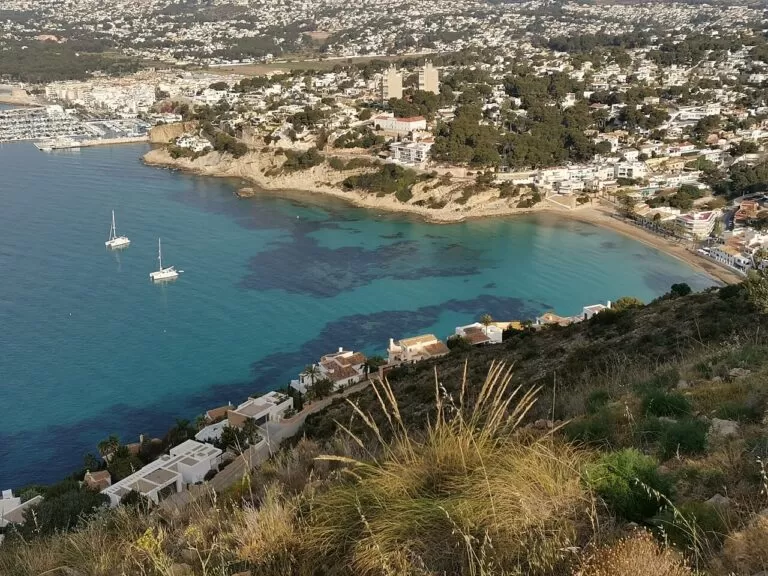
North of the port, Les Marines is the flat, sandy side of Dénia: wide beaches, apartments and villas, and a long promenade-style coast. Dénia Turismo notes a stretch of pebbles at l’Almadrava, so check which part of the shore your accommodation faces if you want fine sand. It suits families and long beach stays, and a bike or a car helps for shopping.
Les Rotes
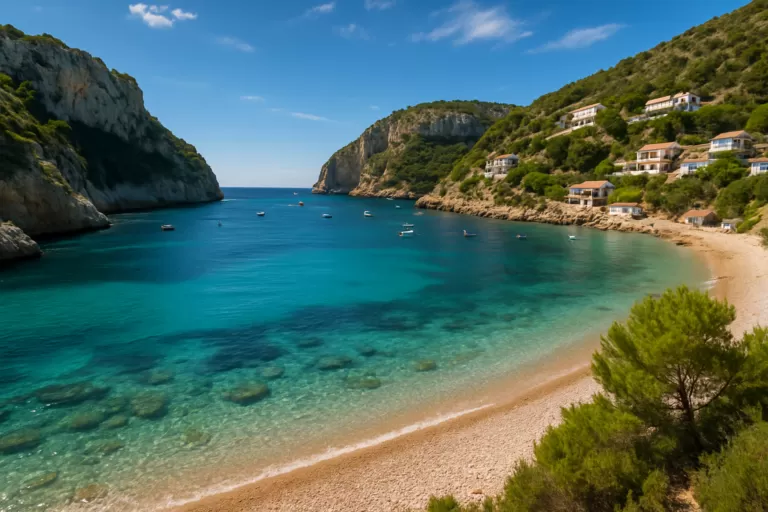
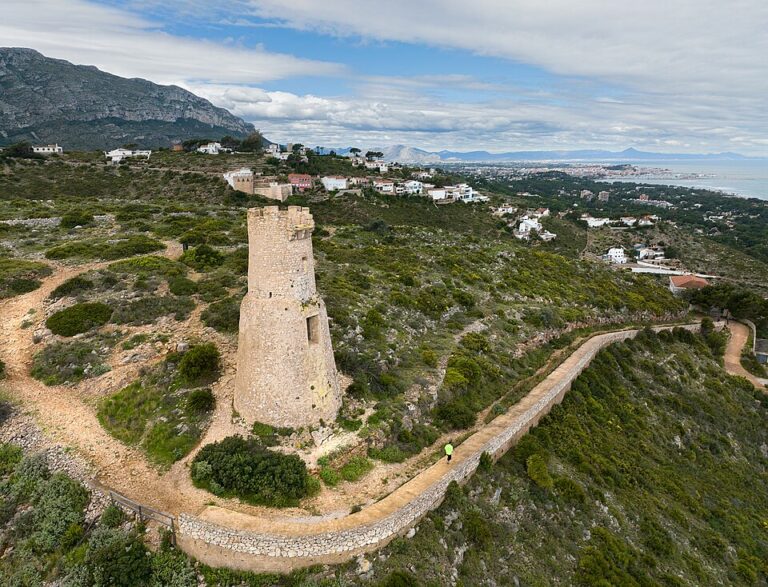
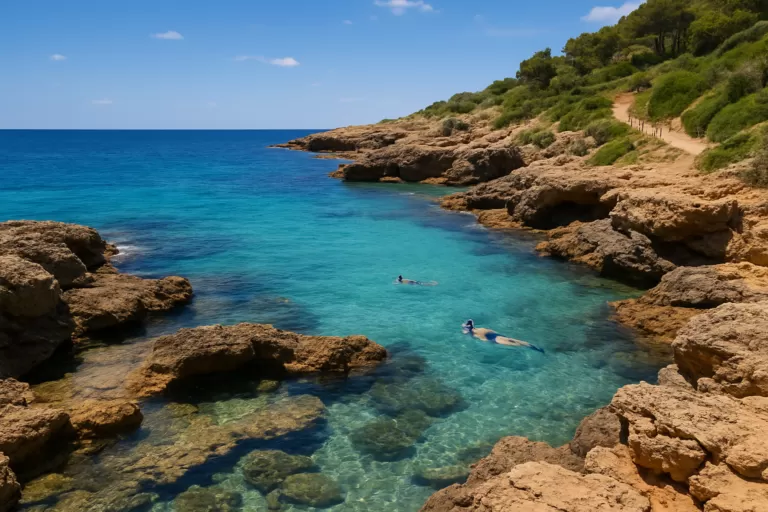
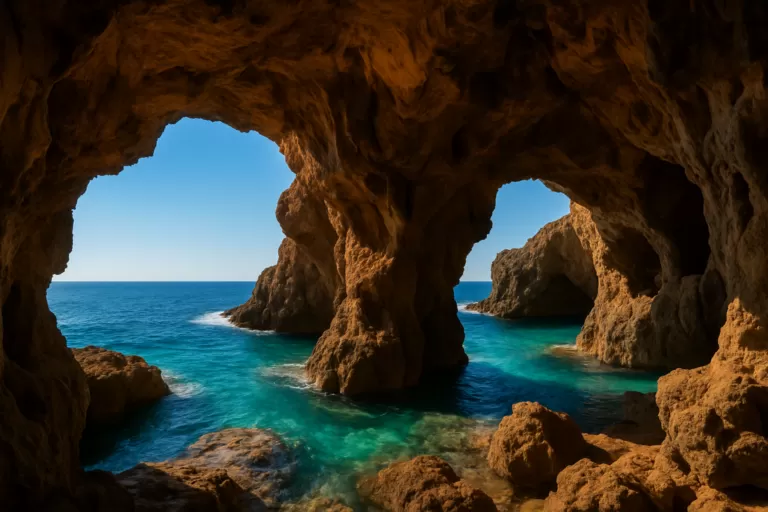
South of the port the coast turns rocky. Les Rotes has a family sand beach followed by natural coves that are good for snorkelling, and it is the starting point for the coastal path towards the sea cave described on our Cova Tallada page. See also Cala Les Rotes. It suits couples and active travellers who prefer coves to long sand, but evening options are thinner than in the centre.
Outside the town
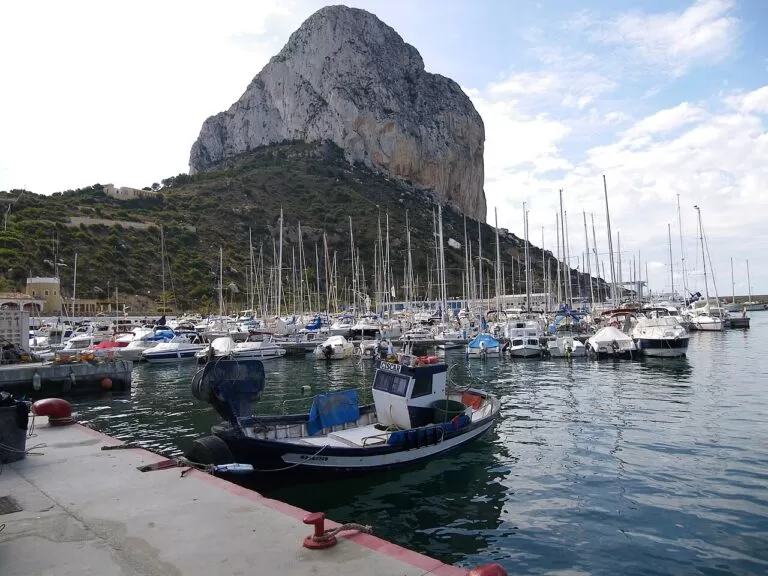
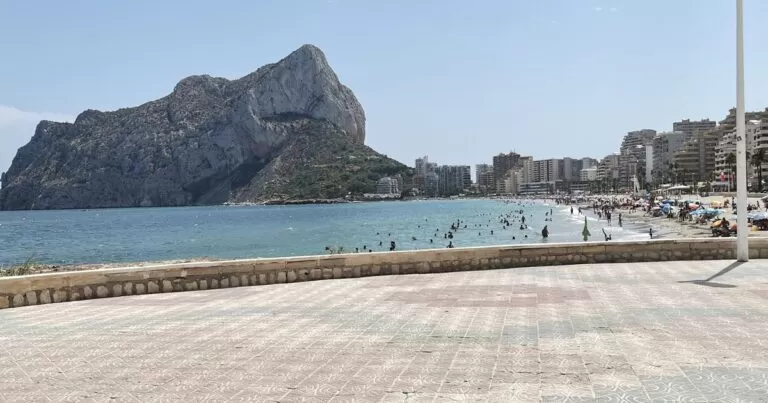
The municipality also includes villages such as La Xara and Jesús Pobre, which have their own fiestas and a quieter, more rural feel on the slopes of the Montgó. A car is essential there. If you want a beach town with a smaller footprint, Jávea, Moraira and Calpe are the neighbouring options along the coast.
Things to do
Dénia is a good place to spend a few days because the main sights are close together and the walking is easy. Skip it as a base if you want large-scale nightlife or a purpose-built resort strip; it is a town where people live all year.
The castle
The fortress of Islamic origin on the hill above the old town is the obvious first stop. Opening hours, prices and the interpretation centre are covered in our separate guide to Dénia Castle, so check there (and with the town) before you go, because the town’s tourism site flags the castle as temporarily closed at the time of writing.

The Montgó and the coast
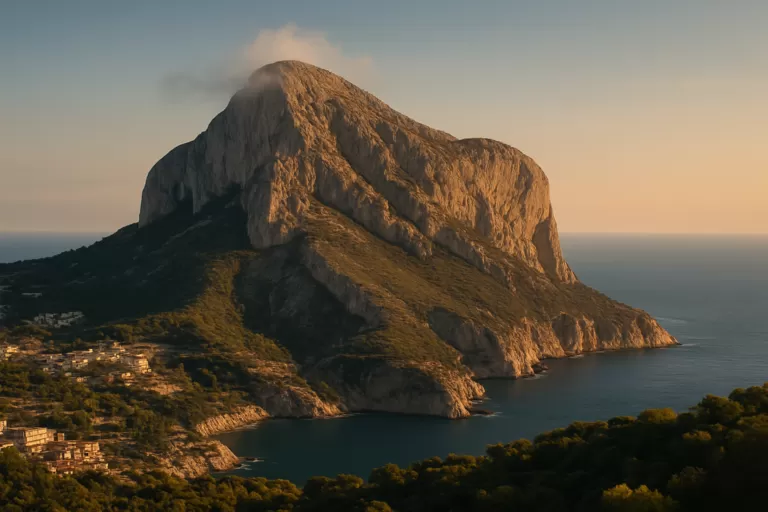
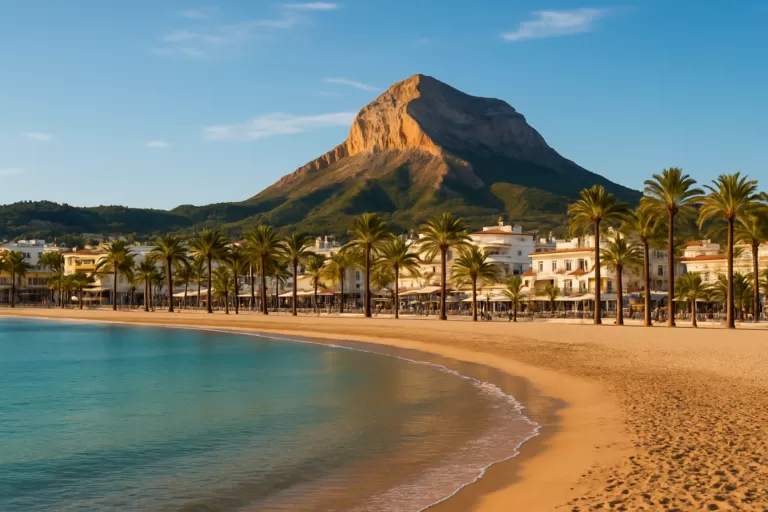
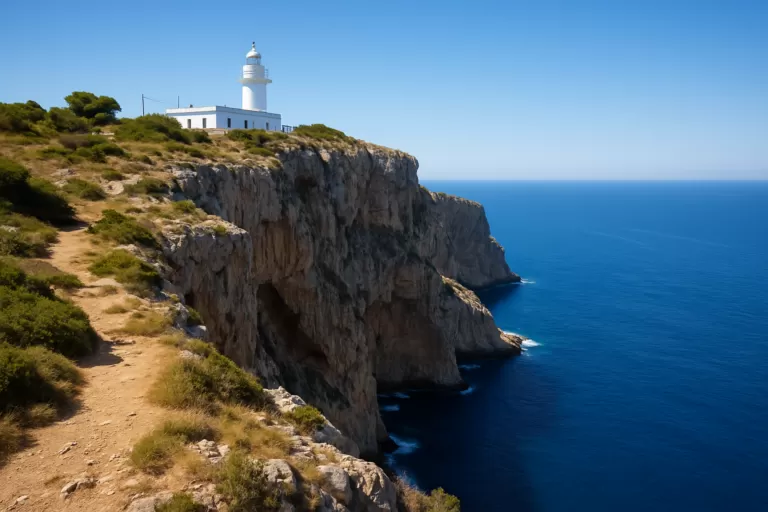
The limestone massif of the Montgó rises between Dénia and Jávea and is the town’s backdrop from almost everywhere. Walking routes start on both sides of it; go early in summer. On the coast, Cap de Sant Antoni and its lighthouse and lookouts are within easy reach by car.
The harbour and the sea
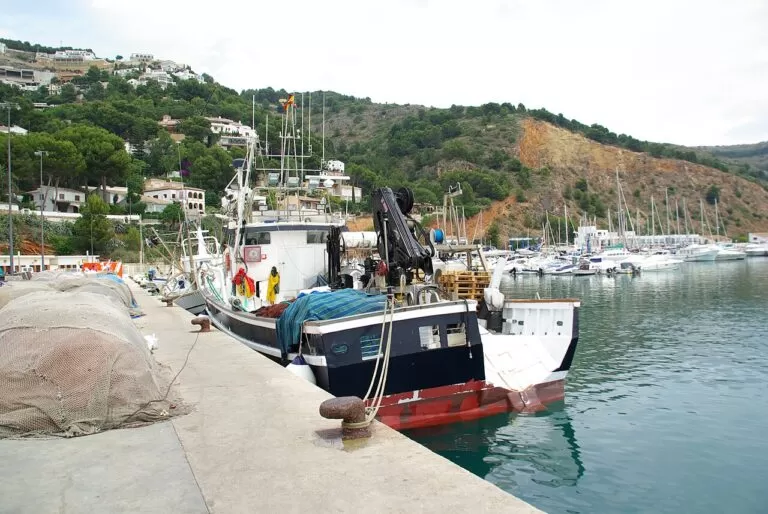
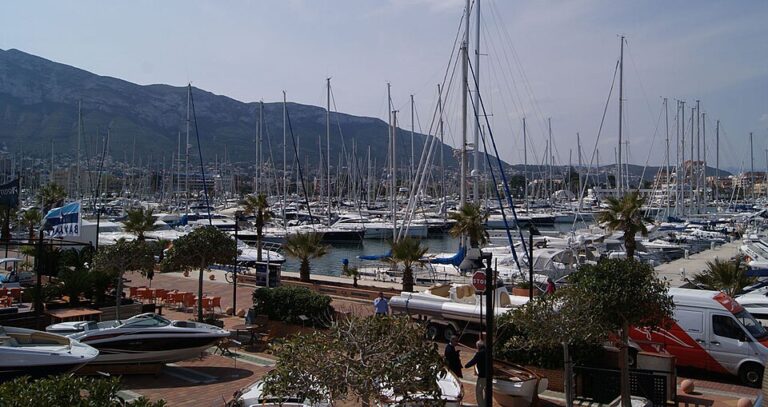
Baleària ferries to the Balearic Islands leave from the north quay. If you only want a day trip, the Ibiza and Formentera fast crossings take about two hours each way, so they work best as overnight trips.
Festivals
Dénia keeps a full calendar, according to the town’s tourism site. The Moors and Christians fiestas are variable but usually fall in late February, Carnival is held the weekend before Lent, the Hogueras de San Juan run from 20 to 24 June, and the Feria de Todos los Santos fills about two weeks around 1 November. Dates for the current year change, so ask the tourist office or check the programme before you plan a trip around one.
Beaches and places nearby
The coast of the municipality has more than 20 km of shore with two clear characters. Les Marines to the north has wide sandy beaches; Dénia Turismo notes pebbles at l’Almadrava. Les Rotes to the south has a family sand beach followed by rocky coves, which suit snorkelling more than sunbathing. Posidonia meadows, a protected seagrass, grow offshore, and the town lists lifeguard posts, accessible toilets and beach bars as services on some beaches. Check each beach on the town’s beach map before you go, because services differ from one to the next.

Beyond Dénia, the nearest towns by road are Jávea, Moraira and Calpe, all on the same stretch of coast, and the Montgó and Cap de Sant Antoni sit between Dénia and Jávea.
Other town guides nearby: Gandia (about 28 km in a straight line), Altea (about 30 km in a straight line), L’Alfàs del Pi (about 34 km in a straight line).
On CostaMap near Dénia: Montgó (4.7 km) · Cala Les Rotes (Dénia) (5.1 km) · Cova Tallada (Dénia) (5.9 km) · Cap de Sant Antoni (Jávea) (8.9 km).
Food and drink
Dénia was recognised by UNESCO in 2015 as a Creative City of Gastronomy, and the town leans on that: rice dishes, fish from the harbour and the local red prawn (gamba roja) are the dishes you will see on menus. The covered municipal market in the centre sells fresh fish, seasonal produce, cured meats, cheeses and bakery goods, and the Friday fruit and vegetable market on Carrer de la Via, held in the morning, is the simplest place to see what is in season. If the Friday is a public holiday, check whether the market runs.
Restaurant lists change quickly, so we do not name places we have not checked. Eat in the harbour area for fish and rice, and in the streets behind it for ordinary tapas and set lunches at lower prices.
Where to stay
Dénia has a wide spread of accommodation: hotels in the centre and along the seafront, apartments and holiday villas around Les Marines and Les Rotes, and rural stays on the Montgó side. Summer is the busy season, so book early for July and August; outside summer the town works well for a long weekend. If you do not have a car, choose the centre or the port; if you plan to spend most days on the beach, choose Les Marines or Les Rotes.
Getting there and around
By air, the two usual airports are Alicante–Elche, about 100 km away, and Valencia, about 113 km, each roughly 1 h to 1 h 30 min by car, bus or transfer depending on traffic (Dénia Turismo). By car, take the AP-7 to exit 608 and then the CV-725: from Alicante it takes a little over an hour, from Valencia about an hour and a quarter, and from Madrid about 4 h 30 min.
The TRAM d’Alacant line 9 links Dénia with Benidorm in 82 minutes, with 17 stations on the line and 17 departures a day from Dénia. The line reopened as a single through service on 28 January 2025 and carried more than 1.4 million passengers in its first year (TRAM d’Alacant). ALSA coaches run from Valencia and Alicante in roughly 1 h 30 min to 2 h. From Valencia you can also take the Cercanías C-1 train to Gandía and a bus on from there.
The ferries leave from the north quay: Baleària to Ibiza (about 2 h 15 min), Formentera (about 2 h) and Palma, with more departures in summer. In town, parking is easiest at the Plaça de l’Oculista Buigues, the underground car park on Carrer de la Via and the Plaça Valgamediós. The centre is walkable, but you need a car or a bike for the coves and the Montgó.
Best time to visit
Spring and autumn are the easiest seasons for walking the Montgó and the coast path and for a town stay with the beaches still usable. July and August are the busiest months, with ferry traffic and the beaches at their fullest; go to the coves early in the day. For forecasts and warnings, use AEMET.
FAQ
Is Dénia worth visiting?
Yes, for the combination of old town, castle, sandy beaches and rocky coves in one place, and as the departure point for Ibiza and Formentera. It is not a resort with a nightlife strip.
Where should I stay in Dénia?
Stay in the centre or port area if you travel without a car or take an early ferry. Choose Les Marines for wide sandy beaches and family stays, and Les Rotes for snorkelling coves.
How do I get to Dénia from Alicante airport?
The airport is about 100 km away. Most visitors drive, take a transfer or use an ALSA coach, which takes roughly 1 h 30 min to 2 h. The trip by car via the AP-7 is a little over an hour.
Can I take the train or tram to Dénia?
Yes, TRAM line 9 runs from Benidorm to Dénia in 82 minutes. There is no train from Alicante airport, and from Valencia you take the Cercanías C-1 to Gandía and a bus.
How long is the ferry from Dénia to Ibiza?
About 2 h 15 min on the Baleària fast ferry. Formentera takes about 2 h.
Sources and freshness
Checked October 2026 · 9 sources Show
Last checked: October 2026. Sources:
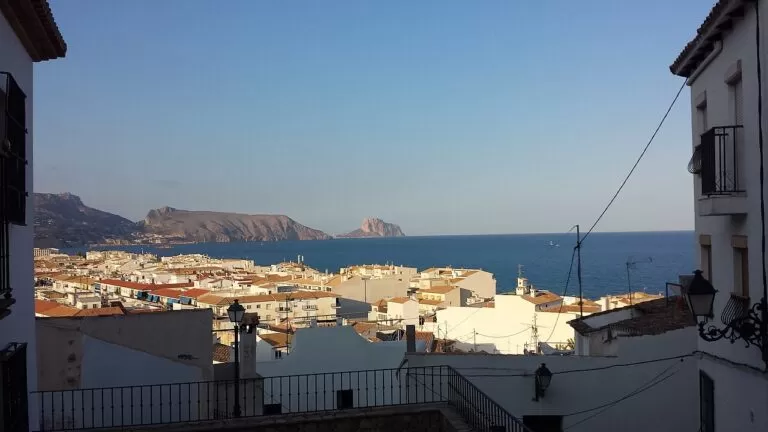
Main photo: chisloup, CC BY 3.0, via Wikimedia Commons.
Nearby on the Costa Blanca
The nearest town guides on this coast, by straight-line distance from Dénia.
Dénia on the map
Places worth knowing near Dénia
How this page is made. CostaMap is written with an AI editorial system run by Ebizapple. This page is based on the sources listed above. Last updated 28 October 2026. Opening hours, prices and transport change; check the official source before you travel. How we work · Partner links and ads