
Small, plain-speaking and compact: this is a guide for people who want to see one of the Valencian interior’s little architectural surprises without the expectation of a tourist spectacle. You’ll find a Moorish-built tower, a central plaza, and remnants of a palace and town-hall complex — tangible layers of local history rather than a curated museum experience. If you come expecting a fully restored castle with visitor centres, you’ll be disappointed; if you come curious about architecture, urban memory and a quiet off-the-beaten-track visit, you’ll get value from the walk and the stories.
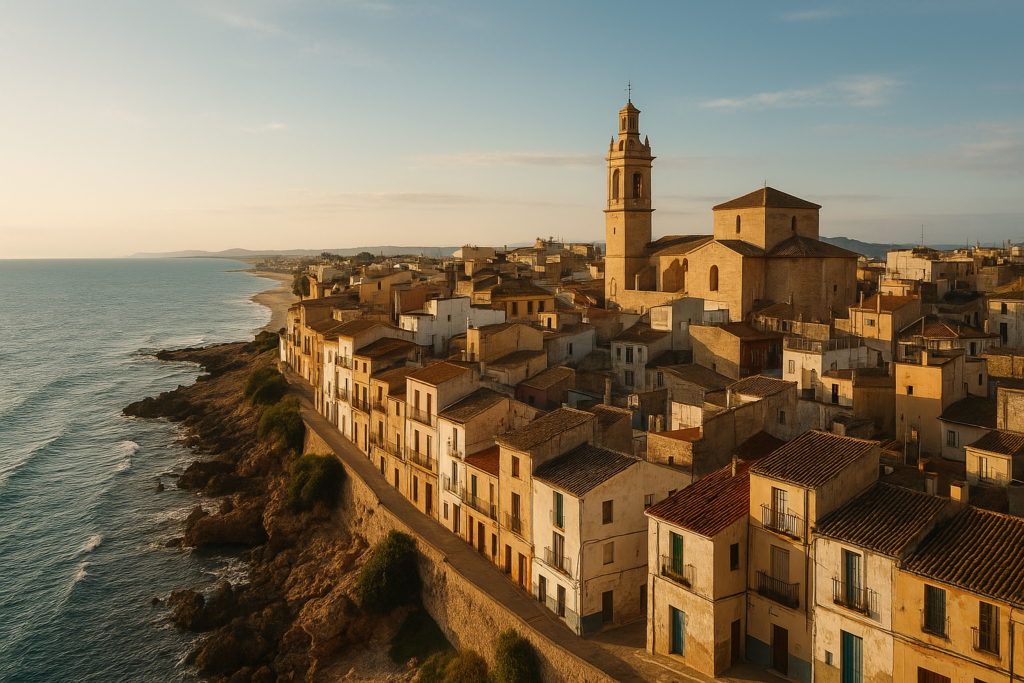
Benifaió at a glance
- Small municipality in the Ribera Alta comarca of the Valencian Community, Spain.
- Key historic sight: the Tower of la Plaça — a Moorish-built tower that forms part of a former palace-castle and the old town-hall complex.
- The tower’s interior preserves traditional vaulting made with cane and mud; stair ladders rise through its four levels.
- Gothic tunnels with diaphragmatic arches run around the tower area, but they are not open to visitors.
- Historic uses of the tower include storehouse, prison and pigeon house — evidence of adaptive reuse over centuries.
- Benifaió is twinned with Valmontone in Latium, Italy — a small cultural link that surfaces in municipal partnerships.
Before you plan
The Gothic tunnels near the Tower of la Plaça are not open for visitors. Plan on seeing the tower and the exterior fabric of the plaza complex from public spaces; do not expect subterranean tours or the tunnels to be accessible.
Things to do in the town
This is a place for short, focused visits: walk the central plaza, study the tower’s exterior and vaulted interior (visible only where public access permits), and use the visit as an architectural detour when you’re exploring the Ribera Alta. There are not long, structured visitor programmes, so the experience depends on your curiosity and preparation — bring a camera, a notebook and time to pause and read plaques or local information if you find them.
| Attraction | What it is | Price/entry | Best for |
|---|---|---|---|
| Tower of la Plaça | Part of a palace-castle and the old town-hall complex; Moorish-built tower with internal vaulting and a ladder rising through four levels | – | Architecture and history enthusiasts |
| Gothic tunnels (around the tower) | Underground Gothic tunnels with diaphragmatic arches surrounding the tower area | Closed to visitors | Photographers and heritage curious who want to view from above |
| Central plaza | Public plaza anchored visually by the former tower and historical municipal buildings | – | People-watching and short strolls |
Tower of la Plaça: what you’ll actually see
The tower is the town’s standout sight. It is a surviving element of a larger defensive and administrative complex — described historically as a palace-castle that later formed part of the palace of Falcó and the old Town Hall. Architecturally, the tower shows several layers: Moorish construction techniques in the fabric, and interior vaults formed with cane and mud. Inside, a ladder with steep steps connects four levels; externally the tower sits at the heart of the central plaza. The building’s past uses — as a storehouse, prison and pigeon house — are visible in the building’s rough utilitarian traces more than in grand decoration.
The Gothic tunnels: why they’re interesting even if you can’t go down
Surrounding the tower area are Gothic tunnels defined by diaphragmatic arches. These passages form an underlayer to the plaza and the tower precinct and are architecturally noteworthy because of their form — but they are not available as a visitor route. You can, however, appreciate their presence in the urban fabric and the way the plaza’s geometry and street levels relate to hidden structures below.
The central plaza and the old Town Hall complex
The tower is not an isolated monument: it forms part of a cluster that includes the Palace of Falcó and the site of the former Town Hall (the old Town Hall was demolished in 1978, which left the tower exposed on three sides). The plaza acts as the best vantage point for understanding the relationship between these civic and defensive elements — slow walking and time spent reading the stonework will be more rewarding than formal guided interpretation, which the site lacks.
Best beaches in the area
Benifaió is inland in the Ribera Alta; there are no beaches in the municipality itself. If you plan a combined trip with coastal time, allocate separate transport to reach the coast — the town visit is a different experience from a beach day.
Benifaió with kids
The visit can work with children if you structure it as a short educational stop combined with playtime in local squares. The tower’s ladder and four-level interior are visually compelling, but there is no commercial attraction or child-focused interpretation on site; supervise children around stairways and uneven stonework. The plaza offers open space for running and informal play between short heritage stops.
How to get to the area and get around
There are no ground transport details verified in the source material for exact routes or times. Expect small-town street layouts and a compact centre: the best way to explore is on foot once you arrive. Street parking and local roads are typical of Valencian inland towns; verify current parking regulations locally on the day.
Where to stay near the tower
Benifaió itself is a small municipality, which makes it a good single-night stop if you’re exploring the Ribera Alta. Accommodation options and distinct districts are not described in the verified material; if you prefer more choice or coastal facilities, consider basing on a nearby larger town or the coastal strip and making Benifaió a day trip.
Best time to visit the town
There are no verified claims about climate or festivals in the source set. As a small inland town, the experience will be best when streets are pleasant for walking and any local businesses or offices you might wish to consult are open. Weekdays may grant easier access to municipal buildings’ exteriors and daylight hours suit photography and reading building details.
History of the town
The town’s core preserves layers of medieval and early modern civic life. The Tower of la Plaça was originally part of a defensive palace-castle. Over time the complex became integrated with the Palace of Falcó and the municipal institutions, serving successive practical purposes — storehouse, prison and pigeon house among them. The old Town Hall’s demolition in 1978 materially changed the ensemble by freeing the tower on three sides, altering how the tower reads in the plaza today. The Gothic tunnels with diaphragmatic arches that surround the tower are significant survivals of earlier construction methods and urban planning, but they are not set up as a visitor attraction.
Practical info
- Site access: The tower and plaza are public-facing monuments; the tunnels are closed to visitors — do not plan on subterranean access.
- Conservation notes: The tower’s fabric includes traditional vaulting techniques using cane sticks and mud; that fragile heritage character means that interior interventions are limited and access can be constrained for preservation reasons.
- Cultural links: The municipality maintains a twinning arrangement with Valmontone in Latium, Italy, which may inform occasional cultural exchanges or municipal-level events.
Worth it for: people interested in Moorish-period architecture, small-town Valencian history and compact heritage walks. Less so if: you’re seeking an interpreted, commercialised attraction, subterranean tours or beach time within the same stop — this is inland, quiet and best combined with other nearby visits.
How we assess this guide
We compiled and cross-checked the points above against municipal and heritage summaries. We flag closures and current access limitations (for example, the Gothic tunnels being closed), and we avoid presenting any closed venue as open. This guide synthesises verified structural, historical and municipal facts; it is not a first-hand field report and does not invent visitor prices, opening times or services that were not in the verified source set.
Frequently asked questions
How do I get from the nearest airport to the town?
There are no verified source details about airport connections in the material we used. The town is a municipality in the Valencian Community’s Ribera Alta; typical access patterns for inland Valencian towns include regional roads and public transport from larger nearby cities. Check current timetables from regional transport providers before you travel.
Is visiting the Tower of la Plaça expensive?
No verified ticketing or price information is available in the source material. Many small-town monuments in the region are freely visible from the public plaza, though formal interior access — when offered — may be handled by local authorities. Expect low-cost or free public viewing of exteriors; confirm interior access locally.
Which part of the town is the best for photographs?
The central plaza provides the clearest vantage points for photographing the tower and the surrounding palace-town-hall ensemble. The plaza shows the tower in its civic context and lets you capture the relationships among buildings and public space.
How long should I plan to visit?
A focused visit of one to two hours will allow you to view the exterior, study the tower’s visible features and walk the plaza. If you want time for slow architectural study, photography and pauses at cafés (availability of cafés is not specified in the source material), add extra time accordingly.
Is the town family-friendly?
Yes for short visits: the plaza offers open space suitable for children to run around. The tower and its ladder imply potential hazards indoors, so supervise children carefully. There is no indication of family-focused attractions or play facilities in the verified material.
Can I get around without a car?
Local detail on public transport was not part of the verified source set. The municipality is compact, and once you are in the town centre the heritage sights are walkable. For comfortable travel across the region or between coastal and inland points, check current bus or train services outside this guide.
Is there parking near the central plaza?
Parking specifics are not included in the verified information. Small Valencian towns typically offer street parking and municipal parking areas; confirm current rules and restrictions locally on arrival.
What are rainy-day options?
The source material does not list indoor museums or attractions besides the tower’s fabric. If the weather turns bad, the plaza and tower exterior still provide visual interest from sheltered points; otherwise plan to move to larger nearby towns for indoor cultural venues.
When is the best time to visit for pleasant weather?
No climate or festival data was provided in the verified claims. As a general principle for inland Valencian locations, pick days when walking in open plazas is pleasant; confirm seasonal weather patterns from a climate source before you travel.
Are the Gothic tunnels accessible?
No. The Gothic tunnels with diaphragmatic arches that surround the tower area are not open for visitors.
What was the tower used for historically?
Historically the Tower of la Plaça formed part of a defensive palace-castle and later the palace of Falcó and the old Town Hall. Over time it served as a storehouse, a prison and a pigeon house. The old Town Hall was demolished in 1978, altering the ensemble and exposing the tower on multiple sides.
Does the town have international links?
Yes. The municipality is twinned with Valmontone in Latium, Italy, which indicates formal municipal ties and potential cultural exchanges.
How many levels are inside the tower?
The tower contains four levels connected by a ladder with high stairs; the interior is covered with vaults built using cane sticks and mud.
Is the tower part of a larger palace?
Yes. The Tower of la Plaça is part of the palace of Falcó and the old Town Hall complex and was originally part of a defensive palace-castle.
Plan the wider trip
- Costa de Valencia guide
- Alcúdia: Xúquer-bank heritage town in the Ribera Alta
- Benaguasil: Arab castle town in the Camp de Túria
- Eliana: Valencia Camp de Túria Guide
- Alboraya
- Paiporta
Nearby on the Costa de Valencia
How this page is maintained. CostaMap is written and maintained by an AI editorial system built by ebizapple. Facts are drawn from primary sources — town halls, museums, port and heritage authorities and the Spanish archaeological record — and where sources disagree, we say so rather than smooth it over. Photographs marked as ours are taken on location. This page was last reviewed on 15 August 2026. Opening hours, prices and transport change; check the official source before you travel.