
Expect a practical, industrial inland town rather than a sun-and-sea resort. This is a place shaped by factories, a distinctive local festival, and a mountainous backdrop — not a postcard beach destination. If you arrive hoping for white sand and promenades, you’ll be disappointed; if you come wanting authentic local industry, unusual monuments and a genuinely local celebration, you’ll find something memorable.
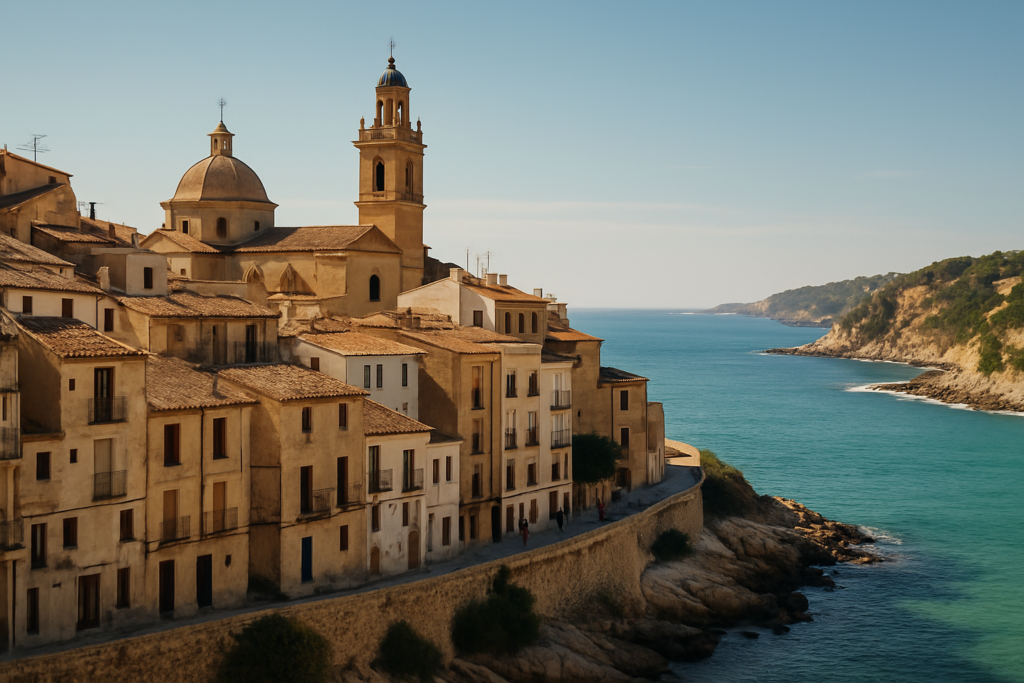
Ibi at a glance
- Inland town in the comarca of Alcoià, province of Alicante, Spain.
- Located about 37 kilometres from the city of Alicante — an easy day trip distance.
- Economy dominated by the toy industry; traditionally Spain’s most important toy-making centre.
- Famous for the annual Els Enfarinats festival, which features a ritualised fight with flour and eggs.
- Important local monuments: the Catholic Church of the Transfiguration and a monument to the Three Wise Men (possibly unique worldwide).
- Surrounded by mountains and gorges; associated with Font Roja Natural Park for outdoor day hikes and nature.
- Twin town: Tomelloso, Spain.
Before you plan
There are no verified claims in our sources that any major Ibi venue is closed or in redevelopment. We flag closures where confirmed; none appear in the verified record for this town.
Things to do in the town
The attractions here are very much about local culture and industry rather than scenic beaches or big-ticket tourist sites. Highlights include seeing important local monuments, timing a visit for the town’s famous festival, taking short trips into the surrounding natural landscape, and observing the town’s industrial character — especially its toy industry and other factories.
| Attraction | What it is | Price/entry | Best for |
|---|---|---|---|
| Els Enfarinats | Annual festival featuring a mock battle with flour and eggs | — | Culture seekers, festival-goers |
| Catholic Church of the Transfiguration | Significant local religious monument | — | Architecture and history |
| Monument to the Three Wise Men | Unusual sculptural monument, possibly unique worldwide | — | Curiosity-seekers, photographers |
| Font Roja Natural Park (associated) | Natural park on the town’s edge; mountains and gorges | — | Hikers, nature lovers |
Els Enfarinats — the festival that defines the town
The town’s single most famous event is its centuries-old Els Enfarinats celebration. The verified tradition centres on an organised fight using flour and eggs; it’s an unusual, visceral local ritual that attracts attention well beyond the immediate area. This festival is what many visitors come to see when they plan a trip specifically to the town. Note that the event is famed for its spectacle rather than for being a tourist showpiece: it is an authentic local custom.
Churches and civic monuments
The Catholic Church of the Transfiguration is listed among the town’s most important monuments, a focal point for local religious life and community identity. Nearby stands the monument to the Three Wise Men — a noteworthy local landmark that our sources describe as possibly the only monument of its kind anywhere in the world. These sites are compact and generally visited as part of a short walking circuit around the historic centre.
Industry on view: toys, factories and local production
Industry isn’t hidden here — it’s central. The local economy is chiefly based on the toy industry, historically the most important toy-producing concentration in Spain. Beyond toys, the town hosts factories producing construction materials, ice cream and tiger nut milk, and has broader industrial activity in plastics, metal and machinery. For visitors interested in industrial heritage, product design or manufacturing, this place offers an unusual inside look at a working production base rather than an industrial museumisation of activity.
Best beaches in the area
This is an inland destination: there are no local beaches in town. Coastal beaches are accessible by travel to the nearby province coastline, but no verified claims list a local beach as part of the town itself.
The town with kids
Families with small children can find the local emphasis on toys and manufacturing appealing, though our verified material does not list specific child-focused attractions such as a children’s museum or theme park within the town. The toy-industry heritage can make for an interesting context — children often enjoy seeing how a town’s economy connects to the objects they use — and the festival (Els Enfarinats) provides an intense, sensory spectacle that older children may find unforgettable. However, because there is no verified record of purpose-built family attractions, treat this as a culturally interesting, compact visit rather than a full family holiday with organised activities.
How to get to the area and get around
Practical travel advantages include the town’s proximity to the provincial capital: it lies approximately 37 kilometres from Alicante. That makes it feasible as a day trip from the city by car or regional transport. Once in the town, most visitor attractions (church, monuments, festival sites and the immediate industrial zones) are compact and walkable; the surrounding natural areas require private transport or organised excursions for access.
Where to stay in Ibi
There are no verified claims in our source set listing distinct hotel districts or named accommodation areas within the town. Given the town’s compact nature, most visitors choose to stay either in nearby larger centres such as Alicante (for coastal access and a wider hotel choice) or in neighbouring inland towns if they are exploring the broader comarca. If you want an overnight focused on local cultural life and early starts for hikes, aim to find lodging close to the historic centre to minimise transfers.
Best time to visit Ibi
Timing depends on what you want to see. If you want to experience local culture at its most theatrical, plan for the annual Els Enfarinats festival — this is the town’s signature event and draws attention from outside the region. For hiking and exploring the surrounding mountains and gorges, the shoulder seasons (spring and autumn) are usually more comfortable than high summer in inland Alicante; our verified material highlights the town’s association with mountainous landscapes and a nearby natural park as reasons to prefer milder weather.
| Season | Months | What to expect |
|---|---|---|
| Festival season | Annual (specific dates vary) | Best for witnessing Els Enfarinats and local traditions |
| Shoulder seasons | Spring & autumn | More comfortable for hiking in the surrounding mountains and Font Roja area |
History of the place
The town has lived a multifaceted life: industrial, cultural and historical. It was the site of Republican-issued currency in 1937, when both 25 céntimos and 1 peseta notes were put into circulation locally. Over time the local economy grew heavily around manufacturing, with the toy industry coming to dominate — today the town’s toy-making activity is described as the most important of its kind in Spain. Monumental and religious landmarks such as the Catholic Church of the Transfiguration and the distinctive monument to the Three Wise Men reflect longer civic and devotional traditions that sit alongside the town’s modern industrial profile.
Practical info
- Distance to Alicante: approximately 37 kilometres — useful for planning day trips or transfers to the nearest major transport hub.
- Population snapshot: as of 2009 the town had roughly 24,000 inhabitants (useful for gauging scale; it is a modest-sized inland town rather than a village or large city).
- Industry on-site: expect active factories producing toys, construction materials, ice cream and tiger nut milk, plus plastics, metal and machinery sectors; these shape the town’s economy and the presence of industrial zones.
- Landscape: the town is surrounded by mountains and gorges, and is associated with the nearby Font Roja Natural Park for outdoor activity and nature excursions.
- Twin town: the town is twinned with Tomelloso in Spain — a cultural affiliation rather than a visitor service.
Worth it for: people interested in industrial heritage, unusual local customs and a festival experience that’s firmly rooted in local tradition. Also useful as a base for exploring nearby natural areas and for visitors coming from Alicante who want an inland day trip.
Less so if: you want beaches, resort facilities or family-focused theme-park entertainment — this is not a coastal holiday town and lacks large-scale tourist attractions aimed at mass visitors.
How we assess this guide
We compiled this guide from verified, cross-checked claims about the town’s economy, monuments, festival traditions and geography. We flag closures when our sources confirm them; no such closures are indicated in the verified record used here. This summary is not based on new first-hand field reporting but on authoritative claims consolidated to reduce surprise and set accurate expectations.
Frequently asked questions
How do I get from Alicante airport to the town?
The town lies roughly 37 kilometres from Alicante, making it feasible to reach by car or regional transport from the city area. Check local timetables for current bus or rail connections; the verified data establishes the distance but does not list specific services.
Is the town expensive to visit?
Our verified sources do not provide detailed cost-of-living or price levels for visitors. The place is primarily an industrial inland town rather than a coastal resort, which generally means fewer high-season tourist premiums, but check current accommodation and restaurant prices when planning.
Which nearby beach should I choose if I want coastline with my visit?
There are no beaches in town itself — it is inland. The nearest coastal options require travel to the Alicante province coastline; our verified facts do not list a specific beach associated directly with the town.
How many days should I spend here?
A focused visit of a few hours to a single day will cover the town centre monuments and give a sense of the industrial character. Add an extra day if you plan hikes into the surrounding mountains or a longer exploration of local factories and the natural park association.
Is it a good place to visit with children?
The town’s toy-making heritage and the spectacle of Els Enfarinats can be very interesting for children, especially older ones. There are no verified claims of purpose-built family attractions within the town, so plan accordingly for family-friendly services and activities.
Can I get around without a car?
Within the town, most points of interest are compact and walkable. For excursions into the surrounding mountains, gorges or Font Roja Natural Park and for access to the coast, private transport or organised excursions are recommended since our sources do not specify frequent public links to these outdoor areas.
Is parking available?
Verified sources do not list specific parking facilities. Given the town’s industrial and compact layout, expect local on-street and municipal parking rather than large resort-style car parks; always check current local signage and restrictions.
What are rainy-day options?
Our verified material highlights monuments and industrial character; these provide indoor and short-walk options if weather turns. There are no verified claims about major indoor tourist complexes, so rainy days are best spent visiting churches, civic monuments and local businesses that welcome visitors.
When is Els Enfarinats held?
Els Enfarinats is an annual festival and is the town’s most famous local celebration; our verified records confirm the festival’s existence and its central feature — a fight with flour and eggs — but do not give a specific date in the source set used here. Check current local sources for the precise date in the year you plan to travel.
Are there guided tours of the toy industry?
While the town’s economy is chiefly based on the toy industry and factories are active locally, our verified claims do not enumerate official guided tours of factories. If you want an inside look, contact local producers or tourist offices to see whether visits are arranged.
What is special about the monument to the Three Wise Men?
The monument is notable because it is described in verified sources as possibly the only one of its kind in the world. It’s a curious civic landmark and a distinctive photo subject for visitors interested in local public sculpture.
Is the town twinned with any other place?
Yes — it is twinned with Tomelloso in Spain, a civic partnership recorded in the verified material.
What outdoor activities are available nearby?
The town is surrounded by mountains and gorges and is associated with Font Roja Natural Park, making it a sensible base for hiking, nature walks and short mountain excursions. Our sources link the town to those natural features, though they do not provide detailed trail names or difficulty ratings.
Are there any notable historical events connected to the town?
One verified historical fact is that in 1937 the town was the location where Republicans issued both 25 céntimos and 1 peseta notes locally — a specific and unusual wartime monetary episode noted in historical records.
Should I combine a visit here with other nearby destinations?
Yes — combining an inland cultural stop with coastal time in Alicante or other Costa Blanca destinations is a common approach, given the town’s approx. 37 km distance from Alicante and its inland, industrial character. Use the town as a cultural or walking day trip and base longer coastal stays on the nearby Mediterranean coast.
Plan the wider trip
- Costa Blanca
- Ibi: Toy-Making Town in the Alicante Mountains
- Rojales: Cave Houses and River Town in the Vega Baja
- Altea Old Town
- Mutxamel
- L’Alfàs del Pi
Nearby on the Costa Blanca
Ibi on the map
Places worth knowing near Ibi
How this page is maintained. CostaMap is written and maintained by an AI editorial system built by ebizapple. Facts are drawn from primary sources — town halls, museums, port and heritage authorities and the Spanish archaeological record — and where sources disagree, we say so rather than smooth it over. Photographs marked as ours are taken on location. This page was last reviewed on 15 August 2026. Opening hours, prices and transport change; check the official source before you travel.