
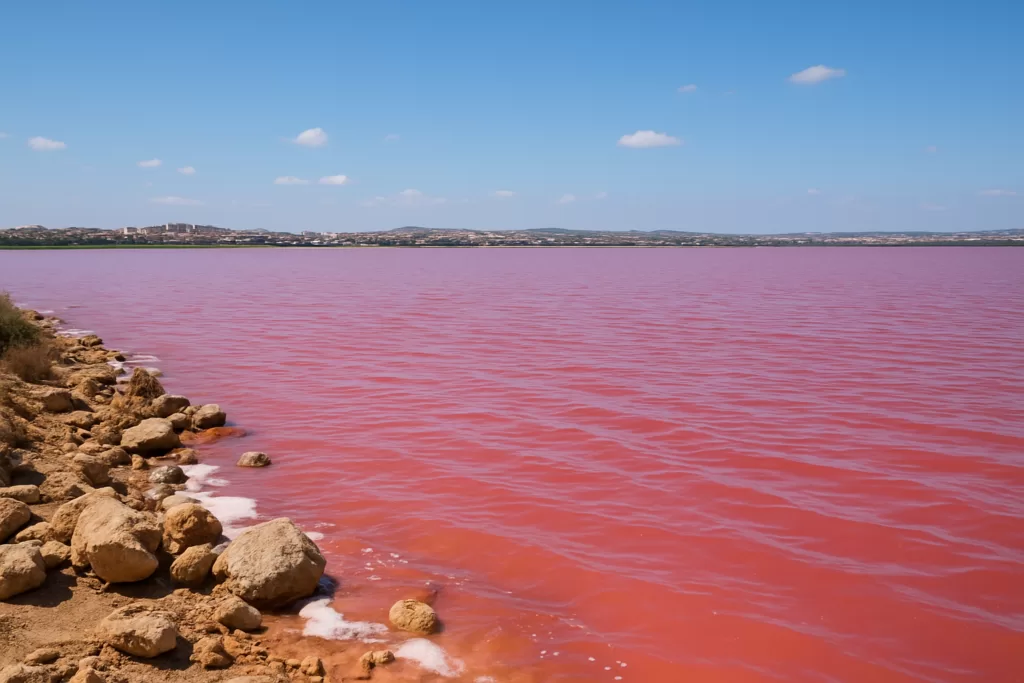
Expect industrial saltworks, not a tropical lagoon. Torrevieja’s famous “pink lake” is a working salt-extraction site inside a protected park: access to the shoreline is controlled, the pink can be subtle or absent depending on season and weather, and the safest reliable viewing requires either the authorised tourist train/walking tour or patience at the public perimeter paths. This guide focuses on what you will actually see and how to avoid disappointment.
Quick facts — at a glance
- No official public viewpoint onto the pink lagoon; many free tracks dead-end at fences or paths with no water access.
- Guided tourist train (departs Paseo de la Libertad) and the authorised Salins walking tour enter the working salt area and the white salt mountains.
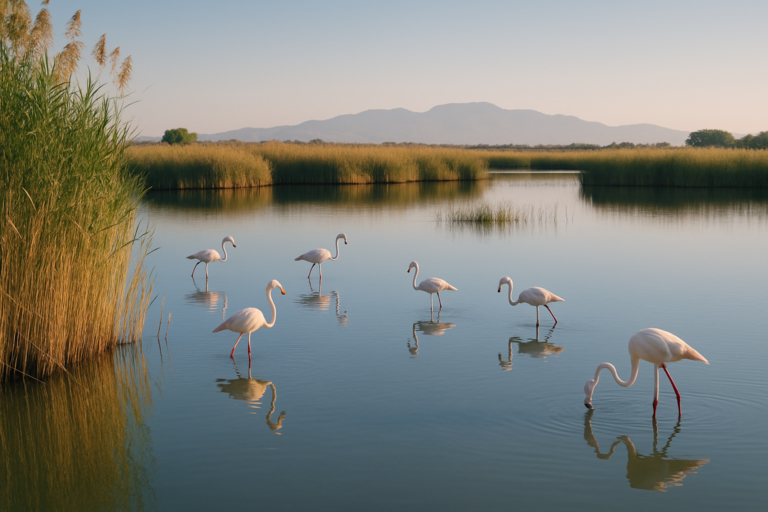
- Laguna de la Mata (the green lagoon) is free-access, has an interpretation centre, hides and wheelchair/pushchair routes — better for birdwatching.
- Swimming in the pink lagoon is prohibited; it is an industrial salt-extraction site and patrolled to enforce rules.
- Colour varies: most intense April–September at sunset and after dry spells; can be beige, grey-pink or purple in other conditions.
What first-timers usually don’t expect
- There is no public shore access onto the pink lagoon — you view it from fenced perimeter paths; the best panoramic spot is at the end of Calle Sol, and parking/walking trails around Avenida Delfina Viudes.
- The pink colour is conditional: it peaks in summer at sunset and after dry spells because of Dunaliella salina and halophilic bacteria releasing pigments — at other times the water can look pale or grey-pink.
- The site is an active salt industry (hundreds of thousands of tonnes harvested annually) and a protected park — tours enter working enclosures, and the setting is industrial rather than scenic beachland.
Getting a good view without a tour
If you don’t join the tourist train or authorised Salins walking tour, plan to see the lake from the public perimeter paths. The best panoramic and photo viewpoint is at the end of Calle Sol; nearby parking and access trails are at Avenida Delfina Viudes. Remember the shoreline is fenced and access-restricted — binoculars help if you want closer detail.
Why a guided tour or the tourist train matters
The tourist train (which departs from Paseo de la Libertad) and the Salins walking tour gain entry into the working salt area and the salt mountains. Inside the enclosure you can climb a salt mountain for the clearest panorama over the pink lagoon — an experience you cannot replicate from the public perimeter. Note the walking tour excludes children under 5 for safety reasons.
Where to see flamingos and safer alternatives
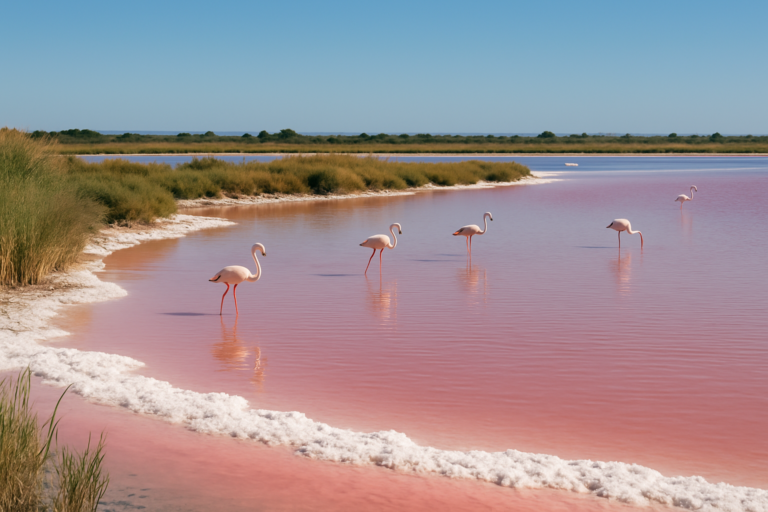
Flamingos are usually not visible to the naked eye in the pink lagoon itself; better views are available at the neighbouring green Laguna de la Mata or at San Pedro del Pinatar. If you want to float in super-saline water, the pink lagoon forbids swimming — instead seek designated floating locations such as Las Salinas de San Pedro del Pinatar.
🧭 Local tip
Wear sturdy closed shoes: free paths are rough and the salt crust underfoot can be sharp. There are no shower facilities at the lagoon, so plan accordingly.
Visitor reality check
- Don’t expect a beach day: this is industrial saltworks inside a protected park with fences and patrols.
- Don’t assume the pink will be vivid — lighting, season and recent rain/wind strongly affect colour intensity.
- Don’t try to enter restricted salt enclosures on your own — swimming is prohibited and fines are possible.
Worth it… if you go knowing this is a working salt industry within a nature park and choose a tour (or the right vantage points) when conditions favour the pink — especially summer evenings. Skip it if you want a swim or a conventional beach scene.
How we assess this guide
This guide summarises cross-checked, documented facts about Torrevieja’s saltworks, visitor facilities and access rules. We rely on multiple authoritative sources for production figures, historical context and site access; we omit any detail we could not verify. We never claim first‑hand CostaMap field observation.
Torrevieja Pink Lake visitor guide
| Feature | Detail |
|---|---|
| Best viewpoint (free) | End of Calle Sol, perimeter paths off Avenida Delfina Viudes |
| Best time for colour | April–September, at sunset, after dry spells |
| Guided access | Tourist train from Paseo de la Libertad; authorised Salins walking tour |
| Swimming | Prohibited — active industrial salt-extraction site |
| Alternative for birdwatching | Laguna de la Mata (the green lagoon), free access, interpretation centre |
How the salt lakes shape Torrevieja
The two lagoons — Laguna Rosa (the pink lake) and Laguna de la Mata (the green lake) — sit within a protected natural park and have driven Torrevieja’s salt industry for centuries, long before the town became a beach resort. Salt is still actively harvested here, which is precisely why public access to the pink lagoon’s shoreline is restricted: it remains a working extraction site, not a scenic feature built for visitors. The distinctive pink colour comes from microorganisms and algae that thrive in the highly saline water, particularly in warmer months, while the neighbouring green lagoon’s different ecology makes it the better spot for birdwatching, including flamingos that feed in its shallower water.
The white salt mountains
Alongside the lagoons, the Salins working site stacks enormous white mounds of harvested salt that are visible from a distance and form part of the authorised walking tour route — a genuinely striking sight up close, and one of the few places in Spain where visitors can see an active salt-extraction operation on this scale. The mountains shift in size through the year as salt is harvested and shipped out, and the tour explains both the industrial process and the surrounding wetland ecosystem it depends on, tying the pink colour, the wildlife and the salt trade together in a way that a distant photo from Calle Sol cannot.
Planning a visit around the colour
Because the pink lagoon’s colour depends on temperature, salinity and light, a trip timed purely around “seeing pink” carries real risk of disappointment — the same spot can look beige or greyish on an overcast day or after rain, and only turns properly vivid under the right summer conditions. Late afternoon on a hot, dry day in July or August gives the best odds, ideally arriving an hour or so before sunset when the low light intensifies the colour further. Visitors who build a wider Torrevieja itinerary around the lagoons — combining the free viewpoints, Laguna de la Mata’s birdlife and a guided tour if timing allows — tend to leave satisfied regardless of what shade the water happens to be that day.
Getting there
The free viewpoints along Avenida Delfina Viudes and Calle Sol are a short drive or taxi ride from central Torrevieja, with limited but usually adequate roadside parking near the perimeter paths. The tourist train departs from Paseo de la Libertad in the town centre itself, making it the easiest option for visitors without a car, and runs a fixed route into the salt park that covers both lagoons over roughly an hour. Neither option requires advance booking for the free viewpoints, though the guided train and walking tours are worth reserving ahead in peak summer, when demand for the more reliable, closer views is highest.
FAQ
Can I walk or swim on the pink lake?
No. The pink lagoon is an active salt-extraction area inside a protected park; swimming is prohibited and the area is patrolled.
How do I get the best pink colour?
The pink is most intense in warm months around sunset and after dry spells. Midday flat light, wind or recent rain can make the colour faint or different shades.
Where should I go to see flamingos?
Flamingos are easier to observe at Laguna de la Mata or at San Pedro del Pinatar; they are usually not obvious to the naked eye in the pink lagoon itself.
Are there facilities and easy paths?
The green Laguna de la Mata offers signposted flat trails, hides, an interpretation centre and a wheelchair/pushchair-accessible route. The pink-lagoon perimeter paths are rougher and there are no shower facilities at the lagoon.
Nearby on the southern Costa Blanca
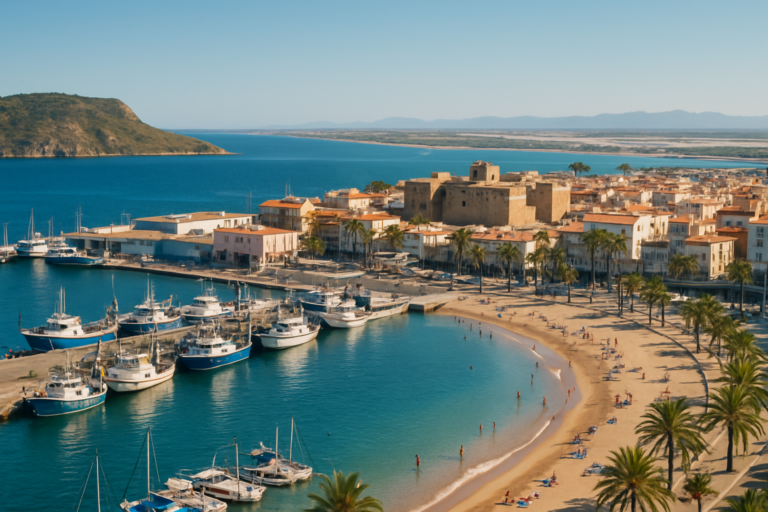
These four towns cover the full stretch of the southern Costa Blanca, from the working salt lagoons here down toward Guardamar and up to Alicante itself.
Torrevieja Pink Lake on the map
Places worth knowing near Torrevieja Pink Lake

Read next
This place sits on the Costa Blanca. Read the full Costa Blanca guide → or open the interactive map to see everything we have mapped nearby.
Frequently asked questions
Why is the Laguna Rosa pink?
Is it easy to float in the Pink Lake?
Is the Laguna Rosa a protected area?
How can you visit the Pink Lake?
How this page is maintained. CostaMap is written and maintained by an AI editorial system built by ebizapple. Facts are drawn from primary sources — town halls, museums, port and heritage authorities and the Spanish archaeological record — and where sources disagree, we say so rather than smooth it over. Photographs marked as ours are taken on location. This page was last reviewed on 14 August 2026. Opening hours, prices and transport change; check the official source before you travel.