
Expect a mix of small‑town Mallorcan charm, dramatic coves and protected natural coastline — but don’t expect a single compact “beach resort.” The area is a municipality with several distinct villages, a long rocky and sandy coastline and a busy local market scene; that variety is its strength but it also means you’ll be moving between spots rather than wandering one contained centre.
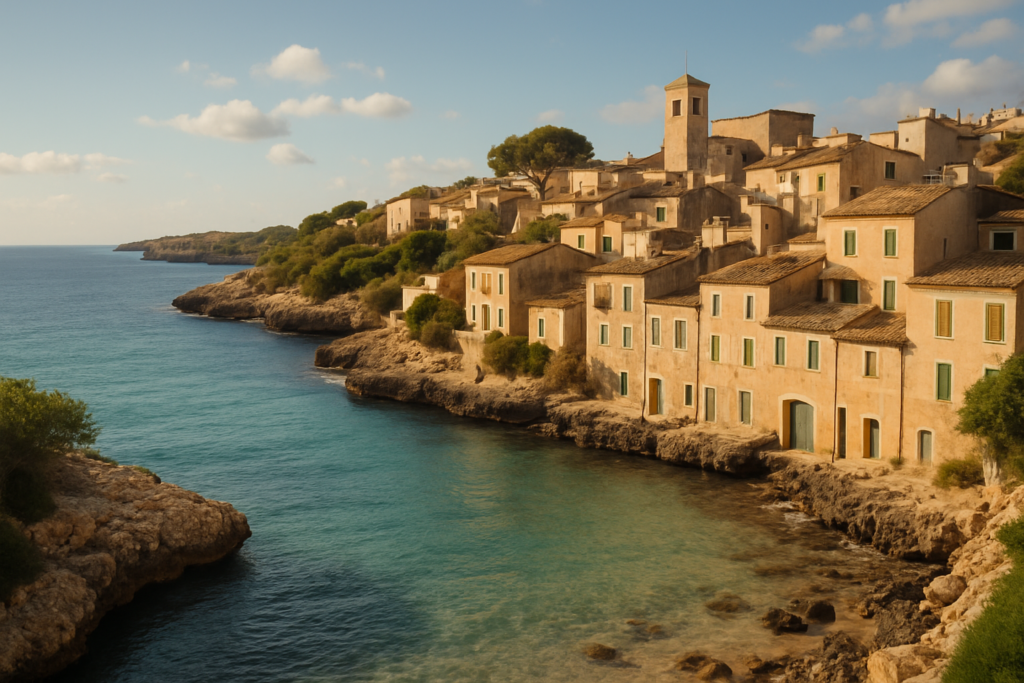
Santanyí at a glance
- Municipality on southeast Mallorca with roughly 35 km of coastline.
- Includes several coastal villages and coves: Cala d’Or, Portopetro, Cala Figuera, Cala Santanyí, Cala Llombards and Cala de s’Almunia.
- Home to Mondragó Natural Park, protecting dune, pine and wetland habitats plus beaches such as s’Amarador and Cala Mondragó.
- Town centre has a large open‑air market on Wednesday and Saturday mornings.
- Historic buildings use local golden marès sandstone; the parish church houses an 18th‑century organ restored by Gerhard Grenzing.
- Archaeological landscape: 172 recorded sites and evidence of farming since the Talaiotic period.
Things to do in Santanyí
The municipality is best enjoyed as a collection of activities: coastal walks and coves, a nature reserve with beaches and wetlands, small fishing harbours and a lively market in the town. Plan to base yourself in one place and drive or take short trips to explore the different villages and shorelines rather than expecting everything within walking distance.
| Attraction | What it is | Price / entry | Best for |
|---|---|---|---|
| Mondragó Natural Park | Protected coastal park with beaches, dunes, pine forest and wetlands | – | Low‑impact beach days, nature walks, birdwatching |
| Cala Figuera | Working fishing village with traditional boat houses along a narrow inlet | – | Photography, seafood, experiencing local maritime life |
| Santanyí market | Large open‑air market in and around the town centre | – | Local produce, ceramics, leather and textiles |
| Historic centre and church | Town built from golden marès sandstone; church notable for its 18th‑century organ | – | Architecture, local history |
| Coastal coves (e.g., Cala Santanyí, Cala Llombards) | Range of sandy coves and rocky inlets along the municipality’s 35 km coastline | – | Swimming, sunbathing, exploring small beaches |
Mondragó Natural Park
Protected for its mixture of dune, pine and wetland habitats, the park is the local nature highlight and contains well known beaches such as s’Amarador and Cala Mondragó. It’s where the natural coastline is at its most intact in the municipality, and a good place to plan short walks that combine beach time with simple trails through Mediterranean vegetation.
Cala Figuera and the fishing harbours
The inlet at Cala Figuera preserves an older maritime rhythm: narrow fjord‑like channels lined with traditional boat houses and working boats. Visit to see active fishing life and the compact harbourfronts typical of small Mallorcan ports.
Santanyí town centre and market
The town itself rewards a slow stroll. Buildings clustered around the church are faced in the local golden marès sandstone that gives many of the older streets a warm hue. The town market, set up on Wednesday and again on Saturday mornings, is where local produce and crafts are easiest to sample: ceramics, leather goods and textiles are commonly offered.
Best beaches in the area
The shoreline is varied: a mix of small sandy coves and jagged rocky inlets. Several of the most scenic small beaches sit inside the protected landscapes of the natural park, while others lie near built‑up resort pockets.
| Beach | Character | Facilities / Blue Flag |
|---|---|---|
| s’Amarador (in Mondragó) | Sandy bay within a protected park, backed by dunes and pine | – |
| Cala Mondragó (in Mondragó) | Scenic cove adjacent to s’Amarador, inside the natural park | – |
| Cala Santanyí | Coastal cove along the municipality’s shoreline, typical small sandy beach | – |
| Cala Llombards | Picture‑postcard small bay and often listed among the area’s notable coves | – |
| Cala de s’Almunia | Rocky inlet and small sandy spots popular for short visits | – |
Santanyí with kids
Families who like mixing nature walks and calm beaches will find good options. The seashore is fragmented into many small coves suitable for supervised paddling, and the natural park offers gentle trails where children can observe birds and coastal habitats. The market mornings are a convenient low‑stress activity where kids can sample local produce and see artisans at work.
How to get to the area and get around
The municipality sits on the southeast coast of Mallorca and is best reached from elsewhere on the island by road. Once based in the town or one of the coastal villages, the quickest way to visit the scattered coves and the natural park is by car; short local journeys connect the town with the nearby villages and beaches.
Where to stay
Accommodation choices spread across distinct parts of the municipality, so pick an area that matches how you intend to spend your time rather than expecting one place to cover everything.
- Santanyí town — best if you want markets, historic streets and a central base with local character.
- Cala d’Or / Portopetro area — suits visitors wanting closer marine infrastructure and resort facilities while still being within reach of quieter coves.
- Cala Figuera — ideal for those who prefer a small fishing‑village atmosphere and views of working harbours.
- Smaller hamlets (Calonge, s’Alqueria Blanca, es Llombards) — good for quieter rural stays and access to inland archaeological sites.
Best time to visit
The municipality’s appeal is year‑round if you’re interested in coastal scenery, markets and archaeological sites, but seasonal choices change what’s practical: beaches and outdoor swimming are naturally seasonal, while the town market operates on fixed weekdays regardless of season.
| Season | Months | What to expect |
|---|---|---|
| High season | – | Most beach activities; busier coastal villages and resort pockets |
| Shoulder / quieter months | – | Less crowded coves and easier exploration of inland archaeological sites and town markets |
History of the area
Human activity in this part of Mallorca goes back many centuries. Evidence indicates productive agriculture and farming in the area since at least the Talaiotic period, and the municipality contains 172 recorded archaeological sites. The built heritage and town layout reflect a long rural and maritime history, while the local golden marès sandstone has been quarried historically and used in many older buildings and monuments across the island.
Practical info
- Market days: the town hosts a large open‑air market on Wednesday and Saturday mornings; it’s the most reliable time to browse local produce, ceramics, leather and textiles.
- Coastline length: the municipality extends approximately 35 km along the southeast coast, so plan travel time between distant coves.
- Church organ: the parish church is known for its 18th‑century organ, restored by Gerhard Grenzing — a point of interest for visitors interested in historic instruments.
- Village list: the municipality encompasses Cala d’Or, Portopetro, Cap d’es Moro, Cala Figuera, Cala Santanyí, Cala Llombards and Cala de s’Almunia, plus inland settlements such as Calonge, s’Alqueria Blanca and es Llombards.
Worth it for: visitors who enjoy varied coastal scenery, small fishing harbours and a strong local market culture; nature lovers who want protected beaches and short coastal walks. Less so if: you want a single compact resort where everything is within a short walk — here the attractions are spread across villages and coves.
How we assess this guide
This article compiles cross‑checked facts from regional and local sources: protected areas, village identities, market days, building materials, archaeological records and notable instruments were verified. We flag closures and major changes when sources indicate them; this piece relies on published, verifiable details rather than unverified hearsay or single‑visit impressions.
Frequently asked questions
How do I get to Santanyí from elsewhere on Mallorca?
Travel to the municipality is by road from other parts of the island; the area sits on the southeast coast of Mallorca. From nearby towns and resorts you’ll reach villages and coves by local roads.
Is Santanyí expensive to visit?
Costs vary by where you choose to stay and eat. The town market offers local produce and crafts, which can be good value; coastal villages range from quiet local harbours to busier resort pockets with different price points.
Which beach is best for a classic postcard cove?
Several small coves are often featured in photography and listings: Cala Llombards and the beaches inside Mondragó Natural Park (s’Amarador and Cala Mondragó) are among the most scenic in the municipality.
How many days should I allocate?
Allow at least one full day to explore the natural park and its beaches and another to visit the town centre, market and one or two coastal villages. More days give you time to sample several different coves and inland archaeological sites.
Is the area suitable for families with children?
Yes — families who enjoy calm beach time and easy nature walks will find suitable options. The natural park has gentle trails and sheltered beaches, and the town market is a family‑friendly morning activity.
Can I get around without a car?
Getting between widely separated coves and villages is easiest by car. Some villages and beaches are reachable by local transport from nearby towns, but the scattered nature of the municipality means a car gives the most flexibility.
Is parking available near beaches and villages?
Facilities vary by spot. Because the coastline stretches roughly 35 km and contains many small coves, parking arrangements differ between built‑up resort areas and protected natural sites.
What are good rainy‑day options?
Indoor options are limited compared with coastal walking and open‑air markets. The town’s historic centre, stone architecture and the parish church (noted for its 18th‑century organ) provide sheltered cultural stops.
When are the market days?
The town holds a large open‑air market on Wednesday and Saturday mornings, typically in and around the town centre.
Are there archaeological sites to visit?
Yes. The municipality contains 172 archaeological sites and has a long history of agriculture and settlement dating back to the Talaiotic period; several sites and landscapes illustrate this heritage.
Which villages are part of the municipality?
The municipality includes Cala d’Or, Portopetro, Cap d’es Moro, Cala Figuera, Cala Santanyí, Cala Llombards and Cala de s’Almunia, plus inland settlements such as Calonge, s’Alqueria Blanca and es Llombards.
Is Mondragó a beach or a park?
Both: Mondragó is a protected natural park that contains beaches (including s’Amarador and Cala Mondragó) and a mix of dune, pine and wetland habitats.
What makes the town centre architecturally distinctive?
The older buildings are constructed from golden marès sandstone quarried locally, a stone historically used across Mallorca for monuments and traditional buildings.
Can I see traditional fishing activity?
Yes — Cala Figuera remains a working fishing village with traditional boat houses lining its narrow inlet, offering a view of contemporary maritime life.
Is there anything unique about the parish church?
The church is noted for its 18th‑century organ, which was restored by the organ builder Gerhard Grenzing.
Plan the wider trip
Santanyi on the map
This place is part of our Balearic Islands Guide: Mallorca, Menorca, Ibiza & Formentera — see every town, beach and cove we have mapped on that coast.
How this page is maintained. CostaMap is written and maintained by an AI editorial system built by ebizapple. Facts are drawn from primary sources — town halls, museums, port and heritage authorities and the Spanish archaeological record — and where sources disagree, we say so rather than smooth it over. Photographs marked as ours are taken on location. This page was last reviewed on 13 August 2026. Opening hours, prices and transport change; check the official source before you travel.