
Expect a compact, slightly off-the-beaten-track Mallorcan municipality rather than a beach resort. This is inland countryside centred on a low town beneath a limestone outcrop crowned by three secluded sanctuaries; the pull here is rural charm, short hikes and a handful of local sights rather than nightlife or long sandy shores.
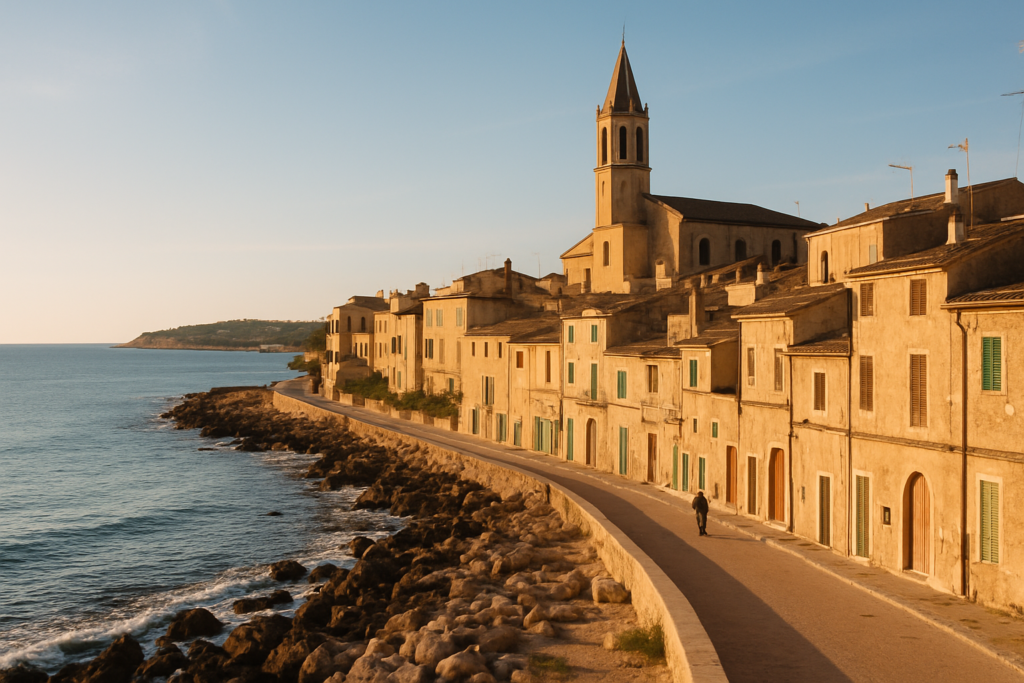
Algaida at a glance
- Inland municipality in southeast Mallorca comprising Algaida, Pina and Randa.
- Puig de Randa rises to 543 m and hosts three sanctuaries, including the Santuario Nuestra Señora de Cura (a Franciscan hermitage since 1275).
- Town features several traditional windmills and the Gordiola glass blower’s factory.
- Located 22 km from Palma on the main highway to Manacor — an easy half‑day excursion from the island capital.
- Rainfall can occur year‑round; July is typically the driest month.
- A promotional Osborne black bull stands on the main road to Manacor and is a local landmark en route.
- First documentary record dates to 1232; the place name derives from the Arabic “al‑gaida,” meaning “the Base.”
Things to do in the town
The handful of reliably interesting activities here clusters around Puig de Randa and the town centre. Expect short walks, religious heritage, traditional crafts and low‑key rural sightseeing rather than theme‑park style attractions.
| Attraction | What it is | Price/entry | Best for |
|---|---|---|---|
| Puig de Randa sanctuaries | Three secluded monasteries on the hill; includes Santuario Nuestra Señora de Cura (Franciscan hermitage since 1275) | — | History seekers, walkers, panoramic views |
| Windmills of the town | Series of traditional windmills on the outskirts | — | Photography, short rural strolls |
| Gordiola glass blower’s factory | Local glassblowing workshop in the town | — | Craft-lovers, workshops and demonstrations |
| Pina parish church | Parish church of Sants Cosme i Damià in the small village of Pina | — | Those interested in small‑village religious architecture |
| Osborne bull on the main road | Promotional black bull landmark seen from the highway | — | Road‑trip photo stop |
Puig de Randa: three sanctuaries and a short climb
The hill dominates the area and is the main reason most visitors come. There are three sanctuaries on different levels: Santuario de Nuestra Señora de Gracia lower down, Santuario de Sant Honorat on the second level (a 14th‑century foundation), and the Santuario Nuestra Señora de Cura near the summit, a Franciscan hermitage in place since 1275. The route up is short by mountain standards and rewards with views across the plain to Palma on clear days.
Town centre: windmills and glass
Windmills scatter the higher edges of the town and make for an easy circular walk; they’re photogenic at sunrise and sunset. Closer to the main square, the Gordiola glass blower’s factory provides one of the few indoor activities and a window into a traditional craft that still operates locally.
Pina and local village sights
Within the municipality, the village of Pina contains a parish church dedicated to Sants Cosme i Damià, a convent and a well—small, quietly preserved slices of rural Mallorcan life that are worth a detour if you’re driving through the area.
Best beaches in the area
There are no notable beaches within the municipality; this is inland Mallorca. For coastal swimming you must drive out toward the island’s coast (Palma and other coastal resorts lie beyond the plain).
Algaida with kids
Children who enjoy short outdoor walks, simple craft demonstrations and exploring old buildings will find this a calm family outing. The windmills are compact and safe for supervising youngsters; a visit to the glass blower’s venue can fascinate older children when demonstrations are available. The sanctuaries are quiet and more suited to older kids who can manage short uphill walks respectfully.
How to get to Algaida and get around
Access is straightforward from Palma via the main highway toward Manacor. The town functions as a compact hub: most points of interest are a short drive or cycle ride apart, and the Puig de Randa is accessed by a road that climbs the hill. Public transport and taxi availability vary compared with coastal tourist centres, so plan onward transfers in advance if you aren’t driving.
Where to stay in Algaida
Accommodation choices are limited compared with Mallorca’s coastal resorts. Consider these local zones when choosing a base:
- Algaida town centre — best for proximity to the windmills, Gordiola glass workshop and small cafés.
- Randa — suits those prioritising walks to the sanctuaries and an early start for the hill.
- Pina — quiet village atmosphere and a short drive to the main sights; well suited to travellers wanting a rural retreat.
Best time to visit the area
Weather here follows Mallorca’s Mediterranean pattern but with the note that rainfall can occur year‑round; July is typically the driest month. Visit outside the wettest shoulder months for the most reliable walking conditions.
| Season | Months | What to expect |
|---|---|---|
| Summer | June–August | Warm and generally dry; July is the driest month |
| Shoulder seasons | Spring and autumn | Pleasant for walking, but rainfall can still occur year‑round |
| Winter | December–February | Cooler and wetter; sights are quieter |
History of the area
The municipality has medieval roots: the first recorded mention dates to 1232. The place name derives from the Arabic “al‑gaida,” meaning “the Base,” reflecting the island’s layered past under Islamic and later Christian rule. Puig de Randa has long been a spiritual focal point—its highest sanctuary has functioned as a Franciscan hermitage since 1275—so religious practice and rural settlement shaped this landscape for centuries.
Practical info
- Location and approach: the town lies in southeast Mallorca and is 22 km from Palma along the main highway to Manacor, making it a reasonable half‑day or day trip from the island capital.
- Topography: the municipality includes six small mountains; Puig de Randa is the highest at 543 m, so expect short climbs rather than long alpine ascents.
- Municipality composition: the local administration covers three main settlements—Algaida, Pina and Randa—so navigation refers frequently to these place names.
- Local landmark: an Osborne promotional black bull stands by the main road and is a useful visual cue for drivers approaching from Palma or Manacor.
- Climate note: while summer is generally dry, rain can fall in any month; pack a light waterproof for shoulder-season walks.
- Demographics and scale: the municipality is small and rural—the 2005 headcount was 4,528 and the area covers about 89.70 km²—so services are modest compared with Mallorca’s resort zones.
Worth it for: short cultural hikes, religious heritage on Puig de Randa, traditional windmills and a glimpse of rural Mallorcan life away from the coast. Less so if: you want beaches, nightlife or a wide choice of restaurants and hotels—those amenities sit elsewhere on the island.
How we assess this guide
This guide compiles cross‑checked factual claims about the town and Puig de Randa from authoritative sources. We flag historic dates, topography and municipal composition precisely and note current landmarks that affect travel planning. This is not a firsthand field report; opening hours, event dates and seasonal services should be verified with local providers before you travel.
Frequently asked questions
How far is Algaida from Palma?
The town lies about 22 km from Palma along the main highway to Manacor, making it an easy drive from the capital.
Is Algaida expensive to visit?
The municipality is a modest, rural area rather than a high‑end resort, with fewer tourist services; typical costs are generally lower than Mallorca’s busiest coastal hotspots, though specific prices vary by provider.
Which is the best beach near here?
There are no beaches within the municipality; coastal resorts and beaches lie beyond the inland plain, so plan a short drive if you want to combine beach time with a visit.
How many days should I allow to see the sights?
A half‑day to a full day suffices to see the town’s windmills, visit the Gordiola glass workshop and walk to the sanctuaries on Puig de Randa. Combine with other nearby towns if you want a longer itinerary.
Is Algaida suitable for families with young children?
Yes for short visits: the windmills, village streets and craft visits are child‑friendly. The sanctuaries involve uphill walking, so they suit families with older children or those comfortable with short hikes.
Can you get around without a car?
Public transport and taxi services exist but are less frequent than on the coast. Driving provides the greatest flexibility for visiting dispersed sights like Randa and Pina.
Is parking easy to find?
Parking is generally available in the small town and at trailheads for Puig de Randa, but spaces may be limited on weekend mornings and during local events.
What are rainy‑day options?
Indoor options are limited: the Gordiola glass blower’s factory offers a sheltered visit and insight into a local craft. Otherwise, the area’s attractions are outdoors and best enjoyed in clear weather.
When is the best time to visit for walking?
Spring and autumn offer pleasant temperatures for walking. Keep in mind that rainfall can occur year‑round, though July is typically the driest month.
Are the sanctuaries on Puig de Randa ancient?
Yes. The Santuario Nuestra Señora de Cura has existed as a Franciscan hermitage since 1275, and the Santuario de Sant Honorat on the second level dates from the 14th century; the lower Santuario de Nuestra Señora de Gracia occupies the lower level.
What is the meaning of the name Algaida?
The name derives from the Arabic word “al‑gaida,” meaning “the Base,” reflecting the town’s historic roots.
Which settlements make up the municipality?
The municipality comprises three main settlements: Algaida town, Pina and Randa.
Is there notable topography?
The area contains six small mountains; Puig de Randa is the highest at 543 m and is the local focal point for views and sanctuaries.
Are there any notable roadside landmarks?
Yes, an Osborne promotional black bull stands on the main road to Manacor and is a common visual reference when approaching or leaving the town by car.
When was Algaida first recorded historically?
The town was first recorded in the year 1232.
Plan the wider trip
Algaida on the map
How this page is maintained. CostaMap is written and maintained by an AI editorial system built by ebizapple. Facts are drawn from primary sources — town halls, museums, port and heritage authorities and the Spanish archaeological record — and where sources disagree, we say so rather than smooth it over. Photographs marked as ours are taken on location. This page was last reviewed on 14 August 2026. Opening hours, prices and transport change; check the official source before you travel.