
Expect a compact, walkable Mediterranean city where a dramatic fortress, palm‑lined promenade and an accessible city beach form the main draws. Alicante rewards people who prioritize easy coastal sightseeing, museums and day trips over picture‑perfect historic centres: the old town is lively rather than pristine, summer is very hot, and some summit access is currently changed by construction. This guide focuses on what matters on the ground so you won’t be surprised.
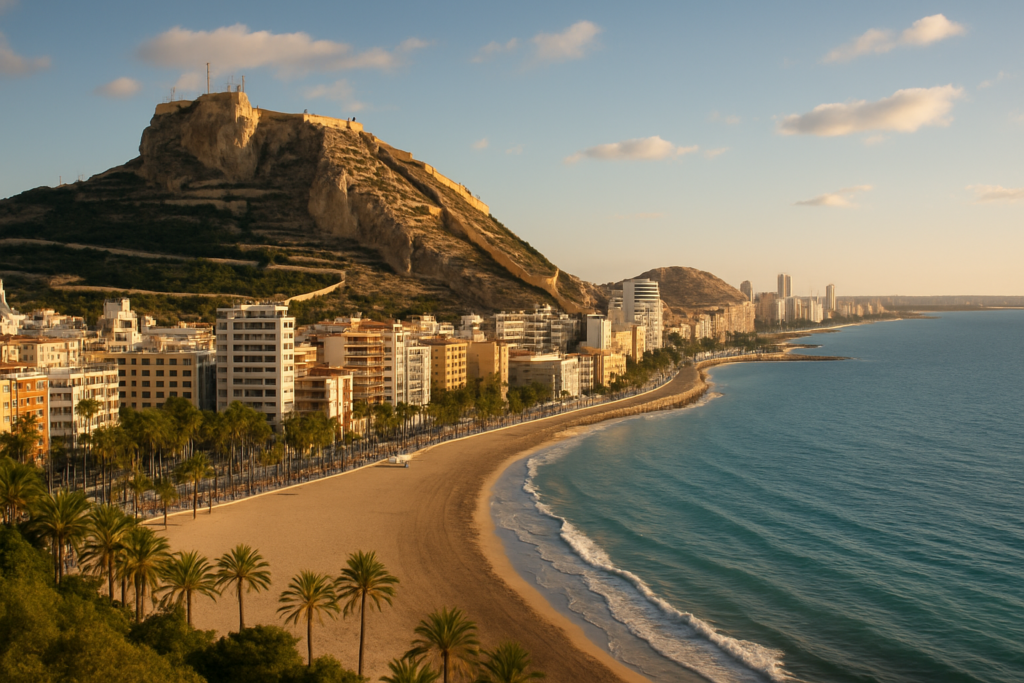
Alicante at a glance
- A coastal city and provincial capital on Spain’s Costa Blanca with a long connection to Mediterranean trade and cruise tourism.
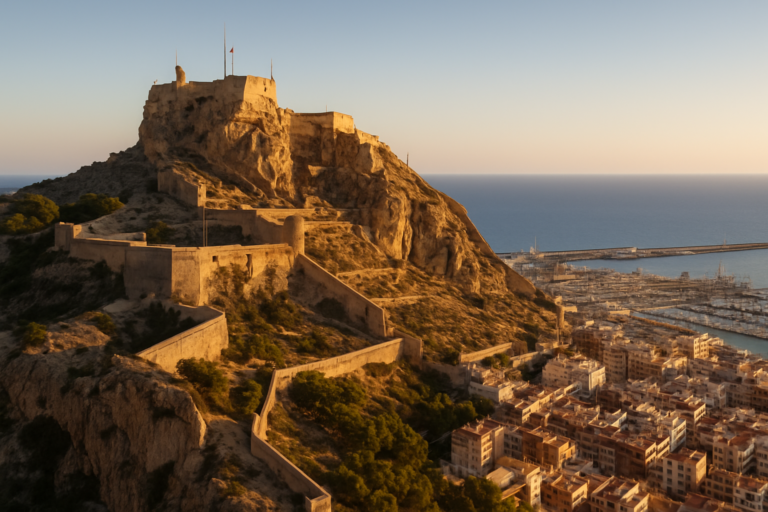
- Dominated by Santa Bárbara Castle atop Mount Benacantil (166 m), one of Spain’s largest medieval fortresses.
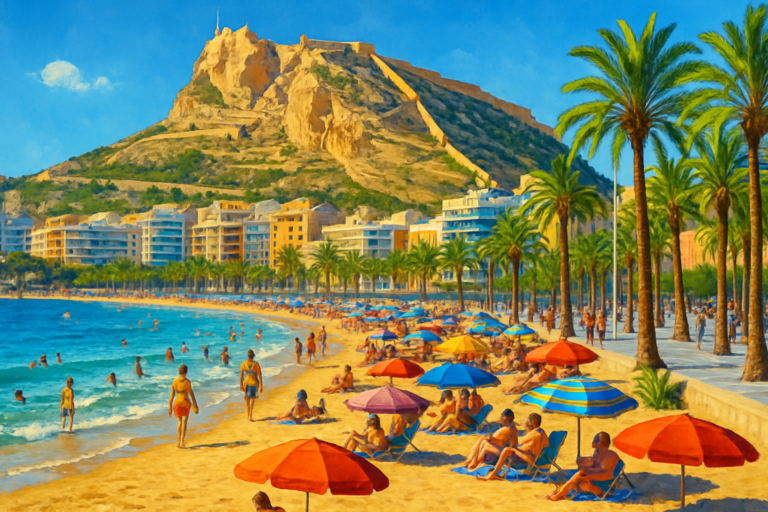
- Two contrasting beaches: the city beach Playa del Postiguet and the long sandy Playa de San Juan to the north-east.
- Alicante‑Elche (L’Altet) Airport lies 11 km south of the centre and is the busiest airport in the Valencian Community.
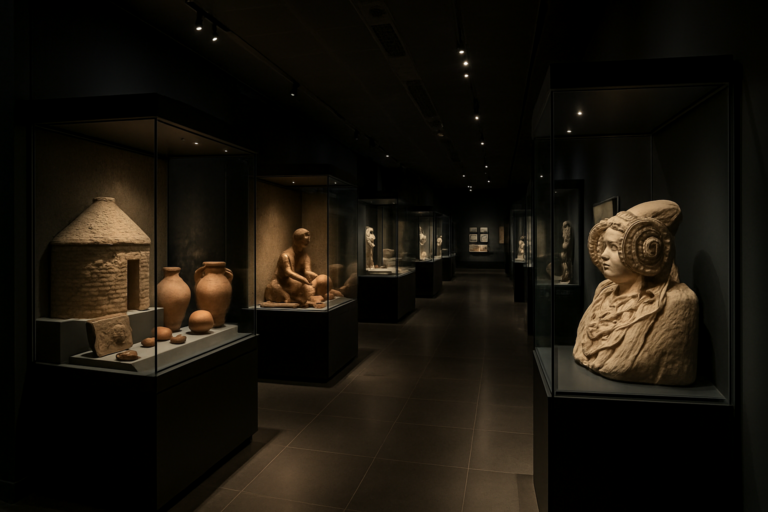
- Good local museums: the archaeological MARQ museum and the free contemporary MACA housed in a 17th‑century civil building.
- Ferries from the port take day‑trippers to Tabarca Island, a protected marine reserve famed for snorkelling and seafood.
- Hot, semi‑arid climate with mild winters and sultry summers; average annual rainfall about 284.5 mm.
Before you plan
Access to Santa Bárbara Castle has been altered while pedestrian‑link works are underway on the slopes of Mount Benacantil. Direct vehicle access is restricted; visitors who need a short ride to the castle can use a shuttle bus from Plaza Puerta del Mar (single journey fare €1.45 as of 2026). The castle itself remains open to the public but arrangements for drop‑offs are limited to the Ereta car park.
Things to do in Alicante
Alicante’s top activities are tightly clustered: climb or ride up to the castle, stroll the Explanada and the old town, hit the beaches, visit a couple of compact museums and take a boat out to Tabarca. Below is a concise comparison of key attractions to help order your time.
| Attraction | What it is | Price / entry | Best for |
|---|---|---|---|
| Santa Bárbara Castle | Medieval fortress on Mount Benacantil with city views | Free to enter; panoramic lift from Avenida Juan Bautista Lafora costs €2.70 (2026) | Views, short walks, history |
| MARQ Archaeological Museum (MARQ) | Modern archaeological museum covering local prehistory to modern times | €5 adults / €3 students & seniors / free <6; free first Sunday of the month (2026) | Cultural visitors, families with older children |
| MACA (Museum of Contemporary Art) | Contemporary art in a 17th‑century civil building beside the Basilica | Free general admission (2026) | Art lovers, architecture fans |
| Tabarca Island | Small inhabited island and protected marine reserve reached by ferry | — | Snorkelling, seafood day trips |
| Explanada de España | Seafront promenade paved in a wave pattern and lined with palms | — | Evening strolls, cafés |
| Lucentum archaeological site | Ruins documenting the Roman era in Alicante | — | History buffs |
Santa Bárbara Castle
The castle crowns Mount Benacantil and is one of the city’s defining features. Entry to the fortress itself is free. If you prefer not to walk up through La Ereta Park or the Monte Benacantil trails (both cost nothing), there is a panoramic lift that runs from Avenida Juan Bautista Lafora opposite Postiguet beach for a small fee (€2.70 in 2026). Seasonal opening hours vary; in high summer the castle keeps late hours while winter closing times are earlier—check the seasonal schedule if you plan a sunset visit. Note the current site works that restrict vehicular drop‑offs; a shuttle from Plaza Puerta del Mar operates for a small fare (€1.45 single journey as of 2026).
Tabarca Island — snorkelling and seafood day trips
Tabarca is Spain’s smallest permanently inhabited island and a designated marine reserve in the Mediterranean. Regular ferries run from Alicante’s Explanada harbour; the island is a popular day‑trip destination for snorkelling in clear waters and for sampling island seafood in village restaurants. If you value underwater life or a relaxed coastal village atmosphere, Tabarca is a solid half‑day or full‑day excursion.
Museums: MARQ and MACA
MARQ (the Provincial Archaeological Museum) is the main draw for local history: founded in 1932, the museum’s displays range from prehistoric finds to Roman Lucentum and later periods. Admission is paid (adult and reduced rates apply), but MARQ offers free entry on the first Sunday of every month and has weekday opening that includes long Saturday hours; it’s closed on Mondays. MACA, by contrast, houses contemporary art in the 17th‑century Casa de La Asegurada and provides free general admission—an easy cultural stop next to the Basilica de Santa María.
Best beaches in Alicante
Alicante is focused on two principal beach experiences: the compact, city‑front Postiguet and the longer Playa de San Juan. Both are convenient bases for beach time and easy sightseeing.
| Beach | Character | Facilities / Blue Flag |
|---|---|---|
| Playa del Postiguet | Central city beach below the castle—sandy and easy to reach from the old town | — |
| Playa de San Juan | Long sweep of sand stretching north‑east of the city, favoured for long walks and more space | — |
Alicante with kids
Families will find straightforward beach days, short museums and an island boat trip that appeal to children. Tabarca’s calm, clear waters make for accessible snorkelling and easy beach time for school‑age kids. MARQ’s hands‑on archaeological displays engage older children; check family facilities and the free‑admission Sunday for budgeting. The short walks up to Santa Bárbara Castle are manageable for families who prefer the lift, though the construction work around access points may make stroller or wheelchair routes more complicated—plan routes in advance.
How to get to Alicante and get around
Alicante‑Elche Airport (L’Altet) sits 11 km south of the city centre and is the region’s busiest airport. The city is also a southern hub for the TRAM coastal tram‑train network linking to towns along the Costa Blanca, including El Campello, Villajoyosa, Benidorm, Altea and Denia. Boats operate from the port to Tabarca Island. Within the city, most highlights are walkable: the old town, Explanada and the harbour form a compact area and the castle sits within easy walking distance or a short lift/shuttle ride (see the fresh callout about current access). Cruise visitors typically disembark at the Port of Alicante, which has grown in importance for cruise tourism.
Where to stay in Alicante
Choose your neighbourhood to match how you want to spend your time:
- Old town (El Barrio / Barrio de Santa Cruz) — best for nightlife, narrow streets, proximity to the Basilica and museums.
- Seafront around Explanada and Postiguet — ideal for first‑time visitors who want immediate beach access and promenades.
- Playa de San Juan area — suits those who prefer a longer beach and quieter resort feel, slightly further from the historic centre.
- Near the port — convenient for ferry connections to Tabarca and for cruise passengers; close to seafront cafés.
Best time to visit Alicante
Alicante’s hot, semi‑arid climate means short winters and long, hot summers. If you dislike very high temperatures and large summer crowds, aim for spring or early autumn. For those who want to experience the city’s signature festival, the Bonfires of Sant Joan runs annually around 20–24 June and is Alicante’s largest civic celebration.
| Season | Months | What to expect |
|---|---|---|
| Spring | Spring months | Mild temperatures and good walking weather; museums open regular hours. |
| Summer | Summer months | Hot and sultry; long daylight hours and late opening at Santa Bárbara Castle during high summer; major festival period in late June. |
| Autumn | Autumn months | Warm sea and quieter beaches compared with peak summer; comfortable for walks and day trips. |
| Winter | Winter months | Mild winters; shorter opening hours for some attractions like the castle (earlier closing in winter). |
History of Alicante
Alicante has deep Mediterranean roots. Tradition links its founding to the Carthaginian general Hamilcar Barca; later the Romans renamed the settlement Lucentum. The area developed as a medieval trading station and port. Today the city’s archaeological record is visible in sites like Lucentum and in museum collections—MARQ, founded in 1932, presents much of this story to visitors.
Practical info
- Airport: Alicante‑Elche Airport is 11 km south of the centre and is the busiest airport in the Valencian Community.
- Santa Bárbara Castle access: the castle remains open, but direct vehicle access is restricted due to pedestrian‑link construction; drop‑offs are limited to the Ereta car park and a shuttle operates from Plaza Puerta del Mar for a fare of €1.45 per journey (2026).
- Museum details: MARQ charges €5 for adults, €3 for students and seniors and free for children under 6; it is closed on Mondays and offers extended hours Tuesday–Saturday and shorter hours on Sundays/holidays (2026). MACA has free general admission.
- Climate and rainfall: expect a hot, semi‑arid climate with average annual rainfall of about 284.5 mm.
- Public transport: Alicante is a hub for the TRAM coastal network connecting to nearby coastal towns and for boats to Tabarca Island; the port also handles cruise passengers.
Worth it for: Short city breaks combining beaches, a dominant hilltop castle and compact museums; day trips to Tabarca and coastal tram excursions. Less so if: You expect a pristine medieval centre or cooler summer temperatures — Alicante’s old town is lively rather than perfectly preserved, and summers are hot and busy.
How we assess this guide
This guide compiles verified, cross‑checked facts from up‑to‑date regional and cultural sources. We flag operational changes (for example, construction affecting castle access) and list museum prices and hours where available. We do not publish on‑the‑ground field reports here; instead we synthesise authoritative, verifiable information so you can plan without surprises.
Nearby on the Costa Blanca
Towns within reach
- San Vicente del Raspeig — a lively University of Alicante town on the Costa Blanca (7 km)
- Mutxamel — a green inland Costa Blanca town near Alicante, with baroque estates (8 km)
- El Campello — lies just north of Alicante (12 km)
- Santa Pola — sandy beaches, the salt flats and flamingos, the fishing harbour (18 km)
- Tabarca — 's walled village, clear water and what day-trippers don't expect – ferries (20 km)
Things to see close by
- Madness Coffee (Alicante) — Madness Coffee is Alicante's original specialty coffee roastery (0 km)
- Santa Bárbara Castle (Alicante) — The great fortress on Mount Benacantil above Alicante (1 km)
- Playa del Postiguet (Alicante) — Playa del Postiguet is Alicante's main beach (1 km)
- MARQ — Alicante's award-winning archaeology museum, tracing the region's history from prehistory through Iberian (1 km)
For the wider picture, see the full Costa Blanca guide.
Frequently asked questions
How do I get from Alicante‑Elche Airport to the city centre?
The airport sits 11 km south of the city centre. Transport options serve that corridor regularly—check local schedules for taxis, buses and other transfers.
Is Alicante expensive to visit?
Alicante combines free public sights (many promenades, the old town), paid museums and budgetable transport links. The MARQ museum has specific admission fees, while MACA offers free entry. Costs will vary by season and accommodation choice.
Which beach in Alicante is best for first‑time visitors?
Playa del Postiguet is the most convenient for first‑time visitors: it sits under Mount Benacantil and is close to the Explanada and the old town. For more space, head to Playa de San Juan.
How many days should I spend in Alicante?
Two to three days cover the city’s main sights—castle, old town, Explanada, a museum visit and a beach session—with an extra half‑day to a full day for a trip to Tabarca Island if you plan a boat excursion.
Is Alicante good for families with children?
Yes. Beaches are accessible, Tabarca provides a family‑friendly excursion for snorkelling and beach time, and MARQ has exhibits that engage older children. Note that some castle access routes may be affected by construction, which can complicate stroller or mobility access.
Can I get around Alicante without a car?
Yes. The central attractions are walkable; public transport and the TRAM network serve the coast and nearby towns. Boats run from the port to Tabarca.
Where can I park if I drive to Santa Bárbara Castle?
Vehicle drop‑off is limited during current works; the Ereta car park is the authorised drop‑off point for the castle during construction. A shuttle from Plaza Puerta del Mar is also available for a small fare (2026).
What are good rainy‑day options?
Visit MARQ for a comprehensive archaeological collection (indoor displays and a modern layout) or MACA for contemporary art in an historic building—MACA has free general admission.
When is the best time to visit Alicante to avoid crowds?
Spring and autumn offer milder temperatures and fewer beach crowds compared with peak summer. If you want to attend the Bonfires of Sant Joan, plan for the festival window around 20–24 June.
When are the Bonfires of Sant Joan and what should I expect?
The Bonfires of Sant Joan (Hogueras de San Juan) take place around 20–24 June each year and feature elaborate bonfire sculptures, daytime mascletà firecracker displays and a dramatic closing-night fireworks display called the Palmera.
How do I get to Tabarca Island from Alicante?
Boats to Tabarca depart from Alicante’s Explanada harbour. The island is the smallest permanently inhabited island in Spain and a protected marine reserve, popular for snorkelling and seafood.
Is Santa Bárbara Castle free to visit and are there any fees?
Entry to the castle is free. If you use the panoramic lift from Avenida Juan Bautista Lafora there is a fare (€2.70 as of 2026); walking routes via La Ereta Park or Monte Benacantil trails are free.
Does MARQ have free admission days?
Yes. MARQ offers free admission on the first Sunday of every month (2026).
What is the ‘Cara del Moro’ and where can I see it?
The ‘Cara del Moro’ is a natural rock profile on Mount Benacantil linked to the legend behind Alicante’s name. It is most visible from the area around Postiguet beach.
Does Alicante have good train or tram connections to other Costa Blanca towns?
Yes. Alicante is the southern hub of the TRAM coastal tram‑train network, which links the city with El Campello, Villajoyosa, Benidorm, Altea and Denia.
Plan the wider trip
Consider coastal extensions along the TRAM line to explore Benidorm for its beaches and skyline, Villajoyosa for colourfully painted houses, or inland to the historic city of Elche as part of a multi‑day Costa Blanca itinerary.
Alicante on the map
Places worth knowing near Alicante

How this page is maintained. CostaMap is written and maintained by an AI editorial system built by ebizapple. Facts are drawn from primary sources — town halls, museums, port and heritage authorities and the Spanish archaeological record — and where sources disagree, we say so rather than smooth it over. Photographs marked as ours are taken on location. This page was last reviewed on 11 August 2026. Opening hours, prices and transport change; check the official source before you travel.