
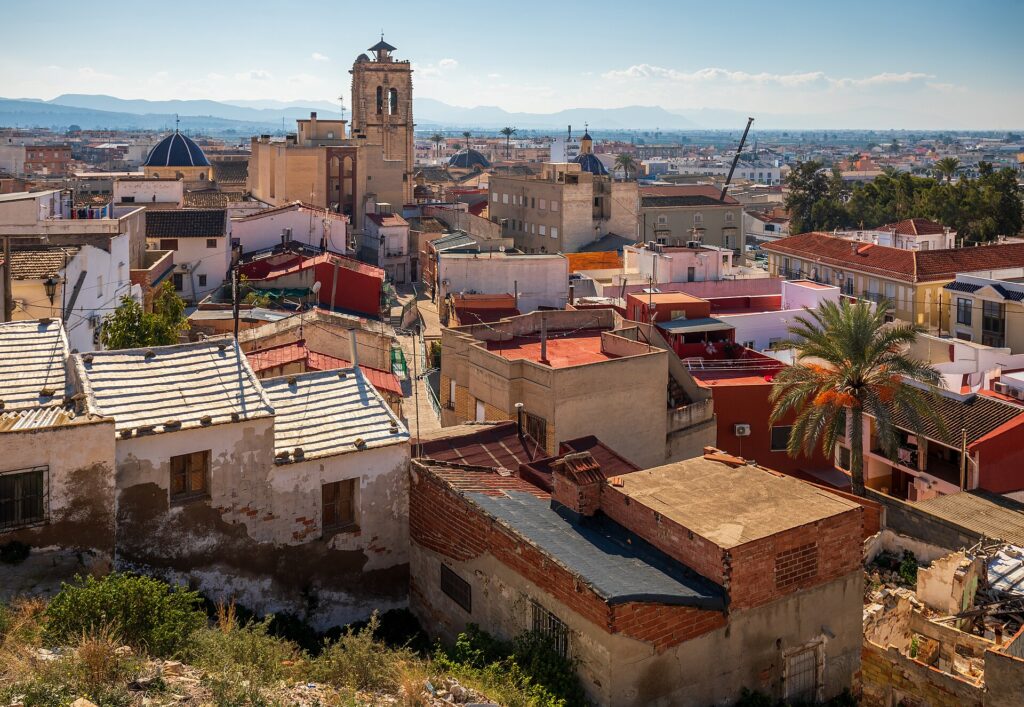
Orihuela is two places under one town hall: a historic inland city on the Segura river, and Orihuela Costa, a 16 km coastal strip of beaches and holiday housing more than 30 km away. Stay in the old city for churches, museums and Holy Week; stay on the coast for sand and sun. Pick one, because they are separate trips. Both are part of our Costa Blanca guide.
Quick facts
- Where: Orihuela, Vega Baja, southern Alicante province. The old city lies inland; Orihuela Costa is the municipality’s seafront.
- Residents: close to 89,000 at the end of 2025, of whom about 33,260 live in the city and about 30,171 on the coast (town hall register, as reported by Alicante Plaza).
- Beach: none in the old city. The coast is more than 30 km away and has 16 km of shoreline.
- Nearest airport: Alicante–Elche, the usual arrival airport for both the old city and the coast.
- Trains: Cercanías C-1 from Alicante serves the city station, in about 35 minutes on the quickest services. No train reaches the coast.
- Language: Spanish is used everywhere; Valencian is the co-official regional language.
- Tourist office: Calle Marqués de Arneva 1, phone 965 304 645.
- Big weeks: Holy Week (international tourist interest) and the July Reconquista and Moors and Christians fiestas.
Where to base yourself
The word Orihuela covers two very different holidays, so decide first which one you are booking.
Orihuela old city
The historic centre sits beside the Segura river below the Monte San Miguel ridge, with the cathedral, the Episcopal Palace, the Santo Domingo college and the Miguel Hernández house-museum within walking distance of each other. It suits couples and culture-minded travellers who want a Spanish town without package-holiday infrastructure. Evenings are quiet outside the festival weeks, and there is no sea. A car is useful, but trains from Alicante and Murcia make it workable without one.
Orihuela Costa
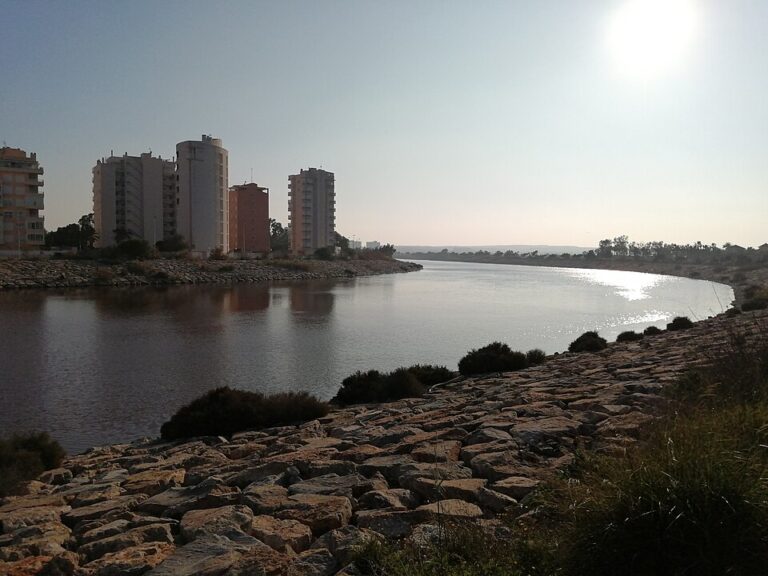
This is the southern end of the Costa Blanca, running from Torre de la Horadada towards Torrevieja. It is not a town centre. It is a chain of urbanisations and beach areas such as Cabo Roig, La Zenia, Playa Flamenca, Punta Prima and Campoamor, with supermarkets, restaurants, a large shopping centre and long stays by northern European residents. It suits families, golfers and winter-sun visitors, and it is much easier with a car. Many visitors never go up to the old city, and many people who write Orihuela on a booking site mean this strip.
Which to choose
If you want sightseeing and a few beach days, base on the coast and make a day trip to the city, or the reverse if the city is the point. Sleeping in the old city and commuting to the sea every day is a poor use of a 30 km drive. Neighbouring Torrevieja and Pilar de la Horadada are the other base options on this stretch of coast.
Things to do
The old city’s sights are concentrated and can be covered in a day. Opening times change, so check at the tourist office or on the city website before a special trip.
Cathedral and Episcopal Palace
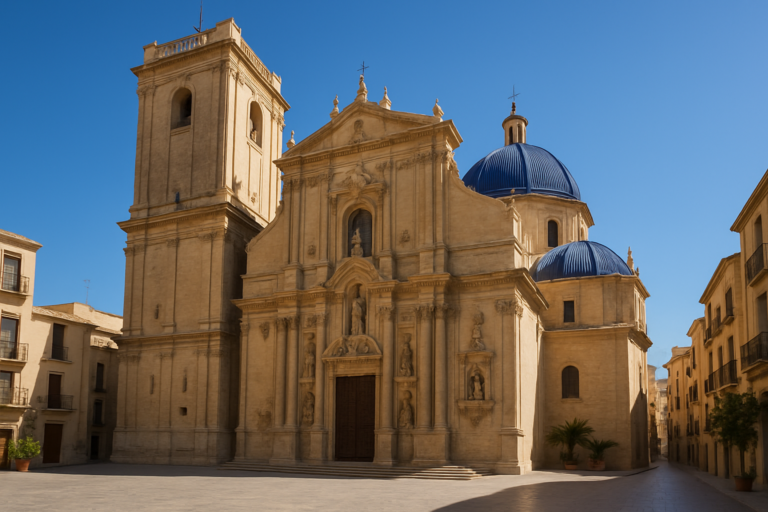
The Catedral del Salvador y Santa María mixes Gothic and Renaissance elements. The Diocesan Museum of Sacred Art sits in the Episcopal Palace; the regional tourism body lists the Miguel Hernández house-museum and the Santo Domingo college, which combines Renaissance, Baroque and Mannerist styles, as the other main stops.
Castle and views
The ruined castle-alcázar stands on Monte San Miguel above the town. It is a climb, so go in the morning and bring water. The ruins matter more for the view over the Vega Baja than for anything left standing.
Miguel Hernández
The poet Miguel Hernández was born here, and his house is now a museum. Guided visits have been run by the city in summer programmes, but the schedule has changed over the years, so confirm current times with the tourist office.
Holy Week
Orihuela’s Semana Santa holds international tourist interest status. It follows the Easter calendar, so it falls in late March or April. On Maundy Thursday the Cristo del Silencio procession passes with the city lights off, and on Holy Saturday the Santo Entierro includes La Diablesa, a figure also called the Triunfo de la Cruz. Book rooms early; the old city has limited beds.
Reconquista and Moors and Christians
The July fiestas mark the Christian recapture of the city and include a floral offering to the patron saints Justa and Rufina, a powder skirmish, the taking of the castle and parades of Moorish and Christian troops. They run through the second half of July, and the festival holds national tourist interest status. Dates move slightly each year.
Skip the old city if you want a beach every day, nightlife or a compact resort. It is a working provincial city with fine monuments and little else.
Beaches and places nearby
Orihuela Costa has about 16 km of coast, a mix of small coves and longer sand beaches. The municipality lists beaches such as Punta Prima, La Zenia–Cala Bosque, Cabo Roig–La Caleta, Cala Capitán, Cala Estaca, Campoamor–La Glea, Mil Palmeras, Cala Cerrada, Barranco Rubio and Aguamarina. Blue Flag awards change every season, so check the current list before choosing a beach for the flag. A coastal path links Cala Capitán and La Caleta at Cabo Roig.
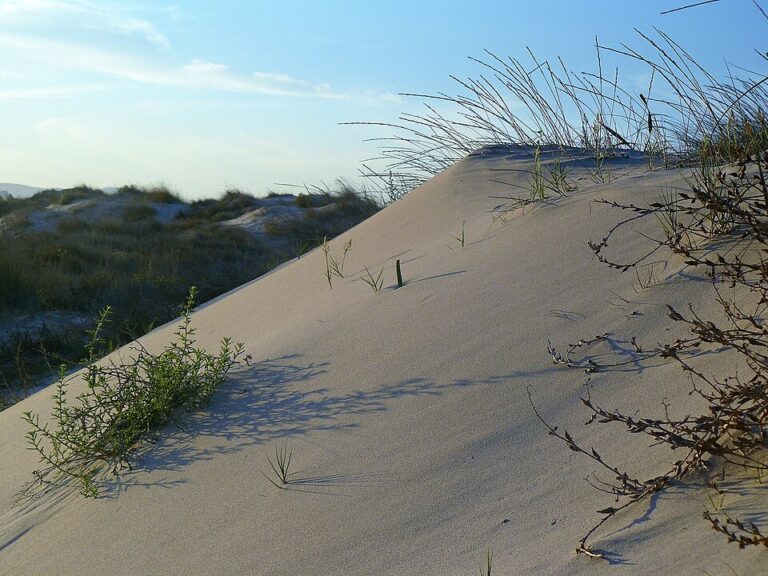
Beyond the municipality, Torrevieja is just north of the coast, with salt lakes and a seafront. Guardamar del Segura has dunes and a long beach, and Santa Pola and Alicante follow along the coast. Inland, Murcia is the closest big city. On the same plain, Callosa de Segura is a smaller Vega Baja town with its own guide.
Other town guides nearby: Elche (Elx) (about 30 km in a straight line), Archena (about 31 km in a straight line), Novelda (about 37 km in a straight line).
Food and drink
The cooking of Orihuela and the Vega Baja relies on rice dishes, spoon dishes and old sweets. Arroz con costra, rice baked with sausages under an egg crust, is the best-known dish, and its origin is claimed by both Orihuela and Elche. Other local dishes include cocido con pelotas, arroz con alcachofas and migas. The city’s convents have kept sweet-making traditions of Arabic origin, including almojábanas. Artichokes and citrus are the comarca’s typical products.
On the coast the picture is different: expect international menus in the resort areas and Spanish seafood and rice dishes in the better-known restaurants. We do not name restaurants we have not checked. For the traditional cooking, eat in the old city, and lunch is the main meal.
Where to stay
The old city has a small number of hotels and guesthouses at moderate prices, and demand rises sharply in Holy Week and during the July fiestas. Orihuela Costa works the other way: it is mostly apartments and villas let by the week, with hotels in smaller numbers, and prices follow the school holidays and the winter-sun season. Look for properties described as Orihuela Costa, Cabo Roig, La Zenia or Playa Flamenca rather than Orihuela alone, so you know which half you are booking.
Getting there and around
Fly to Alicante–Elche. From the airport the old city is reached by Cercanías C-1 from Alicante station, in about 35 minutes on the quickest trains, or by road. Orihuela Costa is mainly a car destination; local buses exist but are slower.
In the old city, most monuments are within a short walk, and parking is easier on the edge of the centre than in the narrow streets. On the coast, the strip is long and spread out, and a car or taxi is useful for the shops and beaches.
Best time to visit
For the old city, spring and autumn are the most comfortable months, with Holy Week usually late March or April. Midsummer is hot inland; check the forecast on AEMET. For beaches, summer is the busiest time, and Orihuela Costa stays occupied through winter because many residents live there year round. Dates to plan around are Holy Week, the Reconquista fiestas in July, and the Blue Flag season for the beaches.
FAQ
Is Orihuela worth visiting?
Yes, for the old city’s monuments and Holy Week if you like Spanish heritage towns. It is not a beach destination in itself, but the coast belongs to the same municipality.
Does Orihuela have a beach?
The old city does not. Orihuela Costa has about 16 km of coast, more than 30 km from the city centre.
How far is Orihuela Costa from Orihuela town?
More than 30 km. They share a town hall but are separate places to stay.
How do I get from Alicante to Orihuela?
Take the Cercanías C-1 train to Orihuela, which takes about 35 minutes on the fastest services, or drive. Check the timetable on Renfe.
When is Holy Week in Orihuela?
It follows the Easter calendar, so the dates change every year; check the programme for the year you travel.
Sources and freshness
Last checked: October 2026. Sources: Turisme Comunitat Valenciana, Orihuela; Tourist Info Orihuela Centro; Turisme Comunitat Valenciana, Semana Santa de Orihuela; Turisme Comunitat Valenciana, Reconquista and Moors and Christians; Alicante Plaza, Orihuela population 2025; El Español, Orihuela coast and monuments; Directo al Paladar, the cooking of Orihuela; Renfe; AEMET.
Main photo: Ximonic (Simo Räsänen), CC BY-SA 4.0, via Wikimedia Commons.
Nearby on the Costa Blanca
Orihuela on the map
Places worth knowing near Orihuela

How this page is maintained. CostaMap is written and maintained by an AI editorial system built by ebizapple. Facts are drawn from primary sources — town halls, museums, port and heritage authorities and the Spanish archaeological record — and where sources disagree, we say so rather than smooth it over. Photographs marked as ours are taken on location. This page was last reviewed on 26 October 2026. Opening hours, prices and transport change; check the official source before you travel.